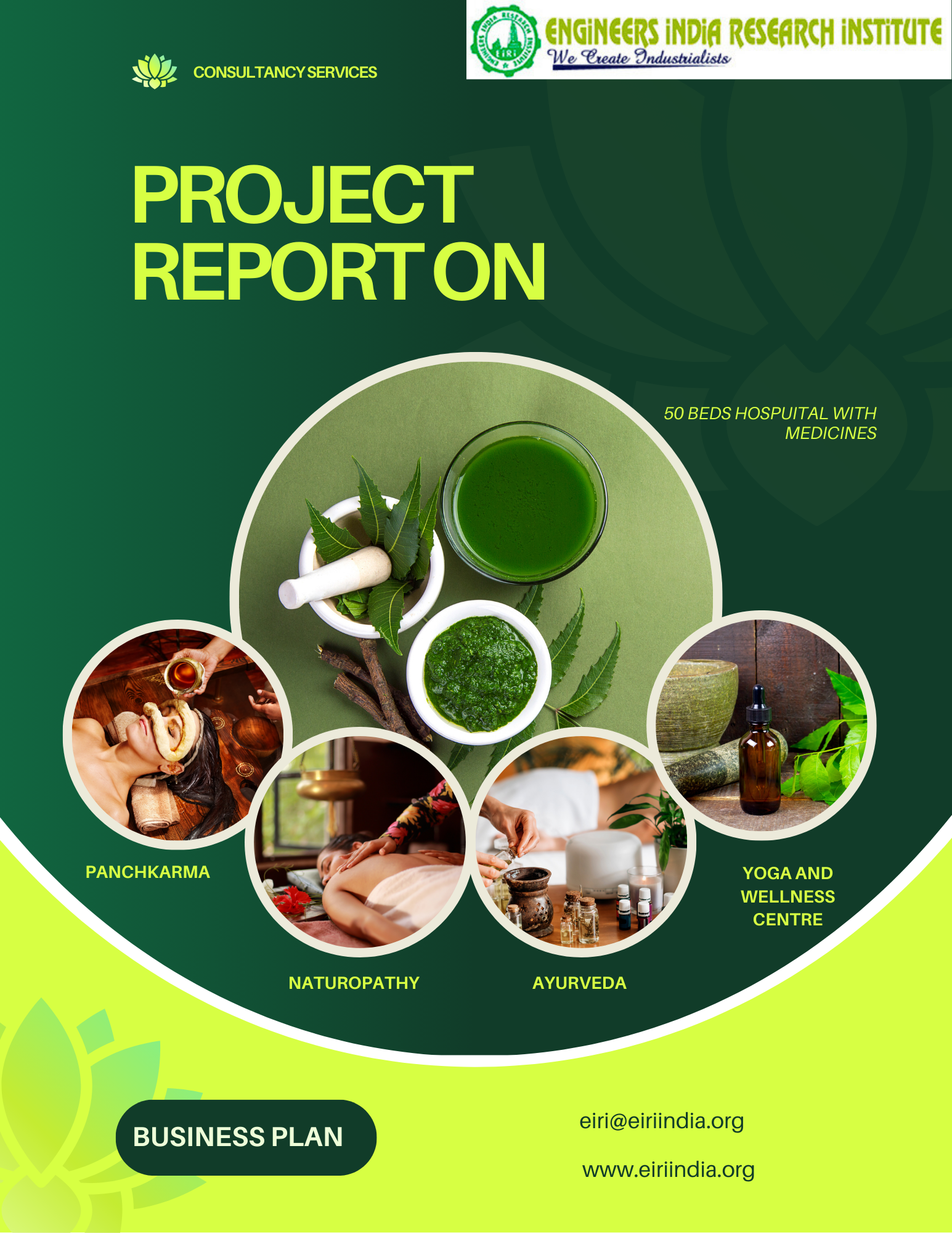
Industry Overview
Pancha Karma, meaning “five actions” or “five treatments,” is a traditional Ayurvedic cleansing and purification therapy aimed at addressing imbalances in the body and supporting health and well-being. Ayurveda describes two principal approaches to treatment: Shaman Chikitsa, which seeks to pacify aggravated Doshas, and Shodhan Chikitsa, a cleansing approach used when the Doshas are considered excessively aggravated. Pancha Karma forms the principal group of Shodhan Chikitsa therapies.
Ayurveda is an ancient Indian system of medicine believed to have evolved around 600 BC. The term Ayurveda is derived from the Sanskrit words “Ayur,” meaning life, and “Veda,” meaning knowledge. The system emphasizes harmony between human beings and nature and considers health in relation to the balance of Vata, Pitta, and Kapha. Its practices include the use of herbs and minerals, purification and detoxification procedures, dietary measures, massage, and meditation.
Pancha Karma is also described as a preventive and health-maintenance approach, with Ayurveda traditionally recommending cleansing procedures during seasonal changes. The report also covers Panchakarma therapy, naturopathy, massage and related therapies, Ayurvedic healthcare facilities, hospital accreditation, equipment requirements, suppliers, and project economics.
Cost Estimation
| Particulars | Cost / Value |
|---|---|
| Land & Building (10 Acre) | Rs. 5 Cr |
| Plant & Machinery | Rs. 98 Lac |
| Working Capital for 1 Month | Rs. 36 Lac |
| Total Capital Investment | Rs. 6.62 Cr |
| Rate of Return | 60% |
| Break Even Point | 39% |
Content Index
- INTRODUCTION
- AYURVEDA PANCHAKARMA
- PANCHAKARMA
- DIFFERENT FEATURES OF PANCHAKARMA THERAPY & THEIR TREATMENTS
- PANCHAKARMA DETOXIFIES THE BODY AND MIND
- THE FOUNDATION FOR HEALTH AND WELL-BEING
- RESTORING THE BODY’S NATURAL BALANCE
- CHARACTERISTICS OF PANCHAKARMA THERAPY
- TYPES OF PANCHAKARMA THERAPIES
- TYPES OF MASSAGE
- SHIRODHORA AND ITS BENEFITS
- BENEFITS OF SHIRODHARA:
- CONTRAINDICATIONS FOR SHIRODHARA THERAPY
- TREATMENT OF DISEASES THROUGH PANCHAKARMA AYURVEDA
- HEALTHCARE INDUSTRY IN INDIA
- OVERVIEW OF AYURVEDIC PANCHKARMA IN INDIA
- PROMISING ALTERNATE THERAPY CLINICS IN INDIA
- MARKET SIZE
- FRANCHISING: THE PREFERRED ROUTE
- OPPORTUNITIES AHEAD
- POTENTIAL AND REQUISITES
- MARKETING STRATEGY
- CURRENT PRESENCE AND ROLL OUT PLAN
- DISCIPLINES AND FACILITIES IN AYRUVEDIC
- PANCHAKARMA RESORT & HOSPITAL
- PRESENT PANCHAKARMA AYURVEDIC RESORT
- METHOD OF PANCHAKARMA THERAPY
- PRADHAN KARMA (MAIN METHODS) WHICH INCLUDES :
- PASHCHAT KARMA (POST-THERAPEUTIC MEASURES) WHICH INCLUDES:
- PURVAKARMA: PRE-PURIFICATION MEASURES
- PANCHAKARMA
- FIVE BASIC SHODHANS: CLEANSING METHODS
- VAMAN: EMESIS THERAPY
- EMETIC SUBSTANCES:
- INDICATIONS FOR VAMAN:
- CONTRA-INDICATIONS FOR VAMAN:
- VIRECHAN: PURGATION THERAPY
- VIRECHAN SUBSTANCES:
- INDICATIONS FOR VIRECHAN:
- CONTRA-INDICATIONS FOR VIRECHAN:
- BASTI: ENEMA THERAPY
- GENERAL INDICATIONS FOR BASTI:
- NASYA: NASAL ADMINISTRATION
- THERE ARE SIX MAIN TYPES OF NASYA, AS LISTED BELOW.
- SUBSTANCES USED IN NASYA:
- INDICATIONS FOR NASYA:
- CONTRA-INDICATIONS FOR NASYA:
- INDICATIONS FOR RAKTAMOKSHA:
- CONTRA-INDICATIONS FOR RAKTAMOKSHA:
- TECHNIQUE OF MASSAGE
- DIFFERENT PHASES OF PANCHAKARMA
- THE 5 PHASES OF PANCHAKARMA
- 1.PURVAKARMA-THE PRE-PURIFICATION PREPARATION
- PRADHANAKARMA-THE MAIN PURIFICATION PROCESS
- 2.VAMANA- VOMITING THERAPY
- 3.VIRECHANA -PURGATION THERAPY
- 4.NASYA- NASAL ADMINISTRATION
- 5.BASTI-ENEMA THERAPY
- SALIENT FEATURES OF NATUROPATHY
- THE MAIN FEATURES OF NATUROPATHY ARE:
- DIET THERAPY
- FASTING THERAPY
- BENEFITS AND PHYSIOLOGICAL EFFECTS OF FASTING
- MUD THERAPY
- MUD PACK - LOCAL APPLICATION
- BENEFITS OF MUD PACK
- MUD PACK FOR FACE
- MUD BATH
- BENEFITS OF MUD BATH
- HYDROTHERAPY
- EFFECTS & USES OF WATER
- COMPRESSES AND FOMENTATION:
- BATHS
- JETSPRAY MASSAGES
- IMMERSION BATHS
- ENEMA
- COLON HYDROTHERAPY
- BENEFITS AND PHYSIOLOGICAL EFFECTS OF HYDROTHERAPY
- MASSAGE THERAPY
- PHYSIOLOGICAL EFFECTS OF MASSAGE
- BENEFITS OF MASSAGE
- ACUPRESSURE
- ACUPUNCTURE
- TRADITIONAL THEORIES OF ACUPUNCTURE
- CHROMO THERAPY
- AIR THERAPY
- MECHANISM
- BENEFITS
- MAGNET THERAPY
- BENEFITS
- TREATMENT IN NATUROPATHY
- HERBALVIBRO POWDER MASSAGE:
- NATUROVILLE REFLEXOLOGY MASSAGE:
- HYDROTHERAPY
- JACUZZI HYDROTHERAPY 20 TO 30 MINUTES
- DELUXE WHIRLPOOL THERAPY 20 TO 30 MINUTES
- HYDRO SPINE THERAPY 20 MINUTES
- HERBAL COLON THERAPY
- CIRCULAR JET THERAPY 20 MINUTES
- STEAM AND SAUNA THERAPY
- HERBAL STEAM THERAPY
- MUD THERAPY
- HERBAL MUD PACK
- MUD BATH
- HERBAL MUD PLASTER
- AROMA MUD THERAPY
- HERBAL SUN BATH THERAPY
- FAR INFRA DETOX THERAPY
- IMPORTANT TREATMENT OF NATUROPATHY
- NATIONAL ACCREDITATION BOARD OF HOSPITAL HEALTHCARE PROVIDERS (NABH)
- 1. WHAT IS NABH?
- 2. WHAT IS ACCREDITATION?
- 3. WHAT ARE THE BENEFITS OF ACCREDITATION?
- 4. WHAT ARE THE PROGRAMS BEING OFFERED BY NABH?
- 5. HOW TO APPLY FOR NABH ACCREDITATION?
- 6. HOW CAN AN ORGANIZATION PREPARE ITSELF FOR NABH ACCREDITATION?
- 7. WHAT IS THE ROLE OF NABH IN PREPARING ORGANIZATIONS FOR ACCREDITATION?
- 8. IS NABH ACCREDITATION A ONE-TIME PHENOMENON?
- 9. DOES NABH HAVE ANY INTERNATIONAL LINKAGES?
- 10. HOW TO GET INFORMATION ABOUT NABH ACCREDITED ORGANIZATIONS?
- 11. WHO SHOULD BE CONTACTED AND HOW, IF ANY INFORMATION IS REQUIRED?
- NABH STANDARD FOR EVALUATION OF AYURVEDA HOSPITALS FOR GRANT OF ACCREDITATION
- PATIENT CENTERED STANDARDS
- ASSESSMENT CRITERIA
- PREPARING FOR NABH ACCREDITATION
- NABH ACCREDITATION PROCEDURE
- APPLICATION FOR ACCREDITATION:
- SCRUTINY OF APPLICATION:
- PRE-ASSESSMENT:
- OBJECTIVE OF PRE-ASSESSMENT:
- FINAL ASSESSMENT:
- SCRUTINY OF ASSESSMENT REPORT
- ISSUE OF ACCREDITATION CERTIFICATE
- SURVEILLANCE AND RE ASSESSMENT
- DETAILS OF EQUIPMENT & INSTRUMENTS FOR AYURVEDIC COLLEGE
- ADDRESSES OF EQUIPMENTS SUPPLIERS FOR PANCHAKARMA
- ADDRESSES OF AYURVEDIC HOSPITAL EQUIPMENTS SUPPLIERS
- MACHINERY & EQUIPMENT SUPPLIERS
- X-RAY MACHINERY & EQUIPMENTS
- SUPPLIERS OF EQUIPMENTS
- SURGICAL INSTRUMENTS
- STEEL FURNITURE
- MICROSCOPE SUPPLIERS
- AIR CONDITIONING & REFRIGERATION UNITS
- LABORATORY CHEMICALS
- LABORATORY EQUIPMENT
- LABORATORY INSTRUMENTS
- BUILDERS & BUILDING CONTRACTROS
- IMPORTED PLANT & MACHINERY SUPPLIERS
- CONSULTANT FOR (HOSPITALS ERECTION)
Appendix
- APPENDIX – A:
- 01. PLANT ECONOMICS
- 02. LAND & BUILDING
- 03. PLANT AND MACHINERY
- 04. OTHER FIXED ASSESTS
- 05. FIXED CAPITAL
- 06. RAW MATERIAL
- 07. SALARY AND WAGES
- 08. UTILITIES AND OVERHEADS
- 09. TOTAL WORKING CAPITAL
- 10. TOTAL CAPITAL INVESTMENT
- 11. COST OF PRODUCTION
- 12. TURN OVER/ANNUM
- 13. BREAK EVEN POINT
- 14. RESOURCES FOR FINANCE
- 15. INSTALMENT PAYABLE IN 5 YEARS
- 16. DEPRECIATION CHART FOR 5 YEARS
- 17. PROFIT ANALYSIS FOR 5 YEARS
- 18. PROJECTED BALANCE SHEET FOR (5 YEARS)
Frequently Asked Questions
Panchakarma is a group of traditional Ayurvedic cleansing and purification therapies intended to support the restoration of balance in the body. The term means “five actions” or “five treatments” and is associated with Shodhan Chikitsa, the cleansing approach described in Ayurveda. The report discusses Panchakarma as both a therapeutic and health-maintenance practice, alongside preparatory and post-therapeutic measures. Specific treatments should be selected and administered by appropriately qualified Ayurvedic practitioners based on individual requirements.
The five principal Panchakarma therapies described in the report are Vamana, Virechana, Basti, Nasya, and Raktamoksha. Vamana is described as emesis therapy, Virechana as purgation therapy, Basti as enema therapy, and Nasya as nasal administration. Raktamoksha refers to a bloodletting procedure in traditional Ayurvedic practice. The suitability, preparation, administration, and contraindications of these procedures vary considerably, so they are traditionally undertaken under appropriate professional supervision rather than as general self-care treatments.
Ayurveda provides the traditional framework within which Panchakarma is planned and administered. Ayurveda describes health in terms of balance among Vata, Pitta, and Kapha and emphasizes harmony between people and nature. Panchakarma is positioned within Shodhan Chikitsa, while Shaman Chikitsa focuses on pacifying aggravated Doshas. The report also associates Ayurvedic healthcare with dietary measures, herbal and mineral preparations, massage, purification practices, and preventive health approaches. Treatment decisions should be individualized by qualified practitioners.
An Ayurvedic Panchakarma resort or hospital can provide dedicated spaces for consultations, therapies, massage, cleansing procedures, and supportive wellness services. The report covers Panchakarma facilities together with naturopathy services such as hydrotherapy, mud therapy, massage therapy, steam and sauna therapy, and other treatment areas. A professionally planned facility may also require suitable treatment rooms, equipment, utilities, patient-support areas, trained personnel, and appropriate operational systems. The exact facility mix depends on the services offered and applicable healthcare requirements.
NABH accreditation provides a structured framework for evaluating healthcare organizations against defined quality and patient-care standards. The report includes sections on patient-centered standards, assessment criteria, preparation, application, pre-assessment, final assessment, accreditation decisions, and subsequent surveillance and reassessment. For an Ayurveda hospital, working toward accreditation can help establish documented processes, quality systems, patient-focused practices, and organizational discipline. The applicable accreditation requirements should be reviewed directly with the relevant accreditation body before implementation.
A Panchakarma project report can cover the therapy concept, treatment methods, facility requirements, equipment, healthcare-sector considerations, marketing strategy, operating requirements, accreditation, suppliers, and project economics. This report also discusses Ayurveda and naturopathy, different Panchakarma procedures, massage and hydrotherapy, Ayurvedic hospital facilities, NABH accreditation, equipment and machinery suppliers, and consultant requirements. Its financial section includes land and building, plant and machinery, working capital, total capital investment, rate of return, and break-even point.
Planning a Panchakarma facility requires consideration of treatment services, qualified personnel, infrastructure, equipment, patient-care processes, utilities, hygiene, safety, and operational management. The report also highlights the importance of equipment and instrument requirements, suppliers, Ayurvedic hospital facilities, accreditation procedures, and project economics. Depending on the proposed model, additional attention may be required for accommodation, wellness services, naturopathy facilities, consultation areas, and administrative functions. Regulatory, clinical, and accreditation requirements should be assessed according to the facility’s intended scope and location.
Why Choose Us
- More than 45 years of experience
- Managed by expert industrial consultants
- ISO 9001-2015 Certified
- Registered under MSME, UAM No: DL01E0012000
How We Work
- 24/5 Research Support Get your queries resolved from an industry expert. Ask before you purchase.
- Custom Research Service Speak to our consultants to design an exclusive study for your needs.
- Quality Assurance All reports are prepared by qualified consultants & verified by experts.
- Information Security Your personal & confidential information is always safe and secure.
Detailed Project Report (DPR) includes Present Market Position and Expected Future Demand, Technology, Manufacturing Process, Investment Opportunity, Plant Economics and Project Financials. comprehensive analysis from industry covering detailed reporting and evaluates the position of the industry by providing insights to the SWOT analysis of the industry.
Each report include Plant Capacity, requirement of Land & Building, Plant & Machinery, Flow Sheet Diagram, Raw Materials detail with suppliers list, Total Capital Investment along with detailed calculation on Rate of Return, Break-Even Analysis and Profitability Analysis. The report also provides a birds eye view of the global industry with details on projected market size and then progresses to evaluate the industry in detail.
We can prepare detailed project report on any industry as per your requirement.
We can also modify the project capacity and project cost as per your requirement. If you are planning to start a business, contact us today.
- Market growth drivers
- Factors limiting market growth
- Current market trends
- Market structure
- Key highlights
- Up-to-date analyses of market trends and technological improvements
- Pin-point analyses of market competition dynamics to offer you a competitive edge over major competitors
- An array of graphics, BEP analysis of major industry segments
- Detailed analyses of industry trends
- A well-defined technological growth with an impact-analysis
- A clear understanding of the competitive landscape and key product segments
- Ask for FREE project related details with our consultant/industry expert.
- Share your specific research requirements for customized project report.
- Request for due diligence and consumer centric studies.
- Still haven't found what you're looking for? Speak to our Custom Research Team.
EIRI Board is a single destination for all the industry, company and country reports. We feature a large repository of latest industry reports, leading and niche company profiles, and market statistics prepared by highly qualified consultants and verified by a panel of experts.
Note: We can also prepare project report on any subject based on your requirement and country. If you need, we can modify the project capacity and project cost based on your requirement.
Our reports provide an expansive market analysis of the sector by covering areas like growth drivers, trends prevailing in the industry as well as comprehensive SWOT analysis of the sector.
Our Clients

- Our research reports comprehensively cover Indian markets (can be modified as per your country), present investigation, standpoint and gauge for a time of five years*.
- The market conjectures are produced on the premise of optional research and are cross-accepted through associations with the business players.
- We use dependable wellsprings of data and databases, and data from such sources is handled by us and incorporated into the report.
- Our project reports include detailed analysis that helps get the industry's Present Market Position and Expected Future Demand.
- Offer real analysis driving variables for the business and the most recent business sector patterns in the industry.
- This report comprehends the present status of the business by clarifying a complete SWOT examination and investigation of the interest-supply circumstance.
- Report gives analysis and in-depth financial comparison of real players/competitors.
- The report gives estimates of key parameters which forecast business execution.