Sri Lanka is the rare case of an economy that collapsed, restructured, and came back with its industrial base intact. Four years after the 2022 crisis brought fuel queues and rolling power cuts, the economy grew 5% in 2025, inflation has returned to modest positive territory, and gross official reserves reached around US$7 billion by the end of March 2026. In May 2026, the IMF Executive Board completed the combined fifth and sixth reviews of Sri Lanka's Extended Fund Facility, releasing roughly US$695 million.
For a manufacturing entrepreneur, one detail inside that recovery matters more than the headline numbers. Restoring cost-recovery pricing for fuel and electricity was a prior action for the latest review — meaning energy in Sri Lanka is now priced to cover its cost rather than subsidised. Any financial model built on the tariff assumptions of a decade ago is wrong. Any model built on current, cost-reflective pricing is on solid ground for the first time in years, because the political incentive to suppress tariffs and then abruptly correct them has been substantially removed.
That is the underappreciated opportunity here: Sri Lanka has become a more predictable place to model a factory, even as it has become a more expensive one to power.
Business and Manufacturing Landscape
Sri Lanka's structural advantages are unusual for a country of 22 million: literacy above 90%, an industrial workforce with decades of experience in apparel, electronics and precision engineering, and a location on the main Indian Ocean shipping lane with Colombo functioning as a regional transhipment hub.
The Board of Investment is the central institution for anyone establishing a manufacturing operation. BOI administers the export processing zones and industrial parks, provides facilitation and incentive frameworks for qualifying investment, and operates cargo verification terminals that let enterprises clear import and export consignments at the factory rather than at the port. Critically for anyone planning a project: BOI applications require submitted proposals setting out manufacturing plans, export strategy, investment quantum and employment projections. The documentation is not optional paperwork appended to an approval — it is the basis on which the approval is granted.
Trade access has improved in at least one concrete respect. The United Kingdom's Developing Countries Trading Scheme liberalised rules of origin for garments with effect from January 2026, which is projected to support Sri Lankan garment exports to the UK. Sri Lanka's access to the EU market under GSP+ remains conditional on continued compliance with international conventions — a factor worth confirming rather than assuming when your revenue case depends on European buyers.
Reconstruction is the other live variable. Cyclone Ditwah caused extensive damage in late 2025, with a recovery bill in the region of US$1.6 billion, and the resulting demand for building materials and capital goods is a real if temporary feature of the domestic market.
Key Industrial Regions and Zones
Katunayake, Gampaha District — Sri Lanka's first and largest export processing zone, established in 1978 and spanning over 512 acres adjacent to Bandaranaike International Airport. Apparel, electronics, rubber-based products and precision manufacturing, with a central effluent treatment plant and dedicated power and water infrastructure. The default choice for air-freight-dependent or high-value manufacturing.
Biyagama, Western Province — Well-established zone with dedicated grid substation capacity and treated water supply, hosting apparel, electronics and general manufacturing. Close enough to Colombo for port access without Colombo land costs.
Seethawaka and Horana — Zones oriented toward lower-polluting industry, with more competitive lease rates than the Katunayake–Biyagama corridor and reasonable access to Colombo port.
Koggala, Galle District — The principal southern zone, established in 1991, with garments and general manufacturing, serving the southern coastal belt.
Hambantota and Mirijjawila — Southern port-linked development, positioned for export-oriented operations wanting deep-water access outside the congested Colombo corridor.
Kandy Industrial Park — Central province location serving the interior, useful for agro-processing and operations sourcing raw material from the hill country rather than importing it.
High-Potential Industries for Entrepreneurs
Coconut-based manufacturing — Sri Lanka's most distinctive industrial advantage and one that is frequently overlooked. The country is among the world's leading producers of coconut-shell activated carbon, a genuinely high-value export used in water treatment, gold recovery and air purification. The same raw material stream supports coir products, desiccated coconut and shell-based derivatives. This is a sector where Sri Lanka competes on raw material access rather than labour cost — a far more defensible position.
Rubber products — Sri Lanka has built a serious international position in solid tyres, industrial gloves and engineered rubber components, backed by domestic natural rubber cultivation. See plastic, polymer and rubber manufacturing.
Spices and essential oils — Ceylon cinnamon is a globally distinct product with no true substitute, and Sri Lanka also produces pepper, cardamom, clove and citronella. Value addition — oil extraction, grading, retail-ready processing — captures margin that raw export gives away. See perfume, flavour and essential oil manufacturing.
Apparel and technical textiles — The country's largest manufacturing export, and one that has deliberately moved upmarket rather than competing on price. The opportunity for new entrants is generally in supplying the ecosystem — accessories, trims, technical fabrics, packaging — or in specialised segments rather than volume basics. See textile and garments.
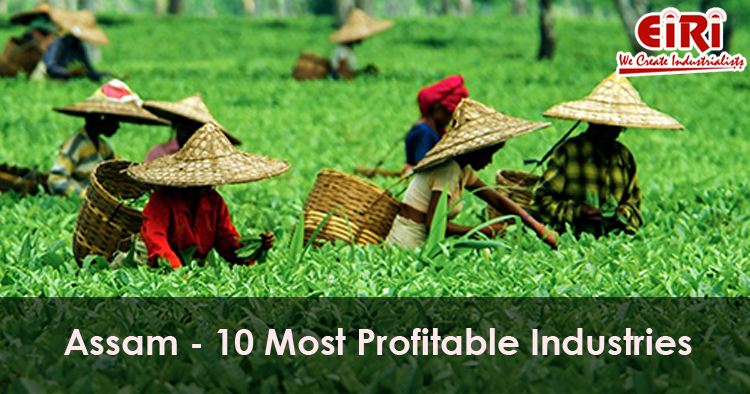
Tea and agro-processing — Ceylon tea remains a globally recognised origin brand, and the value-addition gap between bulk export and branded packed product is substantial. Relevant across plantation and farming, cold storage and edible oil processing.
Ayurvedic and herbal products — Sri Lanka has an indigenous medical tradition and a botanical resource base, and demand for herbal wellness products has grown in both domestic and export markets. See ayurvedic and herbal manufacturing.
Building materials — Reconstruction demand following Cyclone Ditwah, combined with normal construction activity, supports glass and ceramics, paints and pigments and adhesives. Sri Lanka's ceramics industry in particular has an established export record.
Packaging — Supports every export sector above and substitutes for imports. See printing and packaging.
Electronics and precision engineering — An established niche in the Katunayake and Biyagama zones, built on a trained technical workforce. See electrical and electronic manufacturing.
Also worth evaluating: products from waste, soap and detergents, and medical and disposable surgical products.
What It Actually Takes to Get Started
A Sri Lankan manufacturing project generally needs to satisfy two assessors: the Board of Investment, if you are seeking zone entry or incentive status, and a commercial bank, if you are seeking term finance. Both want the same core document.
That document must establish: the product and installed capacity; plant and machinery with specifications, suppliers and landed costs; raw material sourcing, with explicit treatment of what is grown or produced locally versus imported; energy load and cost, modelled at current cost-reflective tariffs rather than historical ones; effluent and environmental compliance where the process requires it; land and building requirement; manpower; working capital cycle; and financial projections showing break-even, cash flow and debt service coverage.
Two Sri Lanka-specific disciplines are worth building in deliberately. First, energy costs deserve genuine scrutiny for any process with significant thermal or electrical load — the arithmetic that worked under subsidised tariffs does not survive cost-recovery pricing, and this is where post-crisis projects most often prove fragile. Second, if your case depends on preferential access to the EU or UK, model it under standard tariff conditions as well, so that the project's viability does not rest entirely on an arrangement subject to periodic review.
Currency is the third consideration. Imported machinery and imported inputs create exposure that a project built on domestic raw material — coconut, rubber, tea, spices, minerals — simply does not carry. In a post-restructuring economy, lenders notice the difference.
Why EIRI
Engineers India Research Institute has prepared project documentation for manufacturing entrepreneurs for 45+ years, ISO 9001-2015 certified and MSME-registered. The practical value for a Sri Lankan project is engineering depth — machinery specification, plant layout, utility load, raw material ratios and cost structures across hundreds of manufacturing categories, developed over decades rather than assembled per enquiry.
Detailed Project Reports are prepared to the standard banks and investment authorities expect, and are customised to your intended capacity, budget and location rather than sold as a fixed-price template. An activated carbon plant sourcing shell from the coconut triangle and a rubber components unit near Horana share almost no assumptions. Because scope varies, DPRs are quoted against your specific requirement.
If you are still deciding what to manufacture rather than how, the Manufacturing Business Idea Books cover a wide spread of project categories with process outlines and indicative economics, and can be purchased directly online.
Frequently Asked Questions
Is Sri Lanka a stable place to invest in manufacturing now?
The macroeconomic position has improved substantially — growth resumed, inflation normalised, reserves rebuilt under the IMF programme. The IMF itself has been clear that the recovery remains vulnerable and depends on sustained reform. A sensible project is one that would survive a moderate shock rather than one that only works under favourable conditions.
Do I need to be inside an export processing zone?
No, but zones offer developed industrial land, reliable utilities, effluent treatment infrastructure and BOI facilitation including on-site cargo verification. If you are export-oriented, the case is strong. If you are serving the domestic market, a location outside the zones may suit better.
What documentation does BOI expect?
Project proposals setting out manufacturing plans, export strategy, investment amount and employment projections. This is the substance of the application, which is why a properly prepared project report does double duty — approval and finance.
How should I treat electricity costs in my projections?
At current cost-recovery tariffs, not historical subsidised rates. This is the most common modelling error in post-crisis Sri Lankan projects, and it matters most for energy-intensive processes such as ceramics, glass, drying and thermal processing.
What raw materials give a Sri Lankan project a genuine advantage?
Coconut and coconut shell, natural rubber, tea, spices — particularly cinnamon — and certain industrial minerals. Projects built on these compete on access rather than on labour cost, and carry less currency exposure than import-dependent alternatives.
Next Steps
If you have a manufacturing category in mind and need bank-ready documentation, start with our Detailed Project Reports. If you are still comparing options, browse the Manufacturing Business Idea Books.
To request a quote, email us your requirement with the product, your target capacity, your intended zone or district, and whether you are applying to the Board of Investment. We will respond with scope and pricing.
This article is general guidance on manufacturing opportunities and economic conditions in Sri Lanka. Tariff structures, trade preference arrangements, incentive terms and IMF programme conditions are subject to change. Verify current details with the Board of Investment, your lender or your advisor before making investment decisions.