Biogas turns organic waste into energy — and in doing so turns a disposal problem into two saleable products: clean gas and organic fertiliser. For a small entrepreneur, a farmer, or a rural business sitting on a steady supply of animal dung, food waste or crop residue, a biogas plant is one of the more approachable waste-to-energy ventures, backed in many regions by government subsidy.
It is also a sector that changed significantly in 2026. In September the government approved GOBARdhan, a unified national scheme for compressed biogas with an outlay of Rs 23,731 crore running to 2035-36, consolidating the earlier support programmes and moving them under the Ministry of Petroleum and Natural Gas. At the same time, the obligation on gas distributors to blend compressed biogas stepped up from 1 per cent to 3 per cent. The demand side of this business is now about as certain as it gets in Indian manufacturing. The difficulty has moved elsewhere — to feedstock, to execution, and to a problem with the second product that very few project write-ups mention. This guide covers what actually matters.
How a Biogas Plant Works
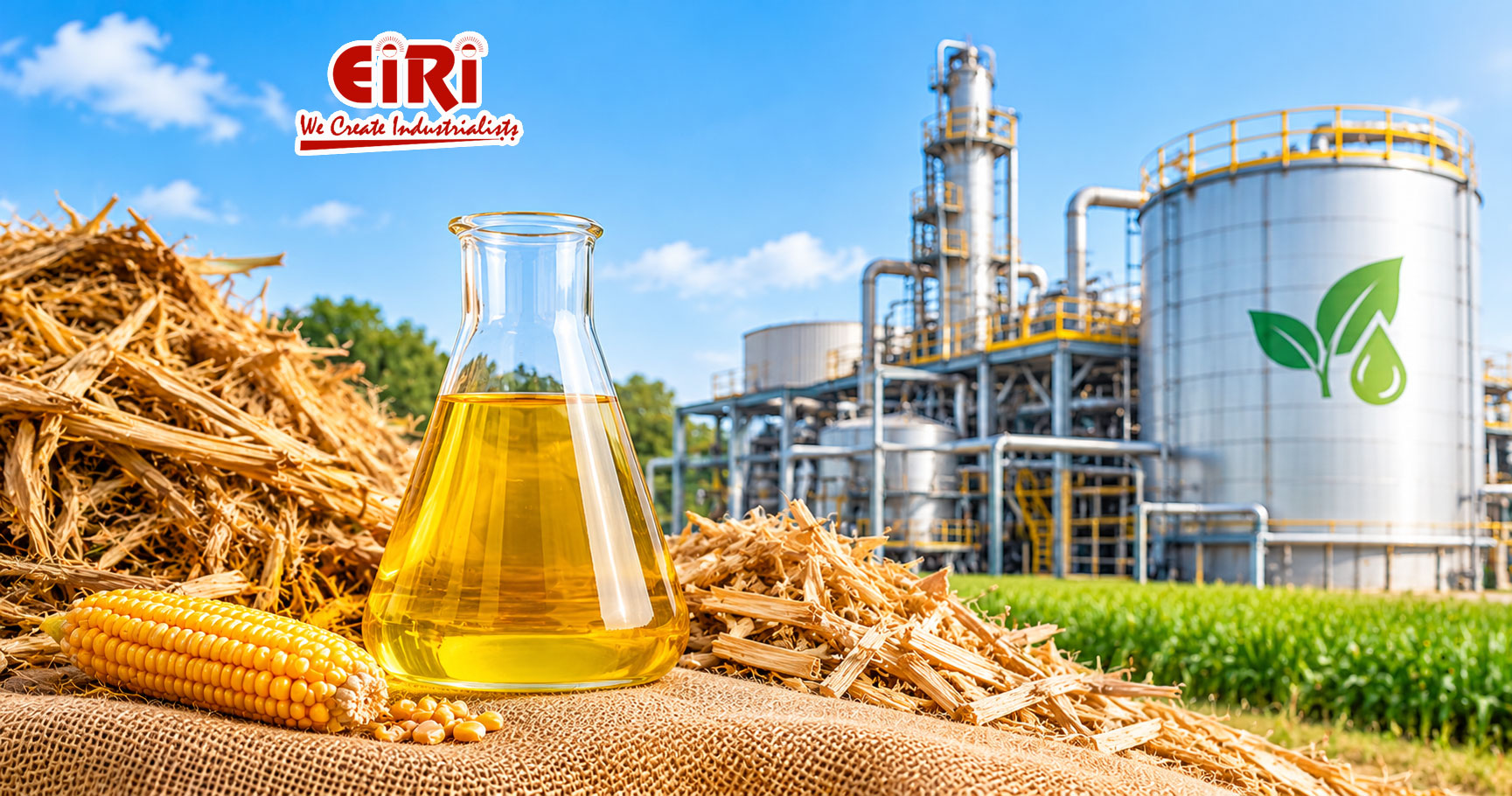
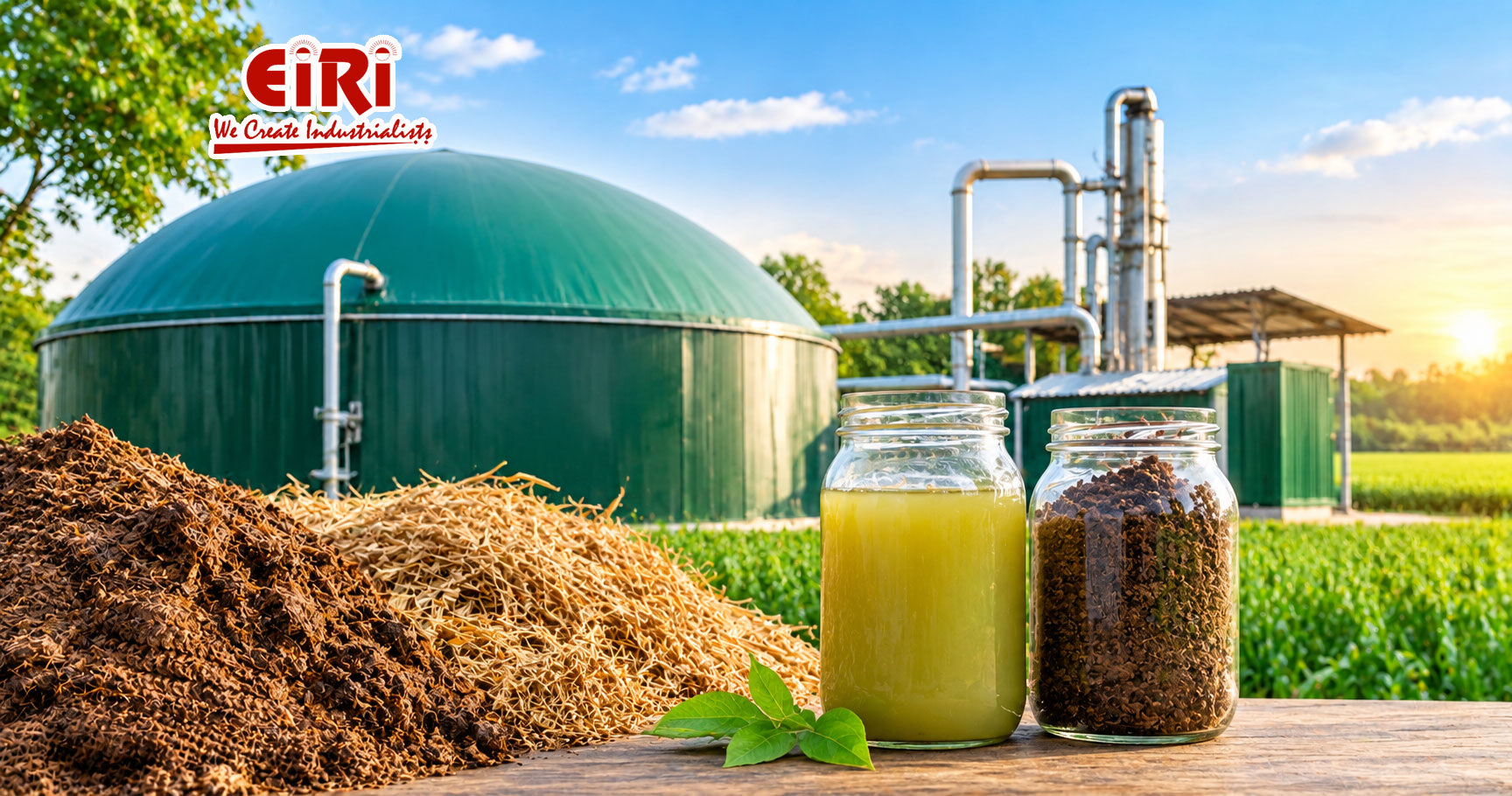
Biogas is produced by anaerobic digestion — organic matter breaking down in an oxygen-free environment, releasing a methane-rich gas that can be burned for cooking, heating, electricity generation or, when upgraded, used as vehicle fuel (compressed biogas, or CBG). The process happens in a sealed digester: feedstock is fed in, micro-organisms break it down over a retention period, gas is collected from the top, and the leftover slurry — digestate — comes out as a nutrient-rich organic fertiliser.
That second output matters more than most entrants expect, and not only as revenue. By weight it is the larger product: industry figures suggest that for every 100 tonnes of daily feedstock a plant produces roughly 4 tonnes of CBG but 35 to 40 tonnes of solid fermented organic manure and up to 50,000 litres of liquid manure. A biogas plant is therefore an energy business and a fertiliser business at the same time, whether or not its owner planned it that way. Where that fertiliser goes is covered below, because it is currently the sharpest issue in the sector.
Two Different Businesses Share One Name
Before anything else, it is worth separating two ventures that get discussed as though they were one, because almost every practical decision differs between them.
Farm and small-scale digesters handle a few cubic metres of gas a day, serve household or on-farm energy needs, and put the slurry straight onto the owner's own fields. Support comes through the long-running small biogas programme, where central financial assistance for plants in the 1 to 25 cubic metre range has run from roughly Rs 7,500 to Rs 35,000 per plant depending on size, location and beneficiary category, administered largely through state rural development departments under the Ministry of New and Renewable Energy. The economics here are about displaced cost — gas you no longer buy, fertiliser you no longer buy — rather than sales revenue.
Commercial CBG plants are an industrial proposition: tonnes of feedstock daily, gas upgrading equipment, a connection or logistics route to a buyer, and capital requirements orders of magnitude larger. This is where the new policy money sits, and where the mandated demand lies.
Both are legitimate. But a reader attracted by the guaranteed CBG offtake price should understand that it applies to the second category, which is not a small-entrepreneur project in the usual sense — while a reader with a handful of cattle is looking at the first, where the returns are real but take the form of avoided expenditure. Several of the problems described later in this article are commercial-scale problems that simply do not arise on a farm.
Feedstock: The Factor That Decides Everything
The single most important question for any biogas plant is: what will you feed it, and can you guarantee that supply? Common feedstocks include animal dung (especially cattle), food and kitchen waste, agricultural residues, poultry litter, and agro-industrial organic waste from dairies, distilleries and food processors. Each has a different gas yield and different handling needs.
The economics live and die on feedstock. It should be reliable, year-round, close to the plant (organic waste is heavy and wet, so transport cost bites quickly), and ideally free or cheap — sometimes it even comes with a disposal fee attached, which is the best case. A dairy farm, a large kitchen, a food-processing unit or a cluster of livestock holdings all represent captive feedstock sources, and a plant built next to its feedstock is far more viable than one that must gather material from far afield.
This is not a theoretical concern. Feedstock aggregation is repeatedly identified as one of the main reasons Indian CBG projects underperform, and many operating plants run at only 20 to 60 per cent of their rated capacity. A plant running at a third of capacity still carries its full debt. Anyone planning a biogas venture should solve the feedstock question first and build everything else around the answer — and should size the digester to the feedstock they can actually prove, not the feedstock they hope to find.
The Policy Picture in 2026
Three instruments now shape the commercial end of this business, and they are unusually favourable on paper.
A rising blending mandate. City gas distribution entities must blend compressed biogas into the CNG and piped natural gas they sell: 1 per cent in FY 2025-26, 3 per cent in FY 2026-27, 4 per cent in FY 2027-28 and 5 per cent from FY 2028-29. Unlike a voluntary target, this is an obligation on the buyer.
A guaranteed price and offtake. CBG carries an administered price of Rs 2,110 per MMBtu — roughly Rs 98 per kg at 95 per cent methane — with a minimum ten-year tenure running to 2036, and distributors are to take up to 100 per cent of saleable output subject to technical feasibility. A decade of price certainty is close to unheard of for a small manufacturer in any sector, and it removes the market risk that usually dominates a project appraisal.
GOBARdhan. Approved in September 2026 with an outlay of Rs 23,731 crore for FY 2026-27 to FY 2035-36, this unified scheme brought CBG support under the Ministry of Petroleum and Natural Gas and absorbed the earlier SATAT framework and related programmes. Its components matter to a new entrant: capital assistance of up to Rs 2 crore per tonne per day of installed CBG capacity for eligible greenfield projects, with feedstock aggregation, organic manure processing and value-addition infrastructure also eligible; a credit guarantee specifically intended to ease institutional lending to MSME-based CBG projects by reducing collateral requirements; support for pipelines connecting plants to city gas networks; and a Rs 500 crore ecosystem challenge fund for district-level feedstock mapping and capacity building. The stated ambition is to raise domestic CBG production roughly ten-fold.
Several states have added their own policies on top, including Maharashtra and Chhattisgarh, both of which introduced dedicated CBG policies in 2026. An India-Japan initiative announced in July 2026 aims to support 1,000 cooperative-based biogas and organic fertiliser plants by 2030, which is aimed squarely at the smaller, farmer-linked end of the sector.
The Gap Between the Mandate and the Supply
Now the other side of the ledger, because the policy generosity above exists for a reason: the supply simply is not there.
Against the 2018 SATAT target of 5,000 CBG plants by FY 2024, around 217 plants had been commissioned as of August 2026, with roughly 1,908 registered and 339 under construction. That spread between registration and commissioning is the single most instructive number in this sector: for every plant actually producing gas, several more exist on paper and never got built.
The volume picture is similar. CBG sales in FY 2025-26 ran at about 111 million standard cubic metres against roughly 12,033 million standard cubic metres of CNG and domestic PNG sales — a blend of just under 1 per cent against a 1 per cent obligation. Meeting the 3 per cent obligation now in force would require roughly tripling national CBG supply in short order. That gap is precisely why the capital assistance, the credit guarantee and the guaranteed price exist.
The execution obstacles behind the gap are worth naming, because they are what a project plan has to answer. Pipeline connectivity is thin — only a small minority of functional plants have been pipeline-connected, and a large number have no connectivity planned, which pushes output into cascade transport and raises logistics cost. Financing has been difficult for first-time promoters, which the new credit guarantee is designed to address. Land and approval procedures vary considerably between states. And capacity utilisation, as noted above, is frequently well below design.
The Digestate Problem Few Project Reports Mention
This deserves its own section, because it is the most common gap between a biogas business plan and a biogas business.
Most project write-ups, including earlier versions of this one, treat digestate as straightforward additional revenue that improves the economics. In 2026 that is not a safe assumption for a commercial plant. India's CBG sector is reporting real difficulty selling fermented organic manure. There is a government-backed offtake framework for the gas; there is no equivalent mechanism for the manure. The Market Development Assistance of Rs 1,500 per tonne that supported organic fertiliser sales has been withdrawn. Farmers have limited incentive to switch from heavily subsidised chemical fertilisers.
The consequence is operational, not merely financial. Recall the output ratio: a plant produces roughly ten times more solid manure by weight than gas, plus large volumes of liquid digestate, and on-site storage typically holds only a few days' production. A plant that cannot move its manure cannot keep digesting. Unsold digestate has pushed some plants to run below capacity or suspend operations — and a plant running below capacity may then fall short of the performance conditions attached to government capital assistance. The Indian Biogas Association has publicly argued that the fertiliser side needs policy and market support comparable to the gas side.
Two qualifications keep this in proportion. First, GOBARdhan's capital assistance does cover organic manure processing and value-addition infrastructure, so there is capex support for treating digestate as a product rather than an effluent — drying, enriching, granulating and branding it rather than hoping someone collects it wet. Second, and importantly for this article's readers, this is overwhelmingly a commercial-scale problem. A farm-scale digester whose slurry goes onto the owner's own fields has no disposal problem at all; it has a fertiliser saving. The smaller operator is genuinely better placed here than the large one.
The practical conclusion: any commercial biogas plan needs a named route to market for the digestate, costed, before the digester is ordered. Treating it as incidental upside is how plants end up idle.
Cost and Returns: How to Think About Them
We will not quote a single cost figure, because a farm digester and a commercial CBG plant differ by orders of magnitude. What matters is understanding the drivers. Capital cost scales with digester size and whether gas upgrading or electricity generation equipment is included — and, for a commercial plant, with the logistics or connectivity needed to reach a buyer, which is frequently underestimated.
Against that sit the returns. For a commercial CBG plant: gas sold at an administered price with a ten-year horizon and mandated offtake, capital assistance of up to Rs 2 crore per TPD of installed capacity, a credit guarantee easing the financing, plus digestate revenue where a route to market exists. For a farm-scale plant: displaced energy and fertiliser cost, plus central financial assistance at the levels noted earlier.
The honest framing for a small entrepreneur has shifted slightly from the usual one. It is no longer mainly about whether demand exists — for CBG, the state has legislated it and fixed the price for a decade. It is about whether you can secure feedstock year-round at a workable cost, reach a buyer without logistics eating the margin, place the digestate, and run at a capacity utilisation that services the debt. A well-sized plant with secure cheap feedstock and a genuine digestate route can be a sound investment, materially helped by the current scheme support. A plant built without those things will disappoint despite the guaranteed price, which is exactly what the 1,908-registered-versus-217-commissioned figure describes. That difference is what a feasibility study exists to establish before money is committed.
Where Biogas Fits in the Waste-to-Value Picture
Biogas belongs to the broader family of turning waste into value and energy. It sits within both the waste-based industry category — alongside other ways of converting agricultural, municipal and organic waste into products — and the biofuels and biomass family, which covers bioenergy routes from ethanol to biodiesel.
That comparison is worth making deliberately rather than by default. Among the bioenergy routes available to someone holding agricultural residue, CBG currently has the rising mandate and the guaranteed price, while ethanol — whose blending target has been met and where capacity now exceeds offtake — does not. EIRI's handbook on ethanol, biofuel and bioenergy-based products covers biogas alongside the other bioenergy products that can share feedstock and infrastructure, which helps an entrepreneur see whether biogas alone, or a combination, best fits their waste stream. Given the digestate issue, the organic-fertiliser output also connects naturally to vermiculture and biofertilizer production — not merely as an add-on, but as a serious option for converting a disposal liability into a branded product.
Licences and Approvals
A biogas plant needs standard business registration and, depending on scale, environmental and pollution-control clearances. Commercial plants selling compressed biogas or electricity face additional approvals tied to that sale and to the relevant energy offtake arrangements, including registration and agreement with the offtaking gas distribution entity. Newer scheme conditions also bring operational obligations — real-time monitoring and automatic shut-off arrangements are now required under the current CBG framework.
Accessing subsidy schemes requires meeting their specific eligibility and documentation, and since the September 2026 consolidation the administering ministry and application route for CBG support have changed. Confirm the current requirements and schemes for your scale and location before committing, as central and state terms are both in flux.
Planning a Biogas Project
A bankable biogas project documents the feedstock source and a realistic year-round supply and cost assessment, the digester type and scale, the energy output and its use or offtake, the digestate revenue and its route to market, applicable subsidies, approvals, and financial projections tested against feedstock reliability.
Current conditions add three specific tests. First, model the project at realistic capacity utilisation rather than design capacity, given how many operating plants run well below rating. Second, cost the route to the buyer explicitly — pipeline connection where available, cascade transport where not — since connectivity is thin and logistics can decide viability. Third, treat the digestate as a product line with its own plan, pricing and buyer, not as a byproduct line in the revenue table.
Engineers India Research Institute — 45+ years, ISO 9001-2015 certified, MSME-registered — prepares Detailed Project Reports for biogas and waste-to-energy ventures, matched to your feedstock, scale and location, and suitable for subsidy and bank-finance applications.
Frequently Asked Questions
Is a biogas plant profitable for a small entrepreneur?
It can be, when the plant is sized to a secure, cheap feedstock source and there is a genuine route to market for the digestate, particularly with current government support. For compressed biogas the demand risk is unusually low because blending into CNG and piped natural gas is mandatory and the price is administered for a ten-year period. The risks have shifted to execution: feedstock aggregation, reaching a buyer without excessive logistics cost, placing the organic manure, and achieving capacity utilisation high enough to service debt.
What can be used as feedstock for a biogas plant?
Common feedstocks include animal dung (especially cattle), food and kitchen waste, agricultural residues, poultry litter, and agro-industrial organic waste from dairies, distilleries and food processors. Each has a different gas yield. The ideal feedstock is reliable, year-round, close to the plant and cheap or free. Feedstock aggregation is one of the most frequently cited reasons Indian biogas plants underperform, with many operating at only 20 to 60 per cent of rated capacity.
What are the two products of a biogas plant?
Biogas (a methane-rich gas used for cooking, heating, electricity or, when upgraded, as compressed biogas vehicle fuel) and digestate (the leftover slurry, a nutrient-rich organic fertiliser). The digestate is by far the larger output by weight — roughly 35 to 40 tonnes of solid manure plus substantial liquid digestate for every 100 tonnes of daily feedstock, against about 4 tonnes of gas. That makes placing it a core operational requirement, not an optional extra.
Can I actually sell the organic fertiliser from a biogas plant?
For a commercial plant this has become one of the sector's hardest problems. There is a mandated offtake framework for the gas but no equivalent for the manure, the Market Development Assistance of Rs 1,500 per tonne has been withdrawn, and farmers have limited incentive to move away from subsidised chemical fertiliser. Because storage holds only a few days of output, plants that cannot move digestate have been forced to run below capacity or pause operations. A farm-scale digester avoids this entirely by applying slurry to its own land. Any commercial plan should identify a costed route to market, or invest in processing the manure into a saleable branded product.
Are there government subsidies for biogas plants?
Yes, and the framework was consolidated in September 2026. The GOBARdhan scheme, with an outlay of Rs 23,731 crore running to 2035-36 under the Ministry of Petroleum and Natural Gas, offers capital assistance of up to Rs 2 crore per tonne per day of installed compressed biogas capacity for eligible greenfield projects, a credit guarantee aimed at easing lending to MSME-based projects, pipeline connectivity support and an ecosystem fund. Smaller family and farm-scale plants are supported separately, with central financial assistance historically in the range of about Rs 7,500 to Rs 35,000 per plant depending on size, location and category. Several states run additional policies. Terms change, so confirm current programmes before planning, and note that a project report is usually required to apply.
Is there guaranteed demand for compressed biogas?
Close to it. City gas distribution entities are obliged to blend compressed biogas into CNG and piped natural gas at 3 per cent in FY 2026-27, rising to 4 per cent in FY 2027-28 and 5 per cent from FY 2028-29, with an administered price of Rs 2,110 per MMBtu and a minimum ten-year tenure. National supply is well short of the obligation — blending ran at just under 1 per cent in FY 2025-26 — so the shortfall, not the surplus, is the sector's defining feature. The practical constraint on a new project is building and running the plant, not finding a buyer.
What size biogas plant should I build?
The right size is determined by the feedstock you can prove, not the feedstock you hope to secure. Plants range from small family or farm-scale digesters of a few cubic metres a day to large commercial plants producing compressed biogas for sale. Start by assessing how much reliable feedstock you can obtain year-round, then size the plant to match. Oversizing is a common and expensive error: a plant running at a third of capacity still carries its full debt, and under-utilisation can also jeopardise performance conditions attached to government assistance.
Is biogas a better option than ethanol for agricultural waste?
On current policy signals, compressed biogas has the stronger position. Its blending obligation is mandatory and still rising through FY 2028-29, its price is administered with a ten-year horizon, and national supply falls well short of the mandate. Ethanol, by contrast, met its 20 per cent petrol blending target in 2025, the government has said it has no immediate plan to go further, and installed distillery capacity now exceeds what blending and industrial users absorb. Both use similar biomass aggregation capability, so an entrepreneur whose real asset is access to agricultural residue should compare the two rather than assume ethanol is the default.
Planning a Biogas Plant?
If you have a feedstock source and want to test whether a biogas plant makes sense — and need documentation for subsidy or bank finance — EIRI can prepare a Detailed Project Report matched to your feedstock, scale and location, including the capacity-utilisation and digestate-offtake analysis the current market requires. Send us your requirement and our consultants will respond. To explore related options, browse our waste-based industry and biofuels and biomass business books.
Scheme details, blending obligations, prices and plant numbers cited here reflect the position as of November 2026 and draw on Ministry of Petroleum and Natural Gas announcements, industry reporting and sector associations. The CBG support framework was restructured in September 2026 and state policies continue to change; confirm current scheme terms, eligibility and prices before relying on them for investment decisions.