Paneer is on the table in millions of Indian homes, restaurants and sweet shops every single day, and demand only keeps growing. It does not need refrigeration to sell quickly, it uses one main raw material almost everyone can source, and you can start small and grow. That makes paneer making one of the easier food businesses to begin with — as long as you get the milk supply and the food licence right. This guide walks through how paneer is made, the machinery you need, what it costs to run, and the one question that decides whether your unit will work.
Why Paneer Sells All Year
Paneer is a daily-use food, not a seasonal or luxury item. Households buy it, dhabas and restaurants buy it in bulk, and caterers need it for every function. Because it is fresh and perishable, buyers come back again and again rather than stocking up, so a unit with steady quality and reliable delivery builds a repeat market quickly. Demand holds through the year and rises around festivals and the wedding season. For a first-time food entrepreneur, that steady, local pull is a real advantage over products that need you to build demand from scratch.
How Paneer Is Made
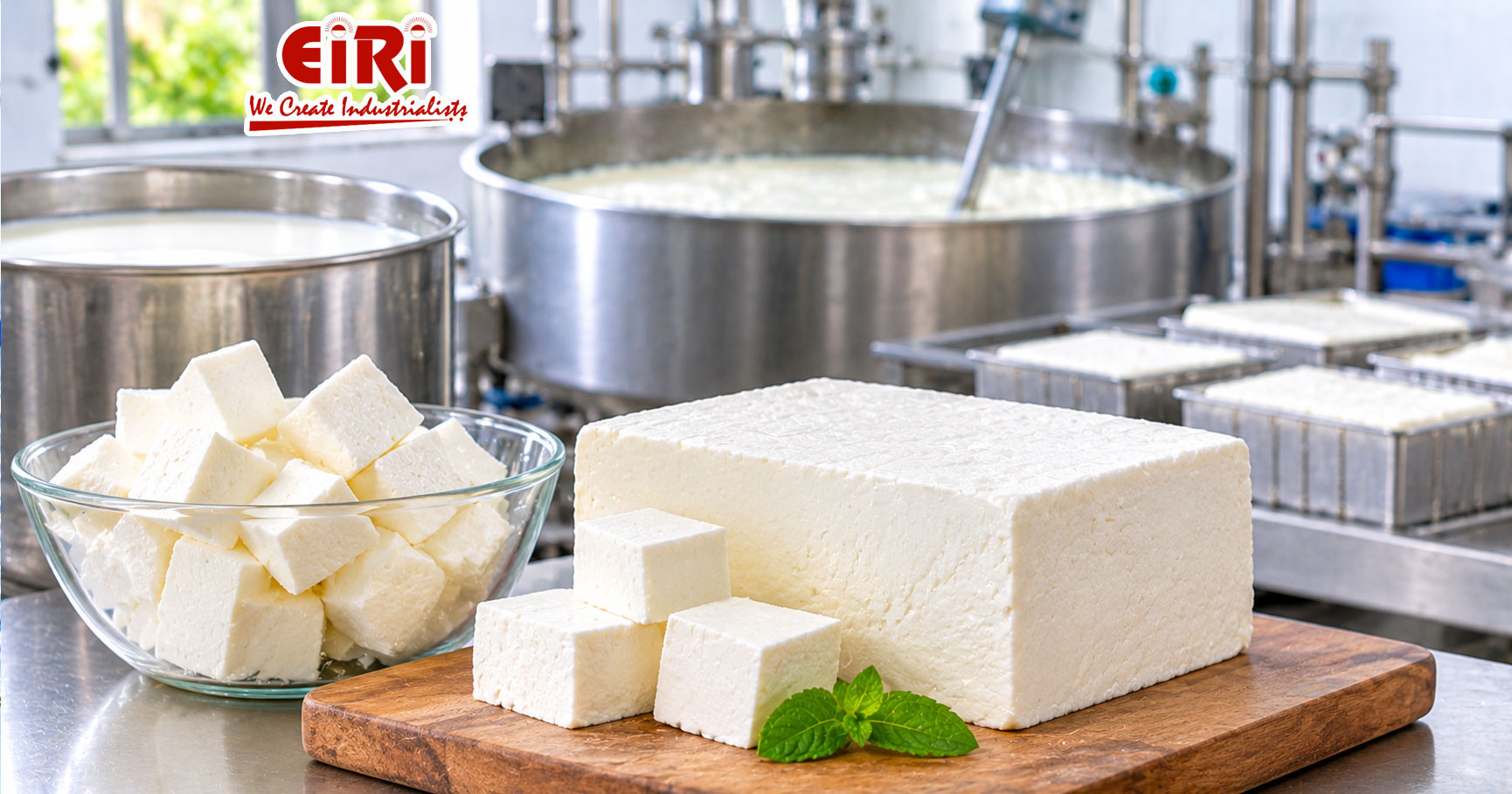
The process is simple to understand and that is part of the appeal. Fresh milk is received and checked for quality, then heated to the right temperature. An edible acid — usually citric acid or a food-grade coagulant — is added, which separates the milk into solid curd and watery whey. The curd is collected, pressed into blocks to remove extra water, cooled in chilled water, cut, and packed. Keeping everything clean and keeping the paneer cold after it is made are what hold the quality and shelf life. Simple as the steps are, doing them the same way every time is what builds a brand buyers trust.
The Machinery You Need
A paneer unit is built around a few core items rather than a long line. You need milk storage and a boiler or steam-jacketed kettle to heat the milk, a coagulation and collection vessel, a press to form and firm the blocks, a chilling tank or cold room to cool and hold the product, and packing equipment. Small units run much of this semi-manually; larger units add automatic heating, pressing and packing to handle more milk with steady quality. Alongside the machinery you need a clean, approved working space, because this is a food product and hygiene is part of the equipment, not an afterthought.
The Milk Supply: The Thing That Really Decides It
Here is the part that matters most. A paneer unit lives or dies on a steady supply of good, fresh milk at a workable price. Milk quality feeds straight into paneer quality, and milk is perishable, so you need a chilled, reliable procurement route — a dairy, a cooperative, or a cluster of farmers you can count on. There is also a seasonal catch: milk is cheaper and plentiful in the flush season and tighter and dearer in the lean months, and your costs move with it. Sorting out where your milk comes from, at what price, and how you handle the lean-season swing is the first job, before you buy a single machine.
Licences and Food Safety
Paneer is a food product, so an FSSAI licence is the main requirement, along with standard business and MSME registration, and local trade and health approvals for a food premises. Because it is fresh and perishable, meeting hygiene and quality standards is not just about the licence — it protects your brand and your buyers. Requirements can vary by state and change over time, so confirm the current position with your FSSAI authority and local body before you start.
What Drives the Cost
We will not put a single rupee figure on it, because it depends on your scale, how much of the work is manual, whether you need a cold room, and your building. What is worth knowing are the things that move the money. Milk is by far the biggest running cost, so your buying price and your yield from it matter more than almost anything else. After that come the chilling and cold storage, packing, and the building. On the machinery side, a small semi-manual unit is far cheaper to set up than an automatic one, which lets you start modestly and add capacity as your market grows.
Understanding the Business Before You Invest
Paneer is a straightforward product, but getting the process, the yield and the food-safety side right is what separates a unit that holds its market from one that struggles. A good grounding in milk processing helps you plan properly, and the dairy and milk processing business books — including the handbook on milk processing, dairy products and packaging technology — cover the process, the plant and machinery, quality and packaging, and the economics of a dairy-products unit as a practical reference you can plan from.
What a Bankable Plan Needs
If you plan to apply for a bank loan or a scheme like PMFME or MUDRA, your project needs to be written down properly: the capacity you are aiming for, the milk source and its cost through the year, the machinery and what it costs, the FSSAI and other approvals, the building and cold storage, working capital, and realistic numbers. Most paneer units that run into trouble either underestimated the milk supply or did not plan the working capital for buying milk daily. Getting that plan right before you spend is what keeps the unit running once it starts.
Ready to Take the Next Step?
When you are ready to turn the idea into a real, financed project, EIRI can prepare a Detailed Project Report for your paneer unit — built around the capacity, milk source and location you have in mind, and in the form banks and scheme offices look for. Send us your requirement with the capacity you are planning and we will come back with the scope and the next step.
For the money side, this paneer project profile is worth opening next. It breaks the investment down for units from roughly 500 to 1,500 litres of milk a day, sets out the demand, and — the part most useful early on — carries a directory of dairy machinery and raw-material suppliers along with ready DPR and CMA reports for a loan application. Sorting your milk source and the bank documents is exactly where a new paneer unit should start, and both sit here together.
Frequently Asked Questions
Is a paneer making business profitable?
Paneer has steady, daily demand from homes, restaurants and caterers, and buyers come back often because it is fresh and perishable. It is a volume business where your buying price for milk, your yield and your quality matter most, so profit comes from running it well and keeping a reliable local market rather than from a big markup.
What licence do I need to make and sell paneer?
Paneer is a food product, so an FSSAI licence is the main one, along with standard business and MSME registration and local trade and health approvals for a food premises. Rules can vary by state and change over time, so check the current requirements with your FSSAI authority and local body before you start.
How is paneer made?
Fresh milk is checked and heated, then an edible acid such as citric acid is added to separate it into solid curd and watery whey. The curd is collected, pressed into blocks, cooled in chilled water, cut and packed. Clean handling and keeping the paneer cold after it is made are what hold its quality and shelf life.
What is the biggest challenge in a paneer business?
A steady supply of good, fresh milk at a workable price. Milk quality decides paneer quality, milk is perishable so you need a chilled, reliable source, and prices swing between the flush and lean seasons. Sorting out your milk supply and the working capital to buy it daily is the first job, before buying machinery.
Can I start a paneer unit on a small scale?
Yes. A small unit can run much of the heating, pressing and packing semi-manually, which keeps the setup cost low, and you can add automatic machinery and capacity as your market grows. Many paneer businesses start owner-run at a modest daily milk intake and build up from there.