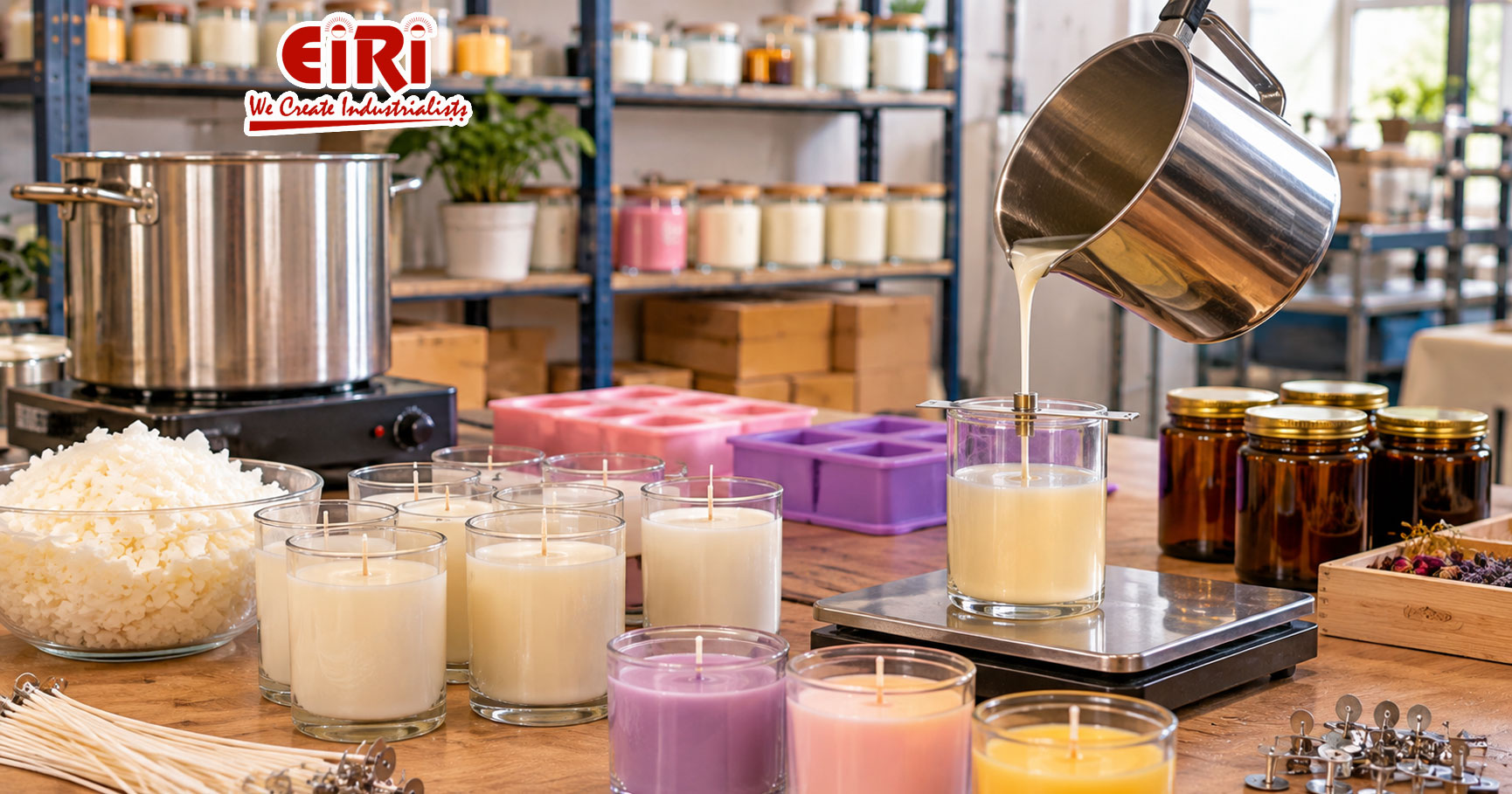
Candle making is one of the easiest manufacturing businesses to begin. It needs very little to start, it can run from a small space or even a home setup, and candles sell steadily for daily use, festivals, decoration and gifting. That low barrier is the attraction — but it also means plenty of people make plain candles, so the makers who do well usually add something: a better finish, scented or decorative candles, good packaging, or a reliable supply to regular buyers. This guide covers what it takes to start, the machinery, the costs, and how to think about making it pay.
Why Candles Keep Selling
Candle demand comes from several directions at once, which keeps it steady through the year. There is everyday and power-cut use, a large festival and religious market, and a growing taste for scented, decorative and gifting candles that sell at better prices than plain ones. That last part is where the opportunity really sits: plain white candles are a thin-margin commodity, but scented, coloured, moulded and well-packaged candles reach customers who will pay more. A maker who moves toward the decorative and gifting end can earn far more from the same basic process.
How Candles Are Made
The process is simple. Wax — usually paraffin, sometimes blended with other waxes — is melted, colour and fragrance are added if wanted, and the wax is poured into moulds holding the wicks. Once set, the candles are removed, trimmed and packed. Different shapes, sizes, colours and scents come from the moulds and the additives, not from different machinery, which is why one simple setup can make a wide range of products. The craft is in the finish and the recipe — a clean surface, a steady burn, a good scent throw — rather than in complex equipment.
What You Need to Start
This is among the lowest-cost manufacturing units there is to set up. At the basic end you need a wax-melting vessel, moulds in the shapes and sizes you want, wicks, colours and fragrances, and simple packing materials — a setup modest enough to start owner-run from a small space. As you grow, moulding machines and larger melting and pouring equipment raise your output and consistency. Because the entry cost is so low, the sensible way in is to start small, find the products and customers that work, and reinvest into capacity and better finishes from there.
The Wax Price: The Main Variable
The one thing to watch in candle economics is the wax. Paraffin wax is the main raw material and the main running cost, and its price follows crude oil, so it can swing. That has two practical effects: your margin moves with the wax price, and there is value in being able to hold some stock and ride through a price swing rather than being forced to buy at the peak. Buying wax well, and leaning toward higher-value scented and decorative candles that carry a wax-price change more easily, is how makers protect their margin.
Licences and Approvals
A candle unit needs standard business and MSME registration and the usual local trade approvals. Because it involves melting wax and working with heat, basic safety and fire precautions matter, and depending on scale, general factory requirements may apply. It is a simple regulatory picture compared with food or chemical products, but you should still confirm what applies to your scale and location with your local authorities before you start.
Understanding the Business Before You Invest
Since the craft is in the recipe and the finish — the right wax blend, colours, fragrances and moulding — it pays to learn that side if you want to move beyond plain candles into the better-margin decorative and scented range. The candle making processes and formulations handbook covers the wax types, the recipes, the moulding and the range of products as a practical reference. Candle making also sits among the most profitable small scale and home-based businesses, alongside other low-entry units worth comparing before you decide.
What a Bankable Plan Needs
Even a small candle unit benefits from a plan, and you will need one for a loan or a scheme like MUDRA or PMEGP: the products and scale you are aiming for, the wax and material costs, the moulds and any machinery, the registrations, packaging, working capital, and sensible numbers. The makers who do best were clear about which products they would sell — plain, scented, decorative, gifting — and to whom, rather than just making candles and hoping. That product-and-market clarity is what turns a low-cost start into a real earner.
Ready to Take the Next Step?
When you are ready to turn the idea into a real, financed project, EIRI can prepare a Detailed Project Report for your candle making unit — built around the products, scale and location you have in mind, and in the form banks and scheme offices look for. Send us your requirement with what you are planning to make and we will come back with the scope and the next step.
Once you want to see it as numbers, this candle making project profile is a handy reference. It lays out the investment across scales, the demand, a directory of machinery and raw-material suppliers (wax, wicks and moulds), and ready DPR and CMA reports for a loan. Because the wax price is the one thing that really moves candle economics, having a supplier list to check real costs against — next to the loan paperwork — is well worth it before you commit.
Frequently Asked Questions
Is candle making a profitable business?
It can be, especially if you move beyond plain candles. Plain white candles are a thin-margin commodity, but scented, coloured, decorative and gifting candles sell at better prices from the same basic process. Demand is steady across everyday use, festivals and gifting, and the setup cost is very low, so the margin comes from the products you choose and how well you finish and package them.
How much does it cost to start a candle making unit?
It is among the lowest-cost manufacturing units to set up. A basic start needs a wax-melting vessel, moulds, wicks, colours and fragrances, and packing materials — modest enough to run owner-run from a small space. You raise output later with moulding machines and larger melting and pouring equipment. The low entry cost is exactly why starting small and reinvesting works well here.
How are candles made?
Wax, usually paraffin, is melted, colour and fragrance are added if wanted, and it is poured into moulds holding the wicks. Once set, the candles are removed, trimmed and packed. Different shapes, sizes, colours and scents come from the moulds and additives rather than different machinery, so one simple setup can make a wide range of candles.
What is the main raw material cost in candle making?
Paraffin wax is the main raw material and the main running cost, and its price follows crude oil, so it can swing. Your margin moves with the wax price, which is why buying wax well, being able to hold some stock through a price swing, and leaning toward higher-value scented and decorative candles all help protect your returns.
What licences are needed for a candle business?
Standard business and MSME registration and the usual local trade approvals, with basic fire and safety precautions because the work involves melting wax and heat. Depending on scale, general factory requirements may apply. It is a simpler regulatory picture than food or chemical products, but confirm what applies to your scale and location before you start.