Sanitary napkins combine two things that make a business worth a serious look: steady, growing demand and strong government and social support for wider access. Awareness campaigns, school and rural distribution programmes, and a general push for menstrual hygiene have all widened the market well beyond the big-brand shelves. For an entrepreneur, a napkin unit can start at a modest scale and serve a local or institutional market. But it is a real product with real quality standards, and it is sold into a market the large brands hold, so planning the product and the market carefully matters. This guide covers the machinery, the process, the costs, and where a new maker actually fits.
Why the Market Is Opening Up
Demand for sanitary napkins is both steady and growing, and the reasons are structural rather than fashionable. Rising awareness of menstrual hygiene, government and NGO programmes that distribute napkins through schools and rural channels, and the simple fact of a large, underserved population all pull demand upward. That creates room below and alongside the national brands — for affordable local products, for institutional and programme supply, and for units that can serve a region reliably. A new maker who understands where that room is can build a genuine market rather than trying to meet the big brands head-on.
How Sanitary Napkins Are Made
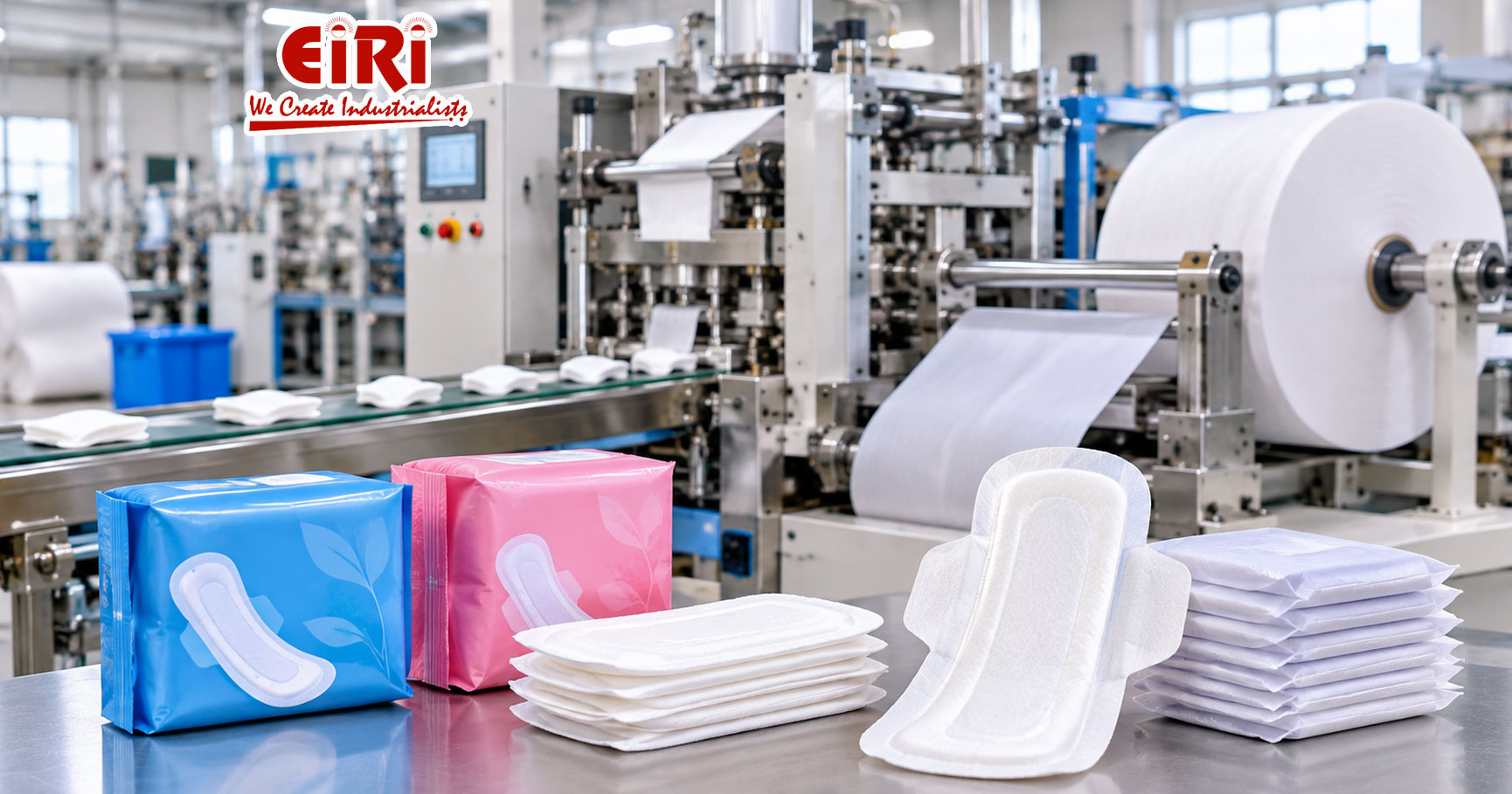
A napkin is a layered product. An absorbent core — made from fluff pulp, often with super-absorbent polymer (SAP) to hold more — is wrapped in a soft top layer that stays dry against the skin and a leak-proof back layer, with an adhesive strip for fixing. In manufacturing, the core is formed and shaped, the layers are brought together and sealed, the napkin is cut to shape, folded, and packed, with the whole process kept clean because it is a hygiene product. Units range from semi-automatic lines, where more of the work is done by hand, to fully automatic plants that form, assemble, cut and pack at higher speed.
The Machinery and the Scale Choice
The equipment follows the scale you choose. A semi-automatic setup uses separate steps and more labour, which keeps the entry cost lower and suits a local or programme-focused start. A fully automatic plant integrates core forming, assembly, sealing, cutting and packing into one faster line, which suits higher volumes and tighter, brand-grade consistency. Choosing between them is really a choice about your market: a local and institutional market can often be served well by a semi-automatic unit, while competing on retail shelves against established brands usually needs the consistency of an automatic line.
Raw Materials and Where the Cost Sits
The running cost sits mainly in the raw materials — the fluff pulp and the super-absorbent polymer that make up the core, plus the top sheet, back sheet, adhesive and packaging. Those material prices are the main thing moving your economics, so buying them well and holding quality are central. The other half of the challenge is not cost but market: shelf space and recognition are held by big brands, so a new maker usually does best by starting where that advantage matters least — institutional supply, government and NGO programmes, and affordable local distribution — and building from there.
Licences and Quality Standards
A sanitary napkin unit needs standard business and MSME registration, the relevant product quality standards for a hygiene product, and the usual local approvals; depending on scale, factory and pollution-control requirements apply. Because it is a personal-hygiene product, meeting the quality and safety standards is important for both compliance and trust, and it is often necessary to qualify for institutional and government programme supply. Requirements can change, so confirm the current standards and approvals that apply to your scale and market before you commit.
Understanding the Business Before You Invest
Getting the product right — the absorbency, the comfort, the quality — is what earns trust in a hygiene product, so it pays to understand the materials and process before you start. The handbook on feminine hygiene products, covering sanitary napkins goes through the materials, the manufacturing and the quality side as a practical reference. These products sit within the wider textiles and garments family, among its higher-growth, non-woven and hygiene opportunities.
What a Bankable Plan Needs
For a bank loan or a scheme application, your project needs to be written down clearly: the scale and whether you are going semi-automatic or automatic, the raw-material supply and cost, the quality standards and approvals, the building and power, working capital, and a realistic read on your market — which channel you are serving and why. The units that do well were honest about where they fit against the big brands and built the right market for their scale. That clear-eyed market plan is as important as the machinery.
Ready to Take the Next Step?
When you are ready to turn the idea into a real, financed project, EIRI can prepare a Detailed Project Report for your sanitary napkin unit — built around the scale, the semi-automatic or automatic route, and the market you have in mind, and in the form banks and scheme offices look for. Send us your requirement and we will come back with the scope and the next step.
On the costing and sourcing side, this sanitary napkin project profile is worth a look. It breaks the investment down from an entry-level local unit up to a full plant, shows the demand, and lists machinery and raw-material suppliers for fluff pulp, SAP and the rest, with ready DPR and CMA reports for a bank loan. For this product, where finding reliable material suppliers is half the battle, that directory next to the loan documents is a real head start.
Frequently Asked Questions
Is sanitary napkin manufacturing profitable?
Demand is steady and growing, helped by rising awareness and government and NGO distribution programmes, which creates room for affordable local and institutional supply alongside the big brands. Profitability depends on buying raw materials well, holding quality, and choosing the right market for your scale, since shelf space is held by established brands. It is a real opportunity for a maker who plans the market carefully.
How is a sanitary napkin made?
It is a layered product. An absorbent core of fluff pulp, often with super-absorbent polymer, is wrapped in a soft dry top layer and a leak-proof back layer, with an adhesive strip. In manufacturing, the core is formed, the layers are assembled and sealed, and the napkin is cut, folded and packed, with the process kept clean throughout because it is a hygiene product.
Should I choose a semi-automatic or fully automatic plant?
It depends on your market. A semi-automatic setup costs less to start and suits a local or programme-focused market. A fully automatic plant runs faster with tighter, brand-grade consistency and suits higher volumes and competing on retail shelves. Decide your market first, then pick the route that serves it, rather than the other way round.
What are the main raw materials for sanitary napkins?
The absorbent core uses fluff pulp and usually super-absorbent polymer (SAP), with a soft top sheet, a leak-proof back sheet, adhesive and packaging. These material prices are the main thing moving the economics, so buying them well and keeping quality steady are central to running the unit profitably.
How does a new brand compete with big companies?
Usually by starting where the big brands' advantage matters least — institutional supply, government and NGO programmes, and affordable local distribution — rather than fighting for retail shelf space straight away. Good, consistent quality and a reliable regional presence build the base from which a new maker can grow.