
Green Energy & Clean-Tech Manufacturing: The Next Industrial Revolution







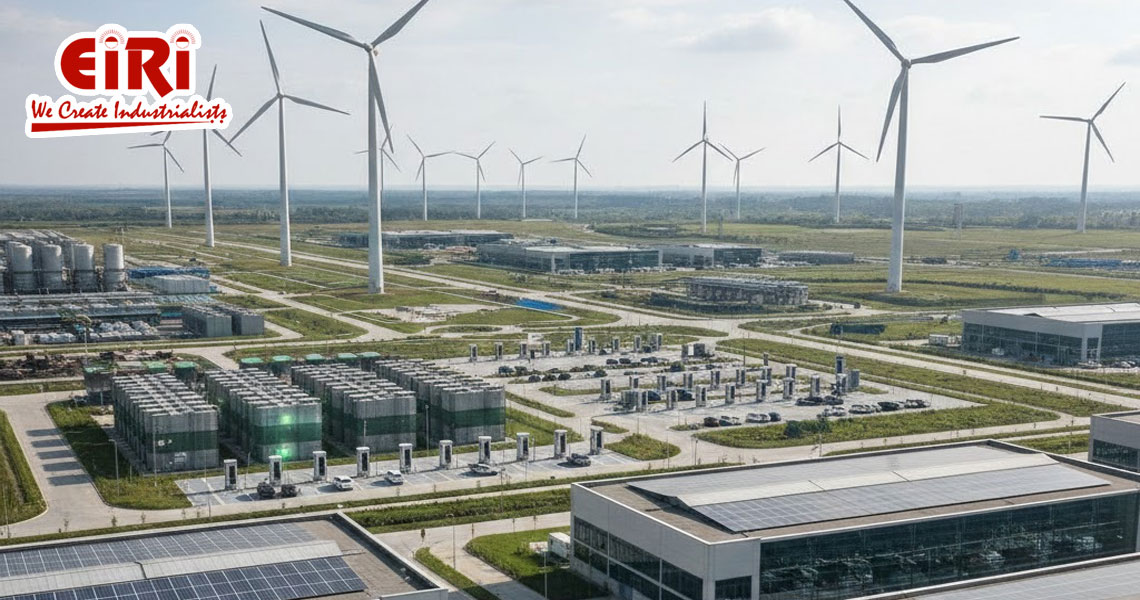
The global economy is entering a new industrial phase where energy systems, manufacturing models, and environmental responsibility are becoming deeply interconnected. Green energy and clean-tech manufacturing are no longer niche sectors driven only by environmental concerns; they are now central pillars of national development strategies, industrial planning, and long-term economic security. Countries across the world are restructuring their energy and manufacturing ecosystems to reduce carbon dependence, strengthen energy independence, and build sustainable industrial capacity.
Unlike earlier industrial revolutions that were driven mainly by productivity and cost efficiency, this transition is driven by survival economics, climate risk management, and long-term resource sustainability. The result is a new manufacturing economy where clean energy technologies, sustainable materials, and low-carbon production systems form the backbone of future industries. Green energy manufacturing is not just about power generation equipment; it is about building a complete industrial ecosystem that supports renewable power, clean mobility, energy storage, waste-to-energy systems, and circular resource use.
This shift is creating a long-term structural transformation in how factories are built, how supply chains operate, and how investments flow into industrial sectors. Green energy and clean-tech manufacturing is becoming one of the most stable, long-duration growth industries of the modern era.
Industry Scope
The transition toward renewable energy is no longer optional—it is becoming mandatory for governments, industries, and consumers. Climate change pressures, environmental regulations, global agreements on carbon reduction, and rising public awareness have pushed clean energy from policy discussions into real industrial execution. What once existed as pilot projects and experimental technologies has now become mainstream infrastructure planning.
Manufacturing linked to clean energy systems is expected to grow continuously for the next 20–30 years. This growth is not driven by short-term trends but by structural changes in how societies produce and consume energy. Traditional fossil fuel systems are gradually being replaced by renewable electricity, distributed energy generation, storage technologies, and low-emission fuel systems. This creates permanent demand for clean-tech manufacturing capacity.
The industry scope is extremely wide. It includes solar components such as photovoltaic cells, modules, mounting structures, cables, connectors, and power electronics. It includes battery systems for mobility, grid storage, and industrial backup power. It includes EV infrastructure such as charging stations, power management systems, connectors, cooling systems, and software-integrated hardware. It also includes bio-energy equipment like biogas digesters, biomass processing units, gas purification systems, and waste-to-energy plants. Hydrogen-related technologies, including electrolyzers, storage tanks, compression systems, pipelines, and fuel cell components, are emerging as a new industrial category within clean-tech manufacturing.
This manufacturing ecosystem is not limited to large factories. It includes raw material processing, component manufacturing, assembly units, testing labs, integration facilities, and recycling operations. From silicon processing for solar cells to lithium processing for batteries, from copper wiring to power electronics, the clean-tech sector connects mining, chemicals, metallurgy, electronics, mechanical engineering, automation, and digital technologies into one integrated industrial chain.
The scope also includes services that are tightly linked with manufacturing, such as system integration, installation engineering, maintenance services, refurbishment operations, and performance optimization. This creates a hybrid industry where manufacturing and services grow together, making the sector more resilient and diversified.
Manufacturing Opportunities
Green energy and clean-tech manufacturing offers one of the broadest opportunity landscapes of any industrial sector today. It supports multiple scalable manufacturing verticals, allowing entry at different investment levels, technical capacities, and business models. This flexibility makes it suitable for both large industrial groups and small entrepreneurs.
- Solar manufacturing remains one of the strongest pillars of the sector. Opportunities exist not only in module production but also in cell manufacturing, wafer processing, glass manufacturing, aluminum frames, junction boxes, and inverter systems. Power electronics for solar systems, such as controllers, transformers, and grid-synchronization devices, form a high-value manufacturing segment with strong demand growth.
- Battery manufacturing is another core opportunity area. Lithium-ion battery packs, battery management systems, thermal management components, casing systems, connectors, and charging modules form a complete manufacturing ecosystem. Beyond production, battery recycling units are emerging as a major industrial opportunity, driven by raw material recovery, environmental regulations, and supply chain security. Recycling operations create a circular economy model where materials like lithium, cobalt, nickel, and copper are recovered and reused, reducing import dependency and environmental impact.
- EV infrastructure manufacturing is expanding rapidly as electric mobility adoption increases. Manufacturing opportunities include EV charging hardware, fast chargers, connectors, cooling systems, enclosures, power distribution units, smart metering systems, and energy management hardware. This segment also supports MSME-level manufacturing through component production, metal fabrication, electronics assembly, and enclosure manufacturing.
- Bio-energy manufacturing offers opportunities in biogas digesters, biomass processing units, gas purification systems, compression units, storage tanks, and energy conversion systems. These technologies are especially relevant for rural industries, agricultural waste management, and decentralized energy systems. Small-scale manufacturing units can serve local energy needs while building scalable business models.
- Green hydrogen technologies are emerging as a future industrial category with high long-term potential. Manufacturing opportunities include electrolyzers, hydrogen storage systems, compression units, piping systems, safety equipment, and fuel cell components. While this segment is still in early growth stages, it represents one of the most future-oriented manufacturing opportunities in clean-tech.
- Energy storage systems beyond batteries, such as thermal storage, compressed air systems, and hybrid storage technologies, are also gaining importance. Manufacturing of energy storage containers, control systems, insulation materials, and integration hardware forms a new industrial segment that supports grid stability and renewable integration.
What makes this sector unique is its compatibility with both large-scale plants and MSME-level component manufacturing. Large factories can handle cell manufacturing, module production, battery pack assembly, and electrolyzer systems, while small units can focus on components, enclosures, wiring systems, control panels, mounting structures, and integration hardware. This creates a layered industrial ecosystem where different scales of businesses coexist and grow together.
Current Market Scenario & Future Growth Outlook
Green energy and clean-tech manufacturing today represents one of the most diverse and rapidly expanding industrial product ecosystems in the global economy. The product landscape spans across renewable power generation, energy storage, clean mobility, bio-energy, and next-generation fuel systems. Solar manufacturing includes photovoltaic modules, cells, wafers, glass, frames, mounting structures, inverters, charge controllers, and power electronics that together form complete solar energy systems. Battery manufacturing covers lithium-ion battery packs, battery management systems, thermal control units, and energy storage containers used in electric vehicles, industrial backup power, and grid balancing. EV infrastructure products such as charging stations, fast chargers, connectors, control panels, and power cabinets are becoming standard components of urban and highway infrastructure. Bio-energy products like biogas plants, digesters, gas purification systems, and biomass processing equipment support decentralized energy generation and waste-to-energy conversion. Emerging technologies such as green hydrogen electrolyzers, storage systems, compressors, pipelines, and fuel cell components are forming a new industrial category that will define future clean energy supply chains. Together, these products create an integrated manufacturing ecosystem where energy generation, storage, distribution, and consumption technologies are structurally connected.
The current market scenario reflects a strong and accelerating transition toward clean energy systems across residential, commercial, industrial, and infrastructure sectors. Renewable power projects are expanding rapidly in both urban and rural regions, supported by government policies, private investment, and rising demand for clean electricity. Solar installations are growing across rooftops, industrial parks, commercial complexes, and utility-scale power plants, creating sustained demand for manufacturing of panels, inverters, structures, and balance-of-system components. Electric vehicle adoption is increasing steadily, which is directly driving the expansion of EV charging infrastructure and battery manufacturing capacity. Energy storage deployment is rising across grids, commercial facilities, and data centers to ensure power stability and reliability. Industrial users are increasingly shifting toward clean power sources to reduce operating costs, comply with environmental regulations, and improve long-term sustainability. At the same time, bio-energy and waste-to-energy projects are gaining momentum as solutions for agricultural waste management and urban waste processing. Green hydrogen is entering the market through pilot projects, research facilities, and early-stage industrial adoption, signaling the beginning of a new clean fuel economy. Overall, the market is moving from experimentation to large-scale deployment, making clean-tech manufacturing a core industrial activity rather than an alternative sector.
- Rapid expansion of renewable power projects across urban and rural regions
- Strong demand for solar power plants, rooftop systems, and commercial installations
- Fast growth in electric vehicle adoption driving EV infrastructure demand
- Increasing deployment of battery storage for grid stability and backup power
- Rising industrial demand for energy efficiency and clean power systems
- Growing investments in green hydrogen pilot projects and infrastructure
- Expansion of waste-to-energy and bio-energy projects in agriculture and cities
- Government-driven push for domestic manufacturing and supply chain localization
- Rising private sector investments in clean-tech startups and manufacturing
- Growing role of MSMEs in component manufacturing and system integration
The future growth outlook of green energy and clean-tech manufacturing is structurally strong and long-term in nature. The global shift from fossil fuels to renewable energy systems is irreversible, driven by climate commitments, carbon neutrality targets, and economic necessity. Electrification of transport, logistics, manufacturing, and urban infrastructure will continue to increase demand for clean power generation, energy storage, and charging systems. Energy storage will become as critical as energy generation itself, creating massive long-term demand for batteries, storage systems, and grid stabilization technologies. Green hydrogen is expected to evolve from pilot projects into large-scale industrial fuel systems for heavy industry, transport, and power generation, opening new manufacturing ecosystems. Circular economy models based on recycling, reuse, and sustainable resource management will expand, creating parallel growth in recycling and recovery manufacturing. Smart grids, digital energy management systems, and AI-driven power optimization will further integrate technology with clean energy infrastructure. As manufacturing hubs develop and export markets grow, clean-tech manufacturing will transform into a global industrial backbone rather than a regional opportunity. This growth will not follow economic cycles or short-term market fluctuations; it will follow long-term structural demand, making green energy manufacturing one of the most future-proof industrial sectors of the modern economy.
Why It’s Future-Proof
Clean energy and clean-tech manufacturing is not a trend-driven industry; it is a structural transformation industry. Energy transition policies across the world are designed for long-term implementation, not short political cycles. Carbon neutrality targets, environmental compliance frameworks, and emission reduction commitments create permanent demand for clean technologies.
Rising fossil fuel costs make renewable energy economically competitive, not just environmentally attractive. As fuel price volatility increases, industries and governments seek stable, predictable energy sources. Renewable energy systems offer long-term cost stability, which directly supports long-term manufacturing demand for clean-tech equipment.
The electrification of transport and industries further strengthens this future-proof structure. Electric vehicles, electric industrial machinery, electric heating systems, and electric logistics infrastructure all depend on clean energy generation and storage systems. This creates interconnected demand across multiple sectors, reinforcing the growth stability of clean-tech manufacturing.
Unlike cyclical industries that depend on consumer trends or economic cycles, clean energy manufacturing is driven by infrastructure development and policy commitments. Power plants, grids, storage systems, and transport infrastructure require continuous manufacturing support for decades. This creates predictable, long-duration demand rather than short-term market spikes.
Clean energy manufacturing will not be cyclical; it will be structural growth. It will evolve in technology, efficiency, and design, but the core demand will remain constant. As technologies improve, older systems will require upgrades, replacements, and modernization, creating continuous manufacturing cycles without demand collapse.
The sector also benefits from risk diversification. Solar, wind, storage, bio-energy, hydrogen, EVs, and grid systems form multiple parallel demand streams. Even if one segment slows temporarily, others continue growing. This multi-vertical structure reduces business risk and improves long-term stability.
Industrial and Economic Impact
Green energy manufacturing is not just an environmental solution; it is an industrial development strategy. It creates domestic manufacturing capacity, reduces energy imports, strengthens supply chains, and builds technological self-reliance. Countries that invest early in clean-tech manufacturing develop long-term competitive advantages in global markets.
This sector also creates employment across skill levels. Engineers, technicians, machine operators, electricians, welders, assemblers, quality inspectors, logistics workers, and service engineers all become part of the clean-tech industrial workforce. This broad employment base makes the industry socially sustainable as well as economically viable.
Clean-tech manufacturing supports regional industrial development by enabling decentralized production models. Manufacturing clusters can develop near renewable energy hubs, industrial corridors, and logistics centers. This reduces urban concentration and supports balanced economic growth.
The integration of digital technologies such as automation, AI-based monitoring, smart manufacturing systems, and data analytics further strengthens productivity and quality in clean-tech manufacturing. This creates a modern industrial ecosystem where sustainability and technology grow together.
Long-Term Business Sustainability
From an entrepreneurial perspective, green energy and clean-tech manufacturing offers rare long-term stability. The sector is supported by policy frameworks, financial incentives, institutional funding, and infrastructure investments. This creates lower regulatory risk and higher long-term predictability compared to conventional industries.
Business models in this sector are also evolving beyond product sales. Manufacturing companies increasingly offer integrated solutions that include installation, maintenance, performance monitoring, and lifecycle services. This creates recurring revenue models instead of one-time sales structures.
The shift toward circular economy models further strengthens business sustainability. Recycling, refurbishing, and re-manufacturing systems create additional revenue streams while reducing raw material dependency. This makes businesses more resilient to supply chain disruptions and price volatility.
Conclusion
Green energy and clean-tech manufacturing is not just a sector; it is the foundation of the future industrial economy. It connects energy security, environmental responsibility, industrial growth, and technological innovation into one integrated system. The scale of transformation is comparable to earlier industrial revolutions, but its impact is broader because it reshapes not only industries but also societies and ecosystems.
For investors, entrepreneurs, manufacturers, and policymakers, this sector represents long-term value creation rather than short-term profit cycles. Its growth is driven by necessity, not luxury. Its demand is created by structural change, not consumer fashion. Its relevance will increase with time, not decline.
As the world moves toward cleaner energy systems, sustainable infrastructure, and low-carbon economies, clean-tech manufacturing will become one of the most stable and powerful industrial engines of the 21st century. It is not simply the future of energy - it is the future of manufacturing itself.