
The Beverage Industry: From Traditional Fermentation to Advanced Processing Technologies









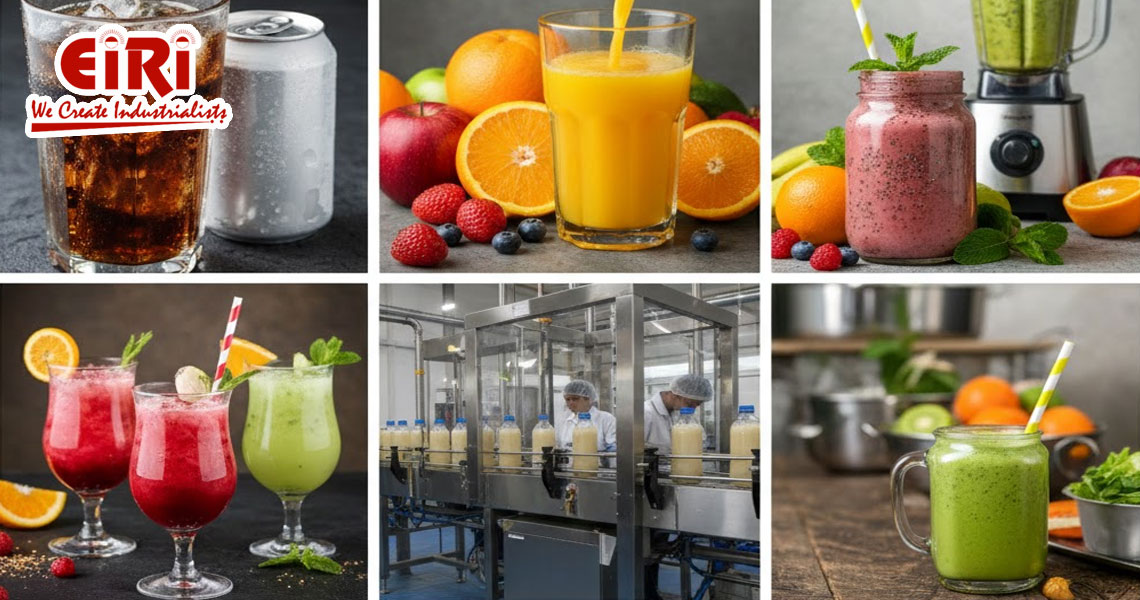
The beverage industry represents one of the most diverse and technologically intensive segments of the global food and agro-processing sector. It spans non-alcoholic functional drinks, fruit juices, carbonated beverages, fermented products, distilled spirits, and emerging low- and zero-alcohol alternatives. Modern beverage manufacturing integrates food science, microbiology, chemical engineering, process automation, regulatory compliance, and plant economics. Consumer expectations related to taste, safety, nutrition, convenience, and brand differentiation continue to reshape beverage formulations and production technologies.
Evolution of Beverage Consumption and Market Dynamics
Beverage consumption patterns have shifted significantly over the last two decades. Functional drinks, fermented beverages, non-alcoholic beers, alcohol-free wines, mocktails, smoothies, and fortified juices are increasingly replacing conventional sugary drinks and high-alcohol products. Digital platforms have accelerated market penetration by enabling targeted marketing, subscription-based delivery, and rapid feedback-driven product innovation. At the same time, alcoholic beverages continue to maintain strong demand, particularly premium spirits, craft beers, and region-specific liquors, driven by urbanization, rising disposable incomes, and lifestyle branding.
Balancing perceived health benefits with risks has become central to beverage positioning. While fermented beverages contribute functional metabolites and sensory complexity, excessive alcohol intake presents health concerns, leading to regulatory interventions and demand for moderation-focused alternatives.
Regulatory Framework and Licensing in Beverage Manufacturing
Beverage production is a highly regulated activity requiring multiple statutory approvals. Food safety licensing governs hygiene, ingredient compliance, labeling, and traceability. Trade and establishment registrations regulate commercial operations, while fire safety, pollution control, and infrastructure approvals ensure environmental and occupational compliance. Alcoholic beverage plants further require excise licenses, bonded warehousing permissions, and strict tax registrations. Regulatory compliance is no longer merely procedural; it directly influences plant design, capital investment, and operational scalability.
Carbonated Beverages and Carbonation Technology
Carbonated beverages rely on controlled dissolution of carbon dioxide to impart effervescence, mouthfeel, and preservation benefits. Carbonation affects flavor perception, acidity balance, and product stability. However, health discussions around obesity, dental erosion, and bone health have driven reformulation strategies focusing on alternative sweeteners, acid regulation, and functional ingredient incorporation.
Ingredients in carbonated beverages include sweeteners, carbon dioxide, acids, flavors, colors, emulsifiers, stabilizers, and foaming agents. The manufacturing process typically involves syrup preparation, precise blending, carbonation under pressure, and hygienic filling. Carbonated water itself serves as a base for flavored beverages, mixers, and functional formulations. Measurement and control of carbonation levels are achieved through carbonation determination techniques and specialized carbonators designed for consistent gas absorption.
Flavourings, Emulsions, and Sensory Engineering
Flavor technology plays a pivotal role in beverage differentiation. Emulsion technology enables the stable dispersion of oil-based flavors in aqueous systems, critical for citrus drinks, colas, and flavored alcoholic beverages. Emulsions are classified based on phase distribution and are produced using mechanical, thermal, or chemical methods. Stability depends on emulsifier selection, stabilizer interaction, oil type, pH, mineral presence, and thermal treatment.
Flavorings may be derived from natural extracts, true fruit sources, fermentation-based compounds, or formulated imitations. Legislative frameworks govern permissible flavoring substances and labeling claims. Flavor development increasingly integrates microbial starter cultures, fermentation biochemistry, and advanced extraction methods such as solid-phase extraction, steam distillation, supercritical fluid extraction, and microwave-assisted extraction. Sensory analysis and volatile profiling remain essential tools for flavor validation and quality control.
Fruit Juice Processing and Preservation Technologies
Fruit juice processing represents a core segment of the non-alcoholic beverage industry. Technologies vary depending on fruit type, desired clarity, shelf life, and packaging format. Grape juice processing involves cultivar selection, carbohydrate and acid management, phenolic stabilization, and volatile retention. Modern processing emphasizes controlled heating, enzymatic clarification, filtration, blending, sterilization, and aseptic filling.
Citrus fruit processing is characterized by large-scale operations focused on juice extraction, oil recovery, aroma preservation, concentration, and pasteurization. Equipment such as extractors, finishers, evaporators, homogenizers, and deaerators are integrated into automated processing lines. By-products such as citrus peel, pulp, and seeds are increasingly valorized through animal feed, oil extraction, and functional ingredient production.
Apple juice technology demonstrates the diversity of juice processing pathways, including cloudy and clear juice production, ultrafiltration, enzyme treatment, blending, and concentrate manufacturing. Apple pomace utilization for ethanol, pectin, microbial pigments, and organic acids highlights the circular economy approach within beverage processing.
Smoothies, Mocktails, and Ready-to-Serve Innovations
Smoothies and mocktails represent high-growth categories driven by convenience, customization, and experiential consumption. Smoothie manufacturing focuses on ingredient compatibility, texture stability, microbial safety, and cold-chain preservation. Fruit combinations such as mango, pineapple, coconut, berries, greens, and nut-based formulations require controlled blending, pasteurization, and packaging.
Mocktails replicate complex cocktail profiles using non-alcoholic bases, carbonation, botanical extracts, spices, syrups, and fruit juices. Equipment requirements include blenders, chillers, carbonators, and hygienic dispensing systems. Service presentation and sensory balance are critical success factors in both commercial and hospitality environments.
Tropical Fruit Juices and Specialized Processing Lines
Tropical fruits such as mango, guava, pineapple, passion fruit, banana, papaya, kiwi, acerola, and lulo offer high nutritional value and processing complexity. Juice production involves sorting, washing, disintegration, enzyme treatment, extraction, clarification, deaeration, sterilization, and filling. Each fruit presents unique challenges related to viscosity, fiber content, enzymatic browning, and aroma retention.
Advanced processing lines integrate peeling, crushing, pulping, evaporation, sterilization, and aseptic packaging. Whey-based fruit beverages illustrate cross-industry integration between dairy and fruit processing. Equipment selection and process control directly impact yield, flavor integrity, and product consistency.
Alcoholic Beverage Manufacturing: From Fermentation to Distillation
Alcoholic beverage production remains rooted in fermentation science while incorporating advanced engineering controls. Whisky manufacturing involves malted and unmalted cereals, mashing, fermentation, distillation, maturation, blending, and bottling. Organoleptically important compounds such as esters, aldehydes, phenols, and alcohols define sensory character and are influenced by raw materials, yeast metabolism, distillation techniques, and aging conditions.
Beer production encompasses malting, brewing, hopping, fermentation, maturation, carbonation, filtration, and packaging. Different fermentation regimes and yeast strains produce distinct beer styles, while quality control addresses defects such as oxidation, diacetyl formation, and microbial spoilage. Craft beer and microbrewery segments emphasize flexibility, flavor diversity, and local identity.
Vodka and rum manufacturing rely on high-purity fermentation substrates, multiple distillation stages, rectification, dilution, and filtration. Flavoring methods range from natural infusions to extract blending. Rum production incorporates terroir, aging, blending, and complex chemical transformations during maturation.
Wine production integrates grape chemistry, alcoholic and malolactic fermentation, clarification, stabilization, and bottling. Special wine categories such as sparkling, rosé, and dessert wines require precise control of fermentation dynamics and carbonation.
Microbreweries and Small-Scale Beverage Systems
Microbrewery technology bridges artisanal brewing with industrial reliability. Systems range from pub-scale installations to automated regional plants. Stainless steel fermenters, brewhouses, packaging lines, and quality monitoring systems form the backbone of modern microbreweries. Considerations before establishment include location, licensing, water quality, energy use, waste management, and brand positioning.
Bottling, RTD Systems, and Country Liquor Technologies
Liquor bottling plants focus on blending, filtration, filling, labeling, and packaging under excise supervision. Ready-to-drink systems integrate flavoring, carbonation, and alcohol dosing into standardized products. Country liquor production emphasizes controlled fermentation, distillation, maturation, and safe bottling practices while adhering to regulatory norms.
Sugarcane Juice Processing and Aseptic Packaging
Sugarcane juice processing presents unique challenges due to rapid enzymatic deterioration and microbial growth. Modern plants incorporate clarification, filtration, pasteurization, and aseptic packaging to extend shelf life while preserving sensory quality. Aseptic systems combine sterile processing with sterile packaging, enabling ambient storage without preservatives.
Plant Economics and Investment Considerations
Plant economics play a decisive role in beverage project viability. Capital investment includes land, buildings, machinery, utilities, and compliance infrastructure. Working capital supports raw material procurement, labor, utilities, and inventory cycles. Turnover projections depend on capacity utilization, product mix, pricing strategy, and market access.
Economic models vary across liquor bottling plants, craft beer units, mineral water facilities, fruit juice plants, ENA production units, and specialized beverage lines. Scale, automation level, regulatory burden, and distribution networks significantly influence profitability and risk profiles.
The Future of the Beverage Industry in India
India’s beverage industry is entering a decisive growth phase shaped by rapid urbanization, rising disposable incomes, changing dietary habits, and strong policy-driven formalization of food processing. The convergence of advanced technology, increasing health awareness, sustainability imperatives, and demand for experiential consumption is particularly pronounced in the Indian context, where a young population, diverse agricultural base, and expanding retail infrastructure create unique opportunities across both alcoholic and non-alcoholic segments.
Technology as a Growth Enabler in the Indian Beverage Sector
Technological advancement is transforming beverage manufacturing in India from small-scale, manual operations to automated, quality-driven production systems. Innovations in fermentation science are enabling consistent production of beers, wines, kombucha, malt beverages, and low-alcohol alternatives despite climatic variations. Flavor engineering and emulsion technology allow manufacturers to use indigenous fruits, spices, herbs, and botanicals while achieving global sensory standards. Aseptic processing and packaging technologies are becoming critical as Indian consumers increasingly prefer shelf-stable products without heavy preservatives, particularly in fruit juices, sugarcane juice, smoothies, and functional beverages.
Digital manufacturing and data-driven quality control are also gaining traction, especially among mid-sized and emerging brands. Smart sensors, batch traceability systems, and automated filling lines help meet FSSAI compliance, reduce wastage, and improve scalability. For Indian entrepreneurs, early investment in modular and upgradeable technology can significantly lower long-term operational risk and support faster market expansion.
Health Awareness Driving Product Innovation
Health consciousness is one of the strongest demand drivers in India’s beverage market. Urban consumers are actively reducing sugar intake, artificial additives, and high alcohol consumption, leading to increased demand for functional drinks, fortified juices, probiotic beverages, non-alcoholic malt drinks, and zero-alcohol beers. Traditional Indian preferences for natural ingredients such as coconut water, fruit pulps, fermented drinks, and herbal infusions are now being reintroduced through modern processing and packaging formats.
This shift presents a major opportunity for entrepreneurs to innovate around nutrition-led beverages using locally available raw materials such as mango, guava, banana, citrus fruits, millets, sugarcane, and dairy by-products. However, success depends on balancing health claims with sensory appeal, regulatory compliance, and price sensitivity. Products positioned as “better-for-you” rather than “medicinal” tend to gain faster consumer acceptance in the Indian market.
Sustainability and Resource Optimization in Beverage Manufacturing
Sustainability is transitioning from a marketing concept to an operational necessity in India. Beverage plants are increasingly evaluated on water usage efficiency, energy consumption, waste management, and by-product utilization. Given India’s water stress and environmental regulations, technologies such as water recycling, energy-efficient evaporators, waste heat recovery, and effluent treatment systems are becoming integral to plant design.
The utilization of by-products such as fruit pomace, citrus peels, spent grains, and fermentation residues offers both environmental and economic advantages. These materials can be converted into animal feed, bioactive compounds, organic acids, pectin, or even ethanol, improving overall plant economics. Entrepreneurs who integrate by-product valorization into their business models can improve margins while aligning with government incentives under food processing and waste reduction schemes.
Experiential Consumption and Premiumization Trends
Indian consumers, particularly in urban and semi-urban regions, are increasingly seeking experiences rather than just products. This trend is evident in the rise of craft beers, artisanal spirits, premium juices, mocktails, and ready-to-serve beverages with distinctive flavor profiles. Microbreweries, tasting rooms, and branded beverage experiences are gaining popularity, supported by evolving state-level excise policies and hospitality sector growth.
For beverage entrepreneurs, experiential consumption translates into opportunities for strong branding, storytelling, and regional identity. Leveraging local fruit varieties, traditional fermentation knowledge, and cultural flavor preferences can help differentiate products in a crowded market. However, experiential offerings must be backed by consistent quality and scalable production to sustain long-term growth beyond niche markets.
Market Opportunities and Strategic Focus Areas
Market trends in India indicate robust growth in packaged fruit juices, nectar and RTS beverages, non-alcoholic malt drinks, functional beverages, and premium alcoholic products such as craft beer, whisky, rum, and flavored vodkas. Organized retail, quick-commerce platforms, and direct-to-consumer channels are expanding reach beyond metros into Tier II and Tier III cities, significantly increasing addressable markets.
Entrepreneurs entering this space should carefully evaluate product selection, capacity planning, and distribution strategies. Starting with focused product lines, adopting flexible processing systems, and ensuring compliance with food safety and excise regulations can reduce entry barriers. Collaboration with contract manufacturers, cold-chain partners, and ingredient suppliers can further accelerate market entry while managing capital investment.
Positioning for Long-Term Success
The Indian beverage industry rewards entrepreneurs who combine technical understanding with market insight. Knowledge of processing fundamentals such as fermentation control, flavor stability, carbonation, pasteurization, and aseptic filling is as important as understanding consumer behavior, pricing sensitivity, and regulatory frameworks. Long-term success will depend on the ability to innovate continuously, scale responsibly, and adapt to evolving consumer expectations.
In this evolving landscape, beverage ventures that integrate technology-driven efficiency, health-oriented product design, sustainable operations, and strong brand narratives are best positioned to succeed. India’s vast agricultural diversity and growing consumer base offer unparalleled potential, but capturing this opportunity requires disciplined execution, regulatory awareness, and a clear vision for growth.
The future of the beverage industry lies in convergence between technology, health awareness, sustainability, and experiential consumption. Innovations in fermentation science, flavor engineering, aseptic processing, and digital manufacturing are reshaping product portfolios. Market trends indicate strong growth in packaged fruit juices, non-alcoholic malt beverages, craft alcohol, and functional drinks. Entrepreneurs and technologists who understand both processing fundamentals and market economics are best positioned to succeed in this evolving landscape.