
Manufacturing Artificial Diamonds for Jewelry - A Detailed Industry Guide for Entrepreneurs










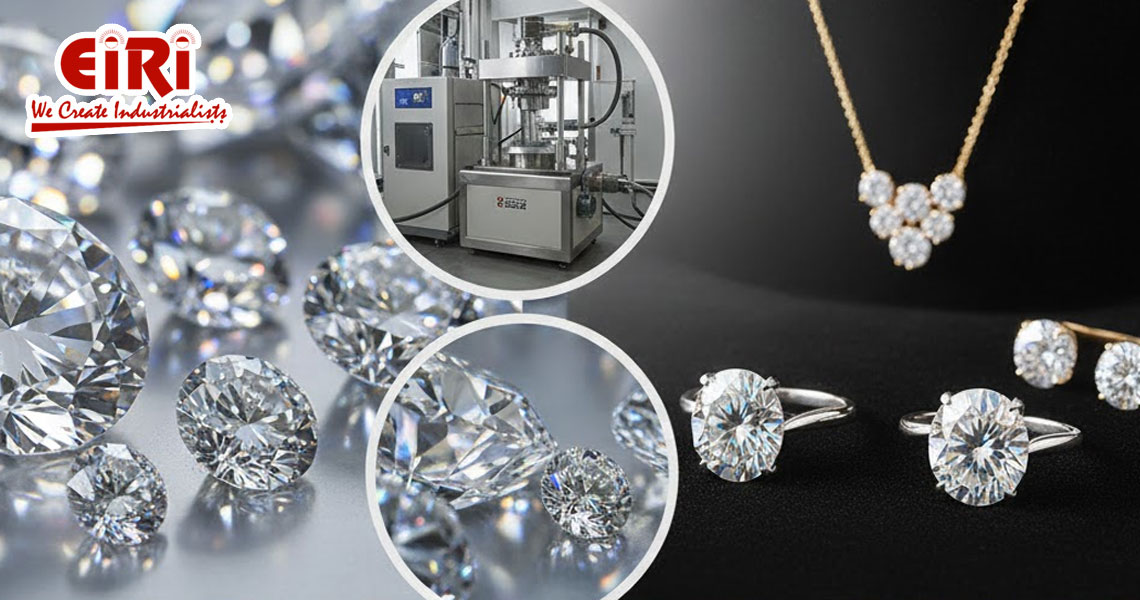
Artificial diamonds - commonly referred to as synthetic diamonds, lab-grown diamonds (LGDs), cultured diamonds, or man-made diamonds—are chemically and physically identical to natural diamonds but are produced through advanced technological processes rather than geological formation. These diamonds exhibit the same crystal structure, hardness, brilliance, and optical behavior as mined diamonds, yet they can be created within a controlled environment in a matter of weeks instead of forming over millions of years beneath the Earth’s surface.
Over the past decade, synthetic diamonds have emerged as one of the most disruptive innovations in the global jewelry industry. What began as a niche technological experiment has now evolved into a scalable industrial sector with strong commercial acceptance. For industrialists, technologists, and experienced jewelry manufacturers, artificial diamond production represents a convergence of materials science, precision engineering, and changing consumer preferences. This guide focuses on the industry structure, manufacturing realities, and strategic considerations relevant to entrepreneurs aiming to enter this sector at a serious manufacturing scale.
Why Artificial Diamonds Matter Today
The global synthetic diamond industry has experienced sustained growth across both jewelry and industrial applications. Market projections indicate that the overall synthetic diamond market is expected to grow from approximately USD 27.2 billion in 2025 to nearly USD 44.8 billion by 2035, reflecting a compound annual growth rate exceeding five percent. Within this broader market, the jewelry-focused segment is expanding even more rapidly, with forecasts suggesting growth from about USD 2.57 billion in 2025 to more than USD 13 billion by 2035, driven by double-digit annual growth rates.
This expansion is closely linked to structural changes in consumer demand. Increasing awareness around ethical sourcing, environmental impact, and supply chain transparency has shifted preferences toward alternatives to mined diamonds. Younger consumers, in particular, show strong acceptance of lab-grown diamonds due to their lower cost, traceability, and reduced ecological footprint. These factors have repositioned synthetic diamonds from being a substitute product to a category of choice in their own right.
Industry adoption trends further reinforce this shift. Lab-grown diamonds now account for a meaningful share of engagement ring sales in key markets such as the United States, reflecting growing mainstream acceptance. Advances in production technologies, especially Chemical Vapor Deposition (CVD), have significantly reduced manufacturing costs over the past two decades, making lab-grown diamonds commercially viable for everyday and mid-range jewelry. Established diamond industry players have responded by adjusting pricing strategies and product positioning, acknowledging that lab-grown diamonds are reshaping long-held assumptions about rarity and value. Together, these developments indicate that synthetic diamonds represent a structural transformation in how fine gemstones are produced, priced, and consumed.
Understanding the Manufacturing Processes
Artificial diamonds intended for jewelry are produced using high-technology manufacturing methods that recreate the conditions required for diamond crystal formation. Two industrial processes dominate commercial production: High-Pressure High-Temperature (HPHT) synthesis and Chemical Vapor Deposition (CVD). Each method has distinct technical characteristics, cost structures, and suitability for different product profiles.
The HPHT process replicates the extreme pressure and temperature conditions found deep within the Earth’s mantle. In this method, small diamond seed crystals are placed inside large industrial presses capable of generating pressures exceeding 870,000 pounds per square inch and temperatures in the range of 1300 to 1600 degrees Celsius. Carbon, usually in the form of graphite, dissolves into a molten metal catalyst such as iron or nickel and then crystallizes onto the diamond seed. The resulting diamonds are structurally robust and suitable for jewelry, particularly in smaller sizes. HPHT technology is well established and can offer relatively lower production costs per carat at industrial scale, although it requires heavy capital equipment, high energy consumption, and skilled technical teams.
Chemical Vapor Deposition has become the preferred method for producing high-quality, gem-grade diamonds, especially larger and more color-controlled stones. In the CVD process, a vacuum chamber is filled with a controlled mixture of carbon-rich gases, typically methane and hydrogen. These gases are energized using microwaves, hot filament systems, or plasma, breaking molecular bonds and allowing carbon atoms to deposit layer by layer onto a diamond seed substrate. Growth continues until the desired thickness and carat weight are achieved. CVD offers superior control over purity, crystal structure, and scalability, making it adaptable to a wide range of production capacities. However, it demands precise gas control systems and often requires post-growth treatments to improve color and clarity.
Production timelines vary depending on the method and quality specifications, with a one-carat diamond taking anywhere from several days to a few weeks to grow. Once growth is complete, rough diamonds undergo cutting, polishing, grading, and finishing. Although significant material loss occurs during cutting, the transformation adds substantial commercial value. As a result, diamond manufacturing must be understood as an integrated industrial process involving crystal growth, material handling, precision finishing, quality control, and certification.
Industrial Supply Chain Overview
At an industrial scale, artificial diamond manufacturing depends on a tightly integrated supply chain. Core inputs include diamond seed crystals that act as nucleation points, carbon sources such as graphite or methane gas, and process gases like hydrogen for CVD systems. A reliable and cost-effective energy supply is critical, as electricity consumption represents a major component of operating costs. The heart of the facility consists of reactor systems—either HPHT presses or CVD chambers—supported by sophisticated monitoring and control equipment to manage temperature, pressure, and gas composition. Downstream operations require cutting and polishing facilities capable of converting rough stones into finished gems suitable for the jewelry market.
Quality assurance and certification are essential for commercial success. Lab-grown diamonds intended for jewelry must be graded by recognized gemological laboratories to achieve market acceptance and premium pricing. Certification reports document cut, clarity, color, carat weight, and laboratory origin. Many manufacturers also use laser inscriptions linked to certification numbers to enhance traceability and trust within the supply chain.
Market Structure and Competitive Landscape
The global synthetic diamond industry is dominated by companies with significant technological expertise and financial capacity. Leading players include both long-established diamond industry groups and specialized technology-driven firms. These companies invest heavily in research and development to improve crystal quality, reduce production costs, and scale output efficiently. Their competitive advantage lies in proprietary processes, operational know-how, and the ability to maintain consistent quality at volume.
Production is geographically concentrated in regions offering favorable industrial ecosystems. The Asia-Pacific region accounts for a large share of global output, with China and India emerging as major manufacturing hubs due to cost advantages, skilled labor availability, and established gemstone value chains. The United States and Europe remain important centers for high-end production, advanced process control, and premium quality assurance, reflecting strengths in technology development and regulatory standards.
Entry and Operational Considerations for Entrepreneurs
Establishing an artificial diamond manufacturing venture requires careful planning and long-term commitment. Capital intensity is a defining characteristic of the industry. HPHT presses and CVD reactors can cost from several hundred thousand to multiple millions of dollars per unit, depending on capacity, automation, and quality targets. Facilities must be designed to handle high energy loads, safety systems, and controlled environmental conditions, often necessitating substantial upfront investment and external financing or strategic partnerships.
Access to technology and intellectual property is another critical factor. Many advanced production techniques are protected by patents or proprietary knowledge. Entrepreneurs may choose to license proven technologies, collaborate with research institutions, or develop in-house capabilities through sustained R&D investment. In certain regions, government incentives for advanced manufacturing, clean technology, or high-value exports can partially offset development costs.
A skilled workforce underpins operational success. Engineers, materials scientists, and experienced technicians are required to manage reactor operations, plasma and gas systems, crystal growth optimization, and defect analysis. Continuous research and process improvement are essential to maintain competitiveness, optimize energy usage, and improve yield and quality.
Regulatory and ethical considerations also play a role. Manufacturers must comply with environmental regulations, trade and export controls, and labor standards. In many export markets, the ethical positioning of lab-grown diamonds as conflict-free and environmentally preferable enhances their appeal, making compliance and transparency strategic advantages rather than mere obligations. Some manufacturers further strengthen profitability by integrating downstream operations such as cutting, polishing, jewelry manufacturing, or brand ownership, although this requires additional expertise and capital.
Strategic Business Models in the Sector
Entrepreneurs can adopt different strategic approaches depending on resources and objectives. Some focus purely on manufacturing rough or polished diamonds for sale to wholesalers and jewelry manufacturers, prioritizing operational efficiency and volume. Others pursue vertical integration, controlling production through to finished jewelry and branding, allowing greater value capture and differentiation but demanding broader capabilities. Alternative models include supplying diamonds under OEM arrangements to established brands or licensing proprietary technologies to other producers. Each model involves trade-offs between risk, margin, and control.
Challenges and Risks
Despite strong growth prospects, the industry faces notable challenges. Price volatility has increased as production capacity expands globally, leading to compression in margins, particularly for smaller, lower-grade stones. Larger, high-clarity diamonds tend to retain more stable pricing, but market dynamics remain competitive. Consumer perception also continues to evolve. While acceptance is growing, some buyers still associate long-term value or emotional significance with natural diamonds. Certification, transparency, and education remain essential in addressing these perceptions. Technologically, scaling production while maintaining consistent quality is complex, requiring precise control and continuous process refinement.
Outlook and Future Growth Areas
The long-term outlook for artificial diamonds in jewelry remains positive. Continued adoption is expected as affordability, sustainability, and design flexibility align with consumer values. Technological advancements are expanding applications beyond jewelry into areas such as quantum technologies, optical systems, advanced coatings, and electronics, offering diversification opportunities for manufacturers. Investment in traceability technologies, including blockchain-based systems, is likely to become increasingly important in premium segments. Additionally, new production hubs may emerge in regions with favorable energy costs or supportive industrial policies, reshaping global competitiveness.
Conclusion: A Mature Yet Evolving Industry
Manufacturing artificial diamonds for jewelry has transitioned from an experimental concept to a mature industrial activity with strong growth momentum. Success in this sector requires balancing high capital investment, advanced technological capability, and a deep understanding of evolving market dynamics. Beyond jewelry, emerging applications in advanced technologies further strengthen the long-term relevance of synthetic diamonds. For entrepreneurs with the resources, expertise, and strategic vision, artificial diamond manufacturing offers a compelling opportunity within the future of the global gemstone and materials industry.