
The Toy Industry: From Playthings to a Strategic Manufacturing Sector










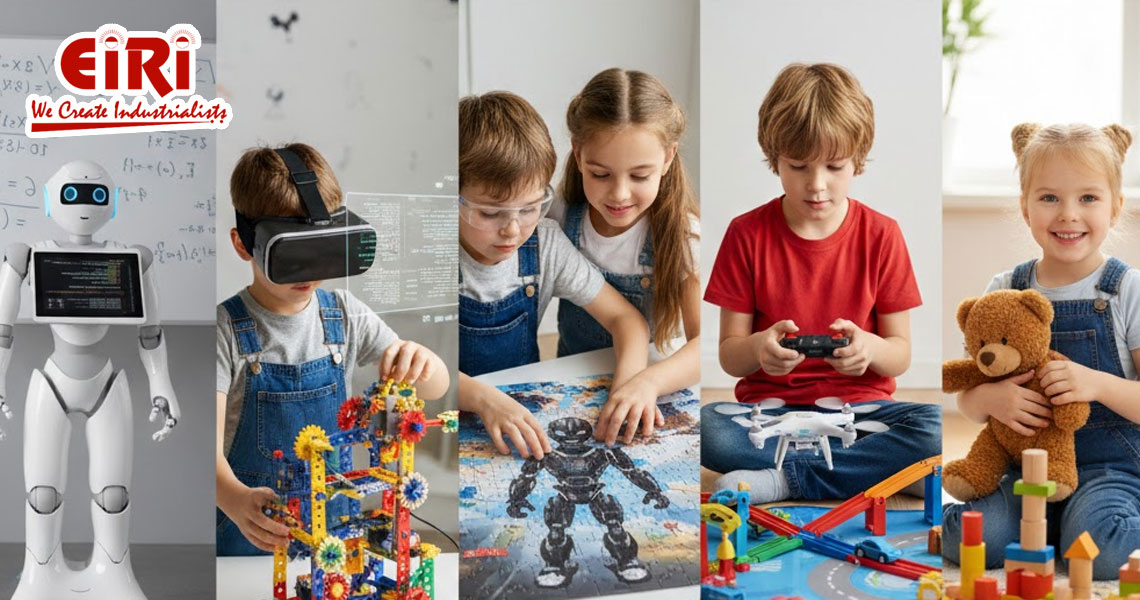
The toy industry has evolved far beyond simple objects of amusement. Today, toys sit at the intersection of education, psychology, technology, manufacturing, and global trade. In India, the toy sector is emerging as a strategic industry capable of generating employment, boosting exports, and nurturing innovation-driven entrepreneurship. From traditional wooden toys to smart, AI-enabled play systems, toys now shape cognitive development, motor skills, creativity, and social behavior across age groups.
India’s toy industry reflects the country’s diversity, craftsmanship, and growing technological capability. With rising domestic demand, supportive government policies, and increasing awareness of child development, the sector offers immense opportunities for manufacturers willing to combine creativity with compliance, safety, and scale.
Market Dynamics and Evolution of Toys in India
Historically, toys have mirrored society. Ancient Indian toys made of clay, wood, and fabric were inspired by daily life, animals, and folklore. Over time, industrialization introduced plastic, electronics, and mass production, reshaping both design and distribution. Gender-specific toys emerged during commercialization, though modern trends increasingly favor inclusive, skill-based play experiences.
Today, the Indian toy market is driven by demographic advantage, rising disposable incomes, urbanization, and a strong push toward educational and STEM-based toys. Cause-and-effect toys, construction sets, puzzles, and interactive play systems dominate early childhood segments, while remote-controlled vehicles, electronic toys, and model kits appeal to older children.
Despite this growth, challenges persist. High dependence on imports in the past, fragmented manufacturing, cost pressures, safety compliance requirements, and limited access to advanced tooling have constrained competitiveness. However, recent policy shifts and investments are actively addressing these gaps.
Technology as the Backbone of a Competitive Toy Industry
Modern toy manufacturing relies heavily on technology. Design has shifted from hand sketches to 3D modeling, simulation, and rapid prototyping. Technologies such as CNC machining, injection molding, blow molding, and rotational molding allow precision, scalability, and cost efficiency. Quality control is strengthened through durability testing, material analysis, and safety validation.
The future of toys is closely tied to artificial intelligence, augmented reality, and additive manufacturing. Smart toys equipped with sensors and learning algorithms personalize play experiences. Augmented reality blends physical toys with digital storytelling, while 3D printers reduce development cycles and enable customization. These technologies are no longer optional but essential for competing in global markets.
Smart Toys and Age-Specific Play Behavior
Children interact with toys differently at every stage of development. Babies engage through sensory exploration, responding to sound, texture, and movement. Smart toys for infants focus on cause-and-effect learning, auditory feedback, and visual stimulation. As toddlers grow, play becomes exploratory and motor-driven, making interactive toys, push-and-pull mechanisms, and simple electronics highly effective.
Preschoolers use toys to role-play, solve problems, and express creativity. Smart toys for this age group integrate storytelling, early numeracy, and language learning. Big kids seek challenge, autonomy, and mastery, gravitating toward construction kits, robotics, remote-controlled vehicles, and STEAM-based learning tools. Ultimately, the perfect toy adapts to the child, encouraging curiosity rather than passive consumption.
Starting a Toy Manufacturing Business in India
Launching a toy manufacturing venture begins with ideation and design. Successful toys start with detailed brainstorming, understanding child psychology, safety norms, and market demand. Sketching concepts leads to 3D depictions and functional prototypes, which are tested for usability, durability, and compliance.
Finding the right manufacturer or setting up an in-house unit requires planning across procurement, manufacturing, delivery, retailing, and feedback loops. Supply chain reliability, raw material sourcing, tooling accuracy, and production scheduling determine long-term viability. Entrepreneurs must integrate design thinking with operational discipline to scale sustainably.
Wooden Toys: Tradition Meets Modern Manufacturing
Wooden toys represent a timeless segment within the toy industry. Their durability, tactile appeal, aesthetic value, and developmental benefits make them highly desirable, especially for early learning. Wooden toys encourage imagination, fine motor skills, reasoning, and real-life skill development while remaining less distracting than electronic alternatives.
Manufacturing wooden toys involves processes such as air drying, shaping blanks, sanding, coating, printing, engraving, and hand painting. Modern CNC machines enhance precision and repeatability, while manual craftsmanship preserves uniqueness. The stability and sensory warmth of wood make these toys emotionally engaging, reinforcing their lasting appeal in both domestic and export markets.
Plastic, Electronic, and Battery-Operated Toys
Plastic toys dominate mass markets due to their versatility and cost efficiency. Injection molding remains the backbone of plastic toy manufacturing, enabling high-volume production with consistent quality. Blow molding supports hollow components like toy car bodies, while spray painting, pad printing, and hand painting add visual appeal.
Battery-operated and remote-controlled toys introduce additional complexity through motors, transmitters, receivers, power supplies, and safety circuits. Selecting the right RPM motors, ensuring electrical safety, and debugging control systems are critical stages. Electronic toys must balance excitement with compliance, particularly under BIS and international safety standards.
Manufacturing Processes and Quality Control
Toy manufacturing begins with market research and design validation, followed by prototyping and safety testing. Legal protection through design registration and intellectual property safeguards innovation. Mold production represents a major capital investment and must align with expected production volumes.
During production, components are manufactured, assembled, and tested under strict quality control protocols. Packaging plays a crucial role in protection, transportation, and consumer engagement. Size, messaging, and material selection influence both cost and perception. Efficient manufacturing capability depends on layout design, process flow optimization, and skilled labor.
STEAM Toys and Educational Innovation
STEAM-based toys integrate science, technology, engineering, art, and mathematics into play. These toys improve problem-solving skills, spatial reasoning, creativity, and cognitive development. Design principles emphasize interaction, thematic learning, structural exploration, and aesthetics.
Educational toys increasingly incorporate electronics, software, and adaptive learning systems. The fusion of play and pedagogy positions STEAM toys as one of the fastest-growing segments, particularly among urban consumers and institutional buyers such as schools and learning centers.
Soft Toys, Paper Toys, and Niche Segments
Soft toys and teddy bears rely on fabric processing, stitching, stuffing, and finishing, with strong emphasis on safety, hygiene, and quality control. Plant layout, workflow efficiency, and material sourcing significantly influence profitability.
Paper toys and jigsaw puzzles offer eco-friendly and therapeutic alternatives. Their manufacturing involves printing, die-cutting, mounting, and packaging. While competition from plastic and digital entertainment exists, paper-based toys continue to gain traction due to educational value and sustainability awareness.
Standards, Safety, and Compliance
Compliance is central to toy manufacturing. In India, BIS certification under the Toys (Quality Control) Order, 2020 is mandatory for most toys. International standards such as CE marking, ASTM, and ISO govern exports. Safety testing addresses mechanical hazards, chemical composition, electrical safety, and disposal risks.
Failure to comply can result in recalls, bans, and reputational damage. Therefore, regulatory awareness and testing infrastructure are critical investments, not optional expenses.
Plant Economics and Investment Considerations
Plant economics vary by toy category, scale, and technology. Capital investment includes land, building, machinery, molds, and utilities, while working capital supports raw materials, labor, and operations. Return on investment depends on product mix, production efficiency, market access, and branding.
Manufacturing in rural and semi-urban areas reduces costs and creates employment, aligning with inclusive growth objectives. Export prospects further enhance revenue potential, especially for quality-driven segments like wooden toys, educational kits, and ride-on vehicles.
Government Initiatives Supporting the Indian Toy Industry
The Indian government has taken decisive steps to transform the toy sector into a global manufacturing hub. The National Action Plan for Toys focuses on cluster development, skill enhancement, design capability, and market access. Toy manufacturing clusters and dedicated Toy Cities provide shared infrastructure, testing facilities, and logistics support, reducing entry barriers for small businesses.
Import regulations and quality control orders have strengthened domestic manufacturing by curbing substandard imports. The Production Linked Incentive framework, MSME schemes, and access to collateral-free loans under programs like CGTMSE support capital investment. Start-up India registration enables tax benefits, faster compliance, and funding access for new entrepreneurs.
Skill development initiatives, design incubation centers, and export promotion councils help manufacturers align with global standards. By integrating traditional craftsmanship with modern technology, these policies empower entrepreneurs to build competitive, compliant, and scalable toy businesses.
Opportunities for New Entrepreneurs and Small Businesses
For aspiring entrepreneurs, the toy industry offers low-to-moderate entry barriers in segments such as wooden toys, soft toys, educational kits, and niche plastic products. Government incentives, shared manufacturing facilities, and growing domestic demand reduce risk. New entrants can benefit from focusing on safety, innovation, and storytelling rather than price competition alone.
With the right blend of creativity, technology, and compliance, India’s toy industry is poised to become a global force. For small businesses and first-generation entrepreneurs, this sector represents not just commercial opportunity, but a chance to shape how future generations learn, imagine, and grow.