
Food Colours and Flavours: Technology, Regulation, Processing and Commercial Opportunities








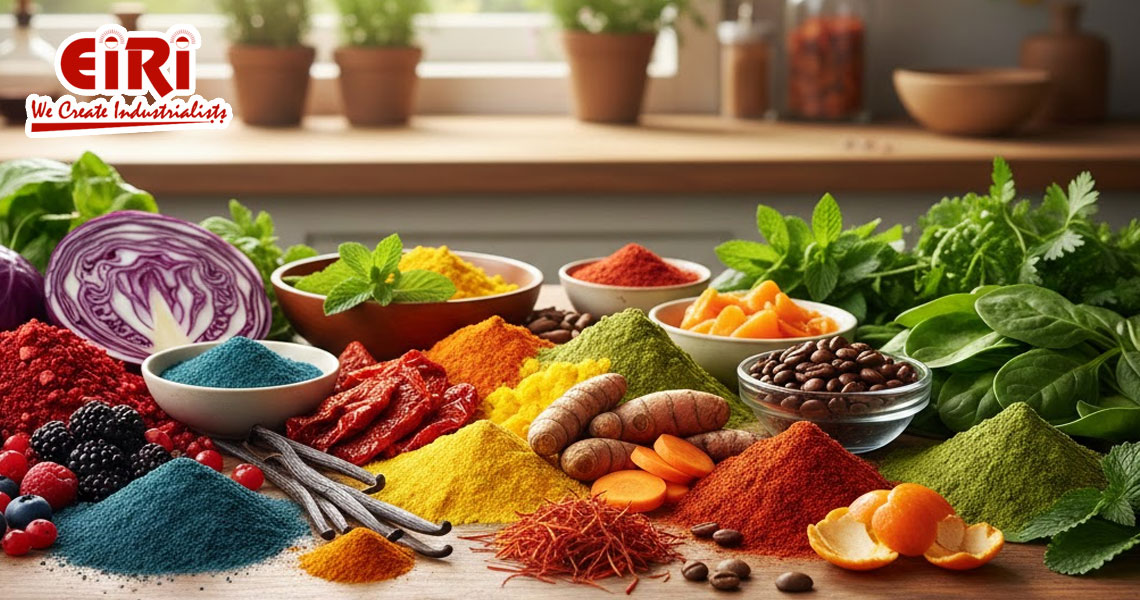
Food colours and flavours are central to how food products are designed, produced, and accepted in the market. Before a consumer tastes a product, colour creates the first judgement about freshness, strength, and quality. Flavour then confirms or rejects that expectation. For entrepreneurs, this makes colours and flavours powerful tools rather than secondary ingredients. They are functional components that directly influence repeat purchase, brand identity, and price positioning. In modern food manufacturing, colours and flavours are used to correct natural variation, restore appearance after processing, maintain uniformity across batches, and create recognisable product profiles. As food production becomes more industrial and more regulated, these ingredients require structured technical knowledge, controlled processing, and strong compliance systems. Businesses that treat colours and flavours as engineered systems rather than simple additives gain long-term commercial advantage.
Evolution of Food Colours and Flavours: From Traditional Sources to Industrial Systems
The use of colours and flavours in food started with simple materials such as plant extracts, minerals, spices, and fermented products. Early food producers relied on turmeric, saffron, beet juice, charcoal, herbs, and spices to enhance visual appeal and taste. These materials were limited by seasonal availability, variation in quality, and low stability during storage and heating. With the rise of industrial food processing, demand increased for ingredients that could deliver consistent colour and flavour at scale. This led to the development of synthetic colours and flavour compounds that could be produced in large quantities with uniform performance.
Over time, the industry evolved into multiple parallel systems. Synthetic colours offered strong colour strength and stability. Nature identical compounds provided chemical similarity to naturally occurring pigments with better consistency. Natural extracts continued to be used where their origin carried market value but required improved processing control. In flavour manufacturing, chemical synthesis, fermentation, enzyme-based reactions, and plant extraction developed side by side. This evolution created an industry where traditional raw materials and advanced processing technologies operate together. Entrepreneurs entering this field must understand that modern colour and flavour systems are the result of decades of refinement, regulatory oversight, and application testing rather than simple ingredient substitution.
Market Structure, Regulatory Frameworks, and Labelling Practices
The global food colour and flavour market is structured by application area, regulatory status, and functional performance. Beverages consume the largest share of food colours due to high volume production and strong visual impact. Confectionery, bakery, dairy, sauces, snacks, and ready-to-eat foods follow closely. In flavours, dairy, beverages, savoury products, snacks, and meat alternatives dominate usage. Market growth has shifted away from selling single raw pigments toward selling complete solutions such as blends, dispersions, emulsions, and application-ready systems. This shift creates opportunities for entrepreneurs who invest in formulation capability rather than only trading raw materials.
Regulation plays a defining role in this industry. Food colours and flavours must meet approval standards based on safety studies, purity limits, and defined use levels. These rules differ across regions, which affects product design and export planning. Compliance is not limited to selecting approved ingredients. It also includes control of manufacturing processes, impurity levels, batch traceability, and accurate documentation. Labelling rules further influence commercial strategy. Colour additives must be declared by approved names or code numbers, and differences between colours, colouring foodstuffs, and flavouring ingredients directly affect ingredient statements. In the United States, colours are divided into certified and exempt categories, with certified colours requiring batch-wise approval. Entrepreneurs who do not understand these distinctions face delays, rejected shipments, or product withdrawals. Strong regulatory knowledge is therefore a commercial asset, not an administrative burden.
Types of Colourants and Pigments: Sources, Performance, and Stability
Food colour systems include synthetic dyes, lakes, nature identical compounds, natural extracts, caramel colours, colouring foodstuffs, and inorganic pigments. Each category serves different technical and commercial needs. Synthetic colours remain widely used because of their high colour strength, predictable behaviour, and cost efficiency. They perform well under heat, light, and acidic conditions, making them suitable for beverages and confectionery. Lakes, which are insoluble forms of dyes fixed onto substrates, are preferred in fat-based and dry applications where bleeding must be controlled.
Inorganic pigments such as titanium dioxide, iron oxides, ultramarines, and carbon black are used where opacity, heat resistance, or specific shades are required. These pigments involve precipitation, calcination, and surface treatment processes that require technical precision and capital investment. Across all pigment types, stability is influenced by particle size, dispersion quality, hydration state, and interaction with the food matrix. Entrepreneurs who understand these factors can design products that perform reliably across multiple applications and processing conditions.
Formulation Science, Processing Technologies, and Analytical Control
The real value in food colours and flavours lies in formulation rather than raw material sourcing. A successful formulation combines pigments or aroma compounds with carriers, stabilisers, preservatives, and processing aids to achieve consistent performance. For example, beverage colour systems must remain clear and stable at low pH while resisting fading under light exposure. This requires careful selection of solvents, emulsifiers, and stabilising agents. Flavour systems must release aroma at the right moment while surviving processing steps such as heating, drying, or extrusion.
Processing technologies include extraction, fermentation, chemical synthesis, enzyme-based reactions, emulsification, encapsulation, and spray drying. Biotechnology has enabled pigment and flavour production through microbial fermentation, offering reliable supply and uniform quality. Examples include fermentation-derived pigments and enzyme-assisted aroma compounds such as esters, lactones, and pyrazines. Analytical control supports every stage of this process. Techniques such as spectrophotometry, chromatography, and colour measurement systems are used to verify strength, purity, and consistency. Stability studies examine how pigments respond to temperature, light, pH, and storage time. Anthocyanin systems, for example, require detailed monitoring because colour changes are directly linked to pH and environmental conditions. Entrepreneurs who invest in in-house testing reduce dependency, improve batch consistency, and respond faster to customer needs.
Industrial Applications, Economics, and Commercial Outlook
Food colours and flavours are used across a wide range of products including beverages, dairy items, bakery goods, confectionery, savoury foods, flavoured milk, tea-based drinks, cheese products, and herb-based formulations. Pigments such as curcumin, betanin, annatto, carotenoids, and chlorophylls show how extraction quality, purification steps, and formulation choices determine commercial success. In flavours, vegetable, meat, dairy, fish, and beverage profiles rely on controlled reaction chemistry, fermentation, and sensory validation to achieve repeatable results.
From a business perspective, success depends on plant design, capital investment, raw material planning, working capital management, and customer integration. Dedicated plants for caramel colour, annatto extraction, curcumin processing, flavour compounding, liquid-to-powder conversion, and beverage premixes demonstrate proven industrial models. Margins improve when businesses move from selling raw materials to supplying application-ready systems. Entrepreneurs who understand formulation science, maintain regulatory discipline, and align production with market demand can build strong, stable operations. The food colour and flavour sector rewards technical depth, process control, and long-term customer relationships, making it a solid opportunity for businesses willing to invest in knowledge as much as equipment.