
Tamarind Technology with Project Profiles (From Cultivation to Commercial Processing)










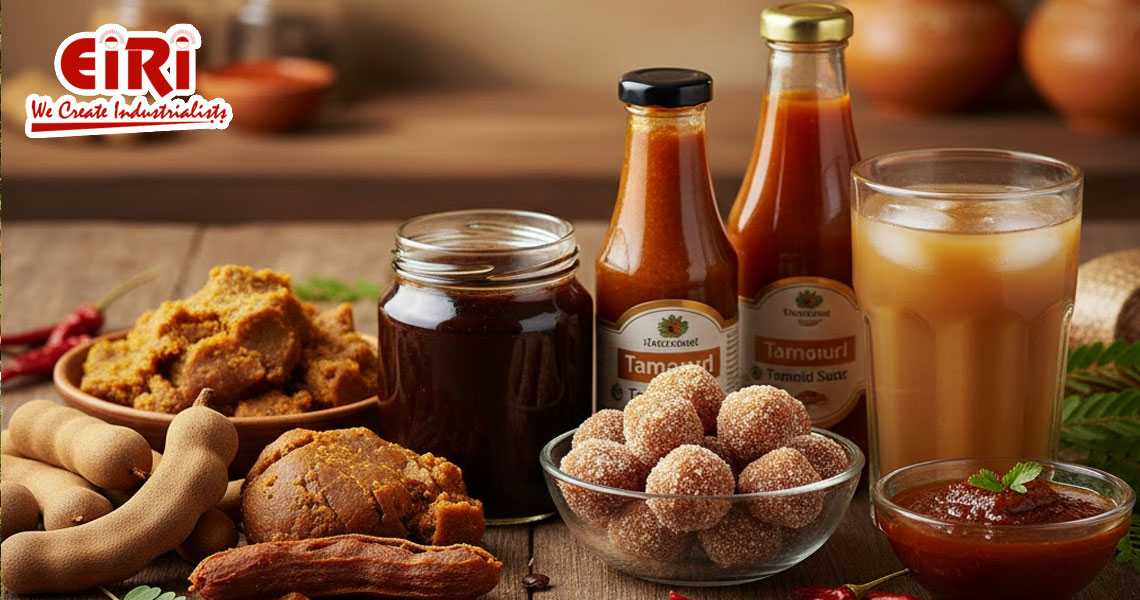
Tamarind is a versatile tropical tree crop valued for its tangy fruit pulp used in food, beverage, traditional medicine, and industrial applications. Much more than a spice ingredient, tamarind has economic importance in India and across many parts of Asia, Africa, and Latin America. India is one of the largest producers of tamarind, especially in states like Telangana, Andhra Pradesh, Karnataka, Tamil Nadu, and Odisha. The crop thrives in semi-arid climates and does not require intensive care, making it attractive for both small and large farmers.
Beyond raw tamarind production, commercial processing adds value and opens up higher income opportunities. Processed tamarind products include tamarind paste, concentrate, powder, seed kernel powder, tamarind candy, and many others. The global demand for these value-added products is increasing, driven by expanding food processing sectors, beverage manufacturers, and international exports.
For entrepreneurs, tamarind offers business opportunity across the value chain — from cultivation and harvesting to primary and advanced commercial processing. This article explores technology, production steps, project ideas, investment considerations, and market insights for anyone keen to enter the tamarind business.
Tamarind Cultivation: Basics and Best Practices
Tamarind thrives in tropical and subtropical climates with well-drained soils. It can grow on relatively poor soils, tolerates drought, and has low input needs once established. However, adopting best practices ensures better yields, fruit quality, and profitability.
Land selection considers soil type, water availability, and spacing. Tamarind trees, once planted, can live and produce for many years, sometimes decades, which makes orchard planning essential. Farmers prepare the land with proper plowing, leveling, and soil amendment before planting.
Planting is typically done using grafted saplings for uniformity and early fruiting. The spacing between trees affects canopy development and ease of harvesting. Initial growth care includes weed control, irrigation during dry spells, and protective measures against pests such as fruit borer and stem borer. Regular soil testing and nutrient management help ensure good tree health.
Tamarind begins fruiting in a few years depending on the variety and growing conditions. Harvesting is mostly manual and involves picking ripe pods when the outer shell becomes brown and the pulp is well developed. Timing and technique influence both output quantity and quality.
Primary Processing: Cleaning, Sorting, and Drying
After harvest, primary processing transforms fresh pods into a product suitable for consumption or further processing. This phase prepares the tamarind by removing impurities and reducing moisture content.
- First, harvested tamarind pods are cleaned to remove dirt, stones, leaves, and unwanted material. Sorting follows, where pods are graded based on size and maturity. Clean, mature pods yield better-quality pulp and higher extraction efficiency.
- Drying is an essential step that stabilizes product quality. Traditional sun-drying is common in many rural areas, but controlled mechanical drying ensures consistent moisture levels and protects against microbial contamination, especially in regions with unpredictable weather.
Primary processing fills the gap between farm output and commercial markets. Proper handling at this stage prevents spoilage, enhances shelf life, and improves market price.
Commercial Processing: Value-Added Tamarind Products
Commercial processing of tamarind includes multiple value-added product lines. Each line has distinct technology, equipment needs, and market potential.
Tamarind paste is one of the most popular commercial products. It is used by food manufacturers, restaurants, and consumers as a cooking ingredient. Production involves pod husking, seed removal, pulp extraction, and refining to a consistent texture. Paste may be standardized for acidity and flavor, then packaged in jars, pouches, or drums depending on market demands.
Tamarind concentrate is a thicker, more concentrated form of pulp used in sauces, condiments, and beverage formulations. It requires mechanical pressing and evaporation steps to achieve higher soluble solids content.
Tamarind powder is made by drying and grinding the pulp after removing seeds and fibers. Powder form offers easy storage, long shelf life, and suitability for spice blends and industrial food applications.
Tamarind kernel powder (TKP) is a by-product of tamarind seed processing. TKP has industrial uses in textiles, adhesives, paper sizing, and food stabilizers. Extracting TKP requires dehusking machines, seed splitting setups, and grinding equipment.
Modern commercial facilities often include quality testing labs, packaging lines, and cold storage for inventory management.
Project Profiles Under Tamarind Technology
There are multiple project profiles possible depending on investment capacity, scale, and market focus.
- A small-scale tamarind paste unit may operate with basic pulping machines, steam kettles, and simple packaging lines. This model works well for local markets, retail distribution, and small hotel chains.
- A medium-scale concentrate and powder processing plant includes seed removal systems, evaporators, dryers, and automated grinding units. This setup can cater to regional food processors and branded product lines.
- A tamarind kernel powder (TKP) processing project requires specific seed dehusking and splitting technology. The output TKP can serve industrial buyers and exporters if quality standards are maintained.
- An integrated tamarind processing complex covers cultivation support, primary sorting and drying, multiple value-added product lines, quality testing, and branding. This model needs higher investment but yields diversified revenue streams and better risk management.
Each project involves planning around land, civil works, machinery procurement, workforce, utilities, quality control, packaging, branding, and distribution channels.
Market Demand and Commercial Potential
Domestic demand for tamarind products is strong in traditional culinary regions and growing in metropolitan food markets and food processing industries. International demand has also risen due to interest in exotic flavors, ethnic cuisines, and natural ingredients. Countries in the Middle East, Europe, and North America import tamarind pulp, concentrate, and powder for food processing.
Organizing supply contracts with food brands, restaurants, retail chains, and exporters improves revenue predictability. Product quality, consistent supply, branding, and certification (like FSSAI and export quality compliance) are critical determinants of success.
Tamarind Technology and Allied Agro Processing Project Profiles
From Cultivation to Commercial Processing of Tamarind, Tomato, and Turmeric
Agro processing based on crops like tamarind, tomato, and turmeric represents a strong value-addition opportunity for entrepreneurs in India. These crops are widely grown, have stable domestic demand, and strong export potential when processed into shelf-stable products. Technologies involved are proven, scalable, and suitable for MSME-level investment.
Instead of selling raw produce at fluctuating prices, processing allows conversion into powders, pastes, and industrial ingredients with longer shelf life and better margins. Tamarind seed powder, tomato powder, and turmeric powder are all examples of products where waste reduction, by-product utilization, and commercial processing come together to create sustainable businesses.
Process Details and Sun-Drying Method
Tomato powder is produced by dehydrating ripe tomatoes and converting them into a fine powder. It is widely used in soups, sauces, snacks, seasoning mixes, and ready-to-eat foods. The process begins with selection of fully ripe, red tomatoes with high pulp content.
After washing and sorting, tomatoes are sliced and subjected to drying. Sun-drying is the most economical method for small and medium units, especially in regions with dry climates. Tomato slices are spread on clean drying trays and exposed to sunlight for several days until moisture content reduces significantly. Proper covering and periodic turning are important to avoid contamination and uneven drying.
Once dried, the tomato flakes are ground using pulverizers and sieved to obtain uniform powder. The final product is packed in moisture-proof packaging to maintain color, flavor, and shelf life.
Plant Economics of Tomato Powder
The economics of a tomato powder unit depend largely on raw tomato prices and drying efficiency. Fixed capital investment includes land development, drying yards or solar dryers, grinding machinery, and packing equipment. This investment is moderate and suitable for MSME entrepreneurs.
Raw material cost forms the largest part of working capital, especially during peak tomato season. Monthly working capital also includes labor, power, packaging, and transport. Tomato powder units typically operate seasonally but can store raw dried flakes for year-round grinding.
Total capital investment remains reasonable, and annual turnover depends on capacity utilization and market access. Tomato powder has good margins due to low transportation cost compared to fresh tomatoes and strong demand from food processors.
Tamarind Seed Powder Manufacturing Technology
Tamarind seed powder is produced from tamarind seeds, which are a by-product of tamarind pulp processing. This makes it an excellent example of waste-to-value conversion. Tamarind seeds are first collected and cleaned to remove pulp residue and impurities.
The seeds are dried and then passed through a roasting or heating process to make dehusking easier. After roasting, the outer seed coat is removed using mechanical dehuskers. The inner kernel is then ground into a fine powder using heavy-duty grinders.
The powder is sieved and packed according to end-use requirements. Tamarind seed powder is used in textile sizing, paper manufacturing, adhesives, and also as a stabilizer in food applications after further processing.
Plant Economics of Tamarind Seed Powder
Tamarind seed powder units benefit from low raw material cost since seeds are often considered waste. Fixed capital includes roasting equipment, dehusking machines, pulverizers, and packaging systems. Space requirement is moderate, and power consumption is manageable.
Working capital requirements are lower compared to many food processing units because raw material availability is linked to tamarind processing units. Monthly expenses mainly include labor, power, and logistics.
Total capital investment is attractive for entrepreneurs looking for industrial raw material businesses. Annual turnover is stable due to continuous industrial demand, and margins improve when linked directly with tamarind pulp processors.
Processing and Quality Requirements
Turmeric powder is one of the most widely consumed spice products in India and globally. Edible-grade turmeric powder requires strict quality control to maintain color, aroma, and curcumin content.
The process starts with procurement of dried turmeric rhizomes. These are cleaned thoroughly to remove soil and foreign matter. The rhizomes are then polished mechanically to improve appearance and reduce surface impurities.
Grinding is done in stages to avoid heat buildup, which can affect color and quality. The ground powder is sieved to ensure uniform particle size. Food-grade turmeric powder must be processed in hygienic conditions and packed using food-safe materials.
Plant Economics of Turmeric Powder (Edible Grade)
Fixed capital investment includes cleaning machines, polishing drums, pulverizers, sieving units, and packing machines. Additional investment may be required for quality testing and dust control systems.
Raw turmeric rhizomes constitute the main raw material cost. Working capital includes labor, power, packaging, and storage. Since turmeric can be stored for long periods, production can be spread throughout the year.
Total capital investment varies by scale, but edible-grade turmeric powder units generally show strong profitability due to consistent demand. Annual turnover is driven by branding, distribution reach, and export linkages.
Integration with Tamarind Processing and Agro Clusters
These processing units work well when integrated with tamarind cultivation and processing clusters. Tomato powder units can operate seasonally alongside tamarind pulp processing. Tamarind seed powder units directly benefit from tamarind processing waste. Turmeric powder units complement spice and food processing clusters.
Such integration reduces raw material costs, improves capacity utilization, and strengthens bargaining power in the market.
Government Support and Business Viability
The Indian government supports horticulture and food processing ventures through various schemes. Under the National Horticulture Mission, growers can get subsidies for planting material, orchard infrastructure, and technology adoption. Food processing units benefit from incentives offered by the Pradhan Mantri Kisan SAMPADA Yojana, which supports cold chains, processing units, and quality certification.
MSME registration helps reduce credit costs and access priority sector loans. State governments often offer additional subsidies for agro-based processing units, electricity duty exemptions, and land allotment in food parks.
These agro processing projects are supported under various Indian government schemes. Food processing units are eligible for assistance under PM Kisan SAMPADA Yojana. MSME registration provides credit access and subsidy benefits. State governments often offer incentives for spice processing, dehydration units, and agro-based industries.
With proper planning, technology selection, and market linkage, these projects offer sustainable income, employment generation, and long-term growth potential.
Conclusion: A Sustainable and Scalable Business
Tamarind technology combined with tomato powder, tamarind seed powder, and turmeric powder processing creates a diversified agro-processing business model. These products serve food, industrial, and export markets while making efficient use of agricultural output and by-products. Entrepreneurs who focus on quality, cost control, and market alignment can build scalable and resilient enterprises in this sector.
Tamarind offers one of the most versatile platforms in agri-business. It combines long-term cultivation prospects with diverse processing and commercial applications. Whether starting with small-scale paste production or choosing an integrated processing model, entrepreneurs can benefit from rising demand, supportive policies, and strong export potential. Success depends on understanding cultivation practices, investing in right technology, ensuring quality, and building efficient market networks.