
Smart Materials, Specialty Chemicals & New-Age Materials - Building the Industrial Backbone of High-Performance, Technology-Driven Economies










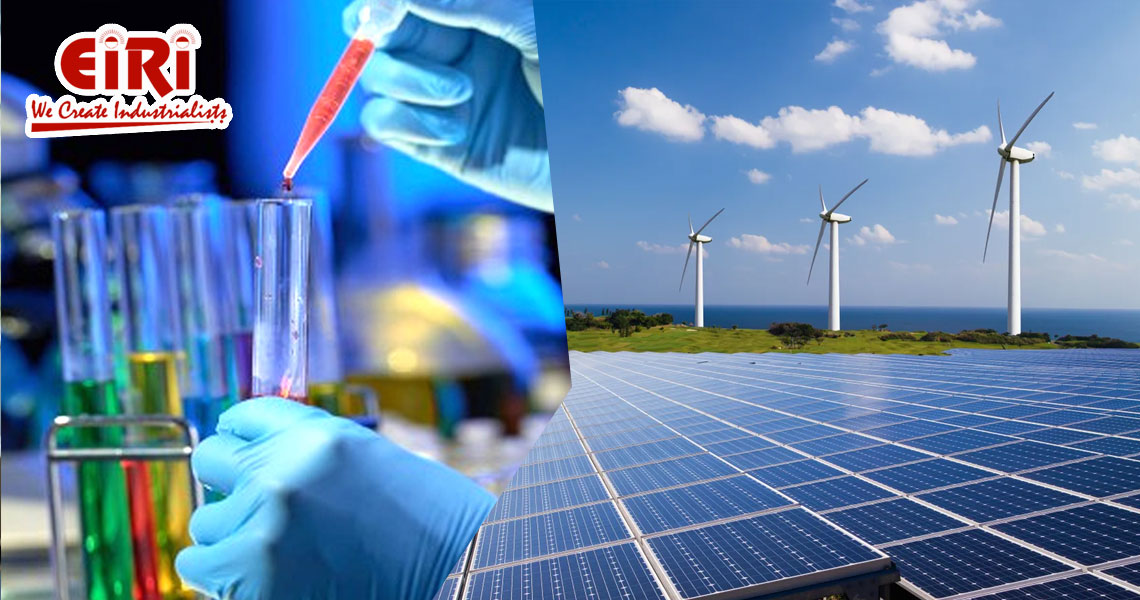
Smart materials, specialty chemicals, and new-age materials manufacturing represent one of the most strategic and high-impact industrial sectors of the modern economy. This industry does not serve consumers directly in most cases; instead, it powers other industries. Electronics, EVs, aerospace, semiconductors, construction, renewable energy, defense, infrastructure, and high-performance manufacturing all depend on advanced materials and specialty chemicals to function, perform, and innovate.
Traditional raw materials like steel, cement, basic plastics, and conventional chemicals are being replaced or upgraded by high-performance alternatives - materials that are lighter, stronger, more durable, more efficient, and more functional. This transition is not driven by luxury or innovation hype alone, but by practical industry needs: energy efficiency, miniaturization, sustainability, safety, performance, and cost optimization over lifecycle use.
Smart materials respond to external conditions like temperature, pressure, electric fields, or chemical environments. Specialty chemicals are engineered for specific performance roles rather than bulk usage. New-age materials combine material science, chemistry, and engineering into function-driven manufacturing, not commodity production. This sector supports advanced industries like electronics, EVs, aerospace, semiconductors, construction, and high-performance manufacturing. Specialty materials replace traditional raw materials with higher-performance alternatives. Instead of using basic metals, simple plastics, and conventional chemicals, modern industries rely on engineered materials that are stronger, lighter, smarter, safer, more efficient, and more durable.
For entrepreneurs and industrial investors, this sector represents a foundation industry. It does not depend on consumer trends or seasonal demand. It grows with industrialization, technology adoption, infrastructure development, and innovation cycles. As long as industries evolve, smart materials and specialty chemicals will remain in demand.
Unlike traditional commodity manufacturing, this sector is driven by performance, precision, and application-specific value, not just volume. This creates higher margins, long-term client relationships, and strong industrial integration. It is not about selling materials - it is about enabling industries to function better, faster, and more efficiently.
For entrepreneurs, this industry offers something rare: high entry value, long-term demand, strong margins, and technology-driven differentiation. Unlike traditional manufacturing, competition is not based only on price—it is based on performance, reliability, consistency, and application-specific solutions.
Industry Scope
Smart materials, specialty chemicals, and new-age materials manufacturing operate at the core of modern industrial systems. This sector is not defined by one product category but by functional performance. Materials are designed not just to exist, but to perform specific roles such as conductivity, insulation, strength enhancement, corrosion resistance, energy storage, chemical stability, thermal control, flexibility, and structural reinforcement.
Specialty materials replace traditional raw materials with higher-performance alternatives. Where industries once used steel, basic plastics, or simple chemicals, they now use composites, engineered polymers, nano-coatings, advanced alloys, lithium compounds, and electronic-grade materials. This transformation is happening across all industrial sectors.
The scope includes specialty chemicals used in industrial processes, manufacturing systems, electronics fabrication, pharmaceuticals, construction, agriculture, and clean energy. These are not bulk chemicals but application-specific chemicals designed for precise performance roles.
It includes smart materials that respond to external stimuli such as heat, pressure, electricity, light, or chemical exposure. These materials are used in sensors, electronics, aerospace systems, EVs, medical devices, and advanced infrastructure.
New-age materials include nanomaterials, advanced polymers, composites, lightweight structures, high-strength fibers, engineered ceramics, and functional coatings that enable modern product design and industrial efficiency.
This sector supports industries rather than markets. It grows with industrial development, not consumer behavior. When EV manufacturing expands, battery-grade chemicals grow. When semiconductor manufacturing expands, electronic-grade materials grow. When infrastructure grows, construction chemicals and composites grow. When renewable energy expands, advanced polymers, coatings, and smart materials grow.
This makes the sector structurally integrated with economic development itself.
Manufacturing Opportunities
Smart materials and specialty chemicals manufacturing offer diverse and scalable business opportunities across multiple industrial verticals. Entry is possible at different technical and investment levels, from component materials to advanced formulations and integrated material systems.
Specialty chemicals form the backbone of this sector. These include process chemicals, functional additives, catalysts, solvents, and performance enhancers used across industries. Unlike commodity chemicals, these products are tailored for specific industrial applications, creating long-term supply relationships and stable demand.
Coatings manufacturing is a major growth area. Industrial coatings, protective coatings, anti-corrosion coatings, thermal coatings, fire-resistant coatings, and functional surface coatings are used in infrastructure, aerospace, marine, automotive, and electronics industries. Performance coatings add value far beyond protection by improving efficiency, lifespan, and safety.
Industrial adhesives and bonding systems are replacing mechanical fasteners in many industries. High-strength adhesives, thermal adhesives, conductive adhesives, and structural bonding systems are used in EVs, aerospace, electronics, and construction. This creates a growing manufacturing segment focused on advanced bonding technologies.
Lithium compounds and battery-grade chemicals represent one of the fastest-growing opportunity areas. Battery-grade lithium salts, electrolytes, cathode and anode materials, separators, and chemical additives support EV manufacturing, energy storage systems, and clean energy infrastructure. This segment directly benefits from electrification and renewable energy transitions.
Nanomaterials manufacturing includes nanoparticles, nano-coatings, carbon nanotubes, graphene, and nano-composites. These materials improve strength, conductivity, durability, and performance in electronics, energy systems, aerospace, and medical devices.
Advanced polymers manufacturing focuses on high-performance plastics and engineered polymers that replace metals and traditional materials. These polymers are lighter, corrosion-resistant, thermally stable, and chemically durable, making them ideal for EVs, aerospace, electronics, and medical applications.
Composite materials manufacturing includes fiber-reinforced plastics, carbon fiber composites, glass fiber composites, and hybrid material systems. These materials offer high strength-to-weight ratios and are used in transport, construction, renewable energy, and defense industries.
Construction chemicals manufacturing includes waterproofing systems, concrete additives, sealants, insulation materials, protective coatings, and structural reinforcement chemicals. These products improve durability, safety, and efficiency in infrastructure projects.
Electronic-grade materials include ultra-pure chemicals, semiconductor chemicals, electronic gases, high-purity solvents, and specialty compounds used in chip manufacturing, PCB production, and electronics assembly. This is a precision manufacturing segment with strong growth potential.
What makes this sector powerful is its multi-industry dependency. Each manufacturing unit does not serve one market - it serves multiple industries simultaneously.
Current Market Landscape
The current market for smart materials and specialty chemicals is being shaped by industrial transformation and technological acceleration.
- Electronics and semiconductor industries are expanding rapidly, driving demand for electronic-grade materials, ultra-pure chemicals, and advanced polymers. Digitalization, automation, and AI integration increase material complexity and performance requirements.
- Electric vehicle manufacturing is driving massive growth in battery-grade chemicals, lithium compounds, thermal materials, adhesives, lightweight composites, and smart materials. The EV ecosystem depends heavily on advanced materials for performance and safety.
- Renewable energy expansion is increasing demand for advanced polymers, composites, coatings, and energy-storage materials. Wind turbines, solar panels, energy storage systems, and grid infrastructure all rely on specialty materials.
- Construction and infrastructure development are shifting toward performance-based materials. Construction chemicals, composites, insulation systems, and smart coatings are replacing traditional materials to improve durability and sustainability.
- Aerospace and defense industries require high-performance materials for strength, weight reduction, thermal stability, and durability. This creates stable long-term demand for advanced materials manufacturing.
- Industrial automation and high-performance manufacturing systems rely on precision materials, lubricants, coatings, and chemical systems for efficiency and reliability.
- Environmental regulations are pushing industries toward cleaner, safer, and more efficient materials, accelerating innovation in sustainable specialty chemicals and green materials.
Overall, the market is shifting from material quantity to material quality. Performance matters more than volume.
Future Growth Development
The future growth of smart materials, specialty chemicals, and new-age materials manufacturing is structurally strong and long-term.
- Electrification of transport and industries will continue to increase demand for battery-grade chemicals, lithium compounds, advanced polymers, and composites.
- Semiconductor and electronics manufacturing will expand globally, driving continuous demand for electronic-grade materials and precision chemicals.
- Clean energy transitions will increase demand for advanced materials used in renewable energy systems, storage technologies, and grid infrastructure.
- Urbanization and infrastructure development will push demand for construction chemicals, smart materials, and high-performance composites.
- Material science innovation will create new product categories, including bio-materials, self-healing materials, smart polymers, and adaptive materials.
- Sustainability requirements will push industries toward green chemicals, recyclable materials, low-carbon materials, and circular material systems.
- Advanced manufacturing technologies such as 3D printing, automation, and digital fabrication will increase demand for specialized materials and formulations.
- Defense, aerospace, and space industries will continue to rely on advanced materials for performance and safety, creating long-term demand stability.
Global supply chain diversification will increase domestic manufacturing of critical materials, creating new industrial clusters.
Business Sustainability and Entrepreneurial Potential
Smart materials and specialty chemicals manufacturing offer high long-term stability for entrepreneurs.
This is a B2B foundation industry. Demand comes from industrial systems, not consumer behavior.
It supports long-term supply contracts rather than transactional sales.
Product differentiation creates high entry barriers, protecting established manufacturers.
Innovation-driven value creation enables premium pricing models.
Multi-industry integration reduces market risk.
Export opportunities strengthen revenue diversification.
Technology integration improves efficiency and scalability.
Once integrated into industrial supply chains, suppliers become long-term partners, not short-term vendors.
Conclusion
Smart materials, specialty chemicals, and new-age materials manufacturing form the invisible backbone of modern industry. They are not always visible to consumers, but they power everything—from smartphones and EVs to buildings, energy systems, and medical technologies.
This sector supports advanced industries like electronics, EVs, aerospace, semiconductors, construction, and high-performance manufacturing. Specialty materials replace traditional raw materials with higher-performance alternatives, enabling industries to evolve, innovate, and compete globally.
For entrepreneurs, this sector offers a rare industrial opportunity:
structural demand, technology-driven growth, high-value manufacturing, long-term stability, and deep industrial integration.
It is not a trend sector. It is not a seasonal market. It is not consumer-driven.
It is a core industrial foundation sector.
As economies modernize, industries digitize, and technology advances, demand for smart materials and specialty chemicals will not decline - it will multiply.
Those who build manufacturing capacity in this sector are not just building factories—they are building the material foundations of future industries.