
Manufacturing Opportunities in West Bengal: Scope, Trends and Practical Roadmap










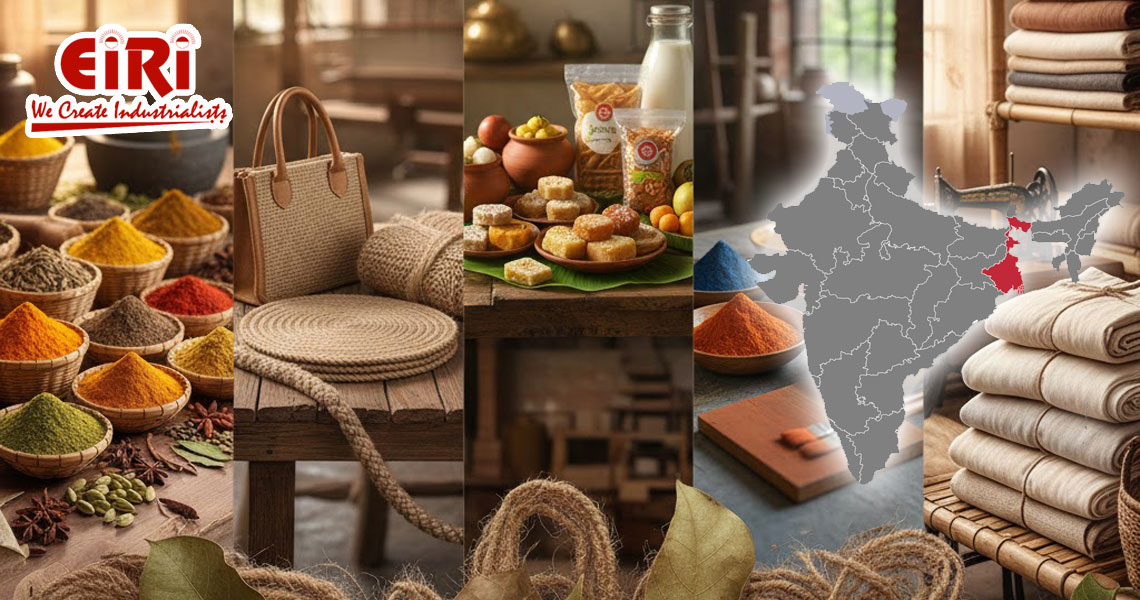
West Bengal has been updating its industrial approach in the last few years to attract more investment and support different types of manufacturing businesses. The state’s Industrial and Economic Corridor Policy, along with other new initiatives, focuses on developing industrial corridors, building more industrial parks, promoting exports, and making the approval process faster and easier. These steps help new businesses get started with fewer hurdles and improve transportation and logistics for companies that want to sell outside the state or even export.
With these policies in place, plus financial and operational support for small and medium enterprises, West Bengal has become a good place for entrepreneurs looking to start units in food processing, jute products, packaged sweets and snacks, paints and coatings, and garment or hosiery manufacturing.
Why West Bengal is strategically suited for manufacturing growth
West Bengal has several natural advantages that make it a strong location for manufacturing. Its location close to the northeastern states, Bangladesh, and South-East Asia—along with access to major ports—gives businesses an easy route for distribution and exports. The state also has a large workforce with both skilled and semi-skilled workers, especially around long-established industrial towns. This, combined with existing supply chains in jute, textiles, and food products, helps manufacturers run their operations more smoothly.
Alongside these factors, government agencies and industrial development bodies are building more industrial parks, upgrading transport and logistics, and providing single-window services that speed up the setup process for new units. These strengths benefit both small entrepreneurs targeting nearby markets and larger companies looking to serve customers across India or overseas.
Current industrial trends shaping opportunity areas
Several concurrent trends are shaping manufacturing demand in West Bengal. First, there is rising consumer preference for branded, hygienic and conveniently packaged food items across urban and semi-urban India, lifting prospects for spices processing and packaged sweets. Second, sustainability and the global move away from single-use plastics are increasing demand for jute and other natural-fiber products. Third, domestic construction and furniture demand continue to drive paints and coating consumption, while the garment sector benefits from reshoring trends and brands looking to diversify manufacturing footprints. Finally, state and central incentives for MSMEs, along with easier access to credit and skill-development programs, are reducing entry costs and operational risks for new manufacturing units. These trends together justify the five manufacturing themes we will explore in depth.
5 highly profitable manufacturing business ideas for West Bengal:
Spices processing and blending: current market dynamics and future scope
Spice processing and blending is a steady and profitable business with good demand in both the Indian and export markets. West Bengal is close to important spice-growing areas, which makes it easier to source raw chilies, turmeric, mustard seeds, and other key ingredients. Consumers today prefer ready-made spice mixes, better-quality single-origin spices, and clean, well-packed products that stay fresh longer, allowing sellers to reach markets outside the state.
Why profitable in West Bengal
State has strong supply of raw materials (chilli, turmeric, jeera, mustard, bay leaf).
High demand for packaged and blended spices in West Bengal, Assam, Odisha, Bihar, and Bangladesh.
Low investment–high margin business.
Potential Products
Turmeric powder
Chili powder
Curry masala blends
Mustard powder
Garam masala
Profit Potential
Margins: 20–40%
Start-up cost: Medium
Easy to scale into multiple SKUs.
For manufacturers, even small units can add value by doing proper cleaning, grinding, and hygienic packaging, and by supplying local shops or online sellers under their own brand. In the future, opportunities will grow in areas like region-specific spice varieties, organic products, and exports to nearby countries. Anyone planning to start a spice unit should focus on food-safety certifications, proper storage to control moisture, and regular quality checks. Setting up close to raw material hubs can also bring down transport and sourcing costs.
Jute-based products manufacturing: strengths, market development and innovation
Jute is still one of the most important industries in West Bengal and offers a mix of traditional and modern business opportunities. The state produces a major share of India’s jute fibre and has a long-established network of mills, skilled artisans, and supporting units that make it easier for new businesses to get started. Today, the market is no longer limited to jute sacks. There is growing demand for jute-based home décor, fashion items, composite materials, and industrial geotextiles, mainly because more people and industries are looking for eco-friendly options to replace plastic.
Why profitable
West Bengal is India’s jute capital (Nadia, North 24 Parganas, Hooghly).
Global demand for eco-friendly, biodegradable alternatives to plastic.
Easy export via Kolkata Port.
Products to manufacture
Jute bags
Jute ropes
Jute home décor
Jute composites
Profit Potential
Margins: 30–50%
Government offers subsidies for jute MSMEs.
There is also room for innovation. Many manufacturers are experimenting with jute blended with cotton or polypropylene to create fabrics with specific qualities. Others are using value-added processes like dyeing, lamination, and fine stitching to make products that can earn higher margins. The government supports jute-based businesses through various incentives, and the presence of Kolkata and Haldia ports makes exporting easier. For entrepreneurs aiming at international markets, strong product design and the right certifications play a key role in attracting buyers.
Packaged sweets and snacks manufacturing: leveraging Bengal’s culinary identity
Bengal’s long tradition of sweets and snacks is a big advantage for anyone looking to scale these products through modern manufacturing. Classic items like rosogolla and sondesh already have a strong identity and are loved across India and by Bengali communities abroad. With the help of modern packaging—such as vacuum-sealed tins, ready-to-eat packs, and longer-lasting baked versions—manufacturers can now sell these products far beyond their local markets.
Why profitable
Bengal’s sweets (rosogolla, sondesh, mihidana) have a strong brand identity.
Ready-to-eat packaged snacks and sweets have huge domestic + diaspora demand.
Retail chains, online grocery platforms improving market access.
Products
Vacuum-packed roshogolla tins
Baked or ready-to-eat sondesh
Bengali snacks: jhalmuri mixes, nimki, chanachur
Profit Potential
Margins: 25–35%
Simple manufacturing process.
At the same time, Bengal’s savory snacks and regional mixes have strong demand in cities, especially when they come in clean, well-labeled, and attractive packaging with a good shelf life. To succeed in this sector, entrepreneurs need to maintain hygienic production standards, use cold-chain systems for dairy-based sweets, and follow proper food safety rules. Working with retail chains and online platforms helps brands grow faster, and offering healthier or more shelf-stable versions of traditional items can attract a wider customer base.
Paints and industrial coatings: demand drivers and entry considerations
The paints and coatings industry supports both the construction sector and different kinds of manufacturing units, which keeps demand steady. In West Bengal, new industrial parks, ongoing construction and renovation work, and a large base of small factories create continuous demand for products like emulsions, primers, metal coatings, and wood finishes.
Customer expectations are also changing. Many buyers now look for low-VOC paints, quicker drying options, and products that last longer. Manufacturers who focus on developing safer, environment-friendly formulas and use energy-efficient production methods can usually earn better margins.
Why profitable
Bengal has strong construction & industrial hub (Howrah, Kolkata, Siliguri, Durgapur).
Major demand from housing, MSME factories, and local furniture makers.
Raw materials available from eastern petrochemical & chemical markets.
Products
Emulsion paints
Industrial metal coatings
Wood coatings
Primers
Profit Potential
Margins: 25–45%
B2B bulk demand ensures stable income.
Starting a paints or coatings unit means securing the right chemical raw materials, following environmental rules, maintaining worker safety standards, and setting up strong quality-control processes. Building partnerships with local distributors, paint shops, and hardware stores can help new brands enter the market faster and expand their retail presence.
Low-cost garments and hosiery: workforce, clusters and market pathways
Garment and hosiery manufacturing has a long history in many of West Bengal’s textile hubs, and the industry continues to benefit from a large workforce skilled in tailoring and small-batch production. There is demand across many product categories, including everyday wear, school uniforms, basic athleisure, and private-label clothing for online brands.
One of the biggest strengths of this sector is its flexibility. Units can handle small orders, deliver quickly to regional buyers, and source materials easily because suppliers are nearby. To run a successful operation, new businesses should focus on smooth production processes, follow labour and fire-safety rules, and maintain consistent quality standards that match the expectations of larger buyers and brands.
Why profitable
Bengal already has strong textile clusters (Metiabruz, Howrah, Nadia, Murshidabad).
Huge demand in Eastern India for affordable garments.
Labour availability is high and skilled.
Products
Kidswear
Women’s leggings
Basic T-shirts
Undergarments
School uniforms
Profit Potential
Margins: 15–35%
High scalability with job-work outsourcing.
Working with established job-work networks and building relationships with local designers and exporters can help manufacturers grow faster. Government skill-development programs and easier credit options for small units also make it simpler for new entrepreneurs to get started and expand over time.
How state support and industrial infrastructure make setup easier
West Bengal has introduced several programs to make manufacturing more practical for both small businesses and large investors. These include subsidies on machinery, interest support on loans, lower power costs, assistance for energy-saving upgrades, and reduced stamp duty. Most of these benefits can be accessed through state portals and single-window systems, which help entrepreneurs move faster during the setup phase.
Industrial development agencies are also building new parks with the basic utilities that units need and offering quicker land allotment for projects that fit into the state’s industrial corridor plans. For small units, special credit schemes and programs that connect artisans and weavers with new markets make it easier to start and grow. These advantages are especially useful in sectors such as jute, food processing, and textiles, where better scale and productivity directly increase profitability. Business owners should reach out to state agencies early to explore benefit packages and should plan to work on licenses and clearances while setting up their factories.
Key challenges entrepreneurs should keep in mind
- Even with strong opportunities, manufacturing in West Bengal requires careful planning. Choosing land and finalizing the site involves checking environmental rules and local zoning. Reliable power, industrial water, and waste treatment systems need to be arranged, especially for chemical units or dairy-based food businesses. Although skilled labour is available, keeping trained workers and maintaining good labour practices adds to regular costs.
- Each sector also has strict compliance needs. Food units must follow food safety rules, paints and coatings require chemical and environmental approvals, and garment units must meet fire-safety norms. New businesses should also plan for working capital needs, quality control expenses, and marketing costs, especially during the first one to two years when cash flow may be tight.
How to enter the market and create value
A strong market entry depends on having a clear product identity and running operations smoothly. For spices and sweets, brand image, shelf life, and packaging matter a lot because retail and online sellers expect consistent quality. Jute manufacturers should focus on design, finishing, and the certifications needed to sell at better prices. Paint producers can gain trust by offering compliant formulations and by working closely with builders, carpenters, and furniture makers. Garment makers can grow by maintaining steady quality, meeting delivery timelines, and taking part in trade fairs and B2B platforms.
Across all sectors, using digital sales channels, e-commerce marketplaces, and direct-to-consumer routes helps reduce time-to-market and improve margins. Being part of industrial clusters also helps in sourcing raw materials, accessing shared labour pools, and reducing operational delays.
Financing, compliance, and skill-building: practical steps for founders
Entrepreneurs should begin with a clear project report that outlines investment needs, working capital, and the expected break-even point. They should check available MSME and sector-specific incentives to reduce machinery costs and loan interest. It is important to apply for necessary registrations such as FSSAI for food businesses or environmental approvals for chemical units.
Founders should also map out their raw material sources, understand transport routes, and plan basic quality-control setups from day one. Building a reliable workforce by using state training programs and partnering with local institutes for short-term training on machine handling and safety can make everyday operations smoother and safer.
Future outlook and growth potential for the five sectors
The medium-term outlook for all five sectors remains positive. Food processing and spices will continue to grow as packaged foods gain popularity and as exports to nearby countries rise. Jute and natural fibre products are expected to see steady demand because of environmental rules and interest in sustainable materials. Packaged sweets and snacks will scale further as retail and e-commerce networks expand, especially when producers invest in longer-lasting products.
- The medium-term outlook for all five sectors in West Bengal remains strongly positive, driven by rising domestic demand and expanding regional trade.
- Food processing and spice manufacturing will grow as packaged foods gain wider acceptance and export volumes to neighbouring countries increase.
- Jute and natural fibre products will enjoy stable, long-term demand due to stricter environmental regulations and global interest in sustainable alternatives.
- Packaged sweets and snacks will scale rapidly as retail distribution and e-commerce penetration deepen across urban and semi-urban markets.
- Growth in this segment will be faster for units that focus on improving shelf life, hygiene standards and packaging innovation.
- The paints and coatings sector will benefit from continued infrastructure development, housing projects and industrial maintenance requirements across the state.
- Garment and hosiery units will remain major employment generators with scope to upgrade to premium-quality production and private-label manufacturing for online and retail brands.
- Together, these five sectors are well-positioned to leverage West Bengal’s improving industrial corridors, port-linked logistics, and MSME-friendly policies.
- Their diverse capital requirements and scalable production models make them suitable for micro, small and medium enterprises alike.
The paints and coatings industry will benefit from ongoing construction and industrial upkeep, while garment and hosiery units will remain strong employers with the potential to move into higher-quality production and private-label contracts. Taken together, these sectors are well positioned to use West Bengal’s industrial corridors, port access, and MSME support systems—making them suitable for businesses of different sizes.
Practical next steps for entrepreneurs ready to begin
The first step is to choose a product category and define the target market—local buyers, national retailers, or export customers. After that, entrepreneurs should prepare a simple project report, select an industrial cluster or park with the right utilities, and apply for the relevant state incentives through the single-window portals.
At the same time, it’s important to arrange raw material supply, apply for required licenses, and run small pilot batches to test the market. Joining local industry groups and attending MSME events can speed up learning and help new businesses connect with buyers. These steps make the transition from planning to actual sales smoother and help conserve capital during the early stages.
Conclusion: combining tradition with modern manufacturing
West Bengal offers a strong mix of traditional strengths and new policy support. The five manufacturing ideas - spice processing, jute products, packaged sweets and snacks, paints and coatings, and garments and hosiery-make good use of the state’s raw materials, skilled labour, and growing demand. With careful planning, a focus on compliance, and attention to market needs, these ventures can grow quickly and profitably. Entrepreneurs who match traditional products with modern manufacturing and use the state’s support systems are well-placed to benefit from West Bengal’s renewed industrial momentum and improved regional and export connectivity.