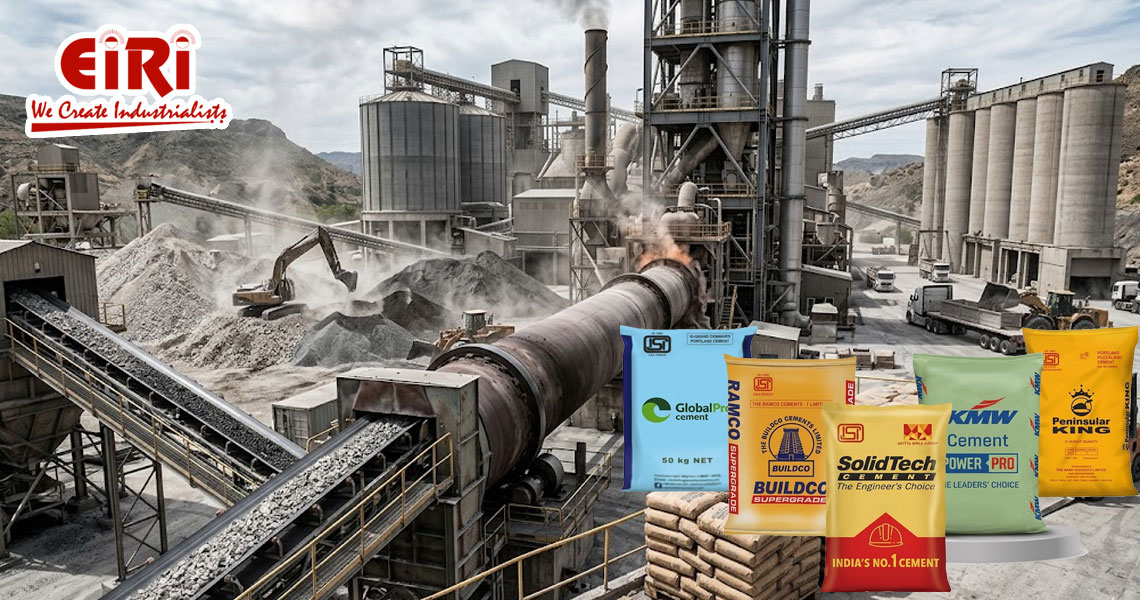
Cement manufacturing is one of the most fundamental and enduring industrial businesses in the world. It serves as the backbone of infrastructure development, feeding demand from housing, commercial construction, transportation networks, and industrial projects. For entrepreneurs, entering the cement manufacturing industry presents an opportunity to participate in a sector that is deeply tied to economic growth and urban expansion. However, it is also a capital-intensive and technically demanding business that requires careful planning, operational discipline, and a clear understanding of market dynamics.
Starting a cement manufacturing venture is not simply about producing a commodity. It involves mastering raw material sourcing, understanding complex production processes, ensuring consistent quality, managing logistics, and positioning your brand in a competitive market. This guide explores the cement manufacturing business from an entrepreneurial perspective, helping you understand the industry structure, production process, investment considerations, and growth opportunities.
Understanding the Cement Industry
The cement industry operates at the intersection of construction demand and industrial production. Cement is not a discretionary product; it is a necessity for development. Demand is largely driven by real estate activity, infrastructure projects, and industrial expansion. Entrepreneurs entering this sector must evaluate regional demand patterns, transportation costs, and competitive intensity.
Unlike many other manufacturing businesses, cement production is location-sensitive. Plants are typically established near limestone reserves, as limestone is the primary raw material. Proximity to markets is equally important because cement is a low-margin, high-volume product where transportation costs can significantly impact profitability.
The industry is often dominated by large players due to economies of scale. However, there are still opportunities for new entrants, particularly in regional markets, niche cement products, and specialized applications. Entrepreneurs who can identify underserved regions or differentiate through product quality and distribution efficiency can build a viable business.
Raw Materials and Supply Chain Foundations
The foundation of any cement manufacturing business lies in its raw materials. Limestone is the primary ingredient, typically accounting for the majority of the raw mix. Other materials such as clay, shale, sand, and iron ore are used to adjust the chemical composition.
Securing a reliable and consistent supply of raw materials is critical. Variations in raw material quality can affect the final product, leading to inconsistencies that can damage brand reputation. Entrepreneurs must invest in geological surveys and long-term supply agreements to ensure stability.
The logistics of transporting raw materials to the plant and finished cement to the market must be carefully designed. Efficient supply chain management can significantly reduce costs and improve margins. This includes optimizing transportation routes, selecting appropriate modes of transport, and maintaining inventory levels that balance production continuity with cost efficiency.
The Cement Manufacturing Process
Crushing and Pre-Homogenization
The process begins with the extraction of raw materials from quarries. Limestone and other materials are crushed into smaller pieces to facilitate further processing. Pre-homogenization ensures that variations in raw material composition are minimized, creating a more consistent feed for the next stages.
Raw Meal Grinding
The crushed materials are then ground into a fine powder known as raw meal. This step requires precision, as the chemical composition of the raw meal determines the quality of the final cement. Modern plants use advanced grinding technologies to achieve uniform particle size and composition.
Clinker Production
Clinker production is the heart of the cement manufacturing process. The raw meal is heated in a rotary kiln at extremely high temperatures, typically around 1400–1500°C. During this process, chemical reactions occur that transform the raw materials into clinker, which consists of nodules with specific mineral compositions.
This stage is energy-intensive and requires sophisticated equipment and process control systems. Maintaining consistent temperature and residence time in the kiln is crucial for producing high-quality clinker.
Cement Grinding and Blending
The clinker is then cooled and ground with gypsum and other additives to produce cement. The grinding process determines the fineness of the cement, which directly affects its performance characteristics. Different types of cement can be produced by varying the composition and fineness.
Packaging and Distribution
Once the cement is produced, it is stored in silos and then packaged or dispatched in bulk. Packaging can be done in bags or through bulk transport systems, depending on the target market. Efficient distribution is essential to ensure timely delivery and maintain customer satisfaction.
Plant Setup and Infrastructure
Establishing a cement manufacturing plant requires substantial investment in land, machinery, and infrastructure. The size and capacity of the plant will depend on the target market and available resources. Entrepreneurs must carefully evaluate the optimal plant size to balance economies of scale with market demand.
The plant layout should be designed to ensure smooth material flow and operational efficiency. This includes the placement of crushers, grinding units, kilns, storage silos, and packaging facilities. Automation and control systems play a crucial role in maintaining consistency and reducing operational errors.
Power supply is another critical consideration. Cement manufacturing is energy-intensive, and reliable power is essential for uninterrupted operations. Entrepreneurs must plan for adequate power infrastructure, including backup systems to handle potential disruptions.
Machinery and Technology Selection
The choice of machinery and technology has a significant impact on production efficiency and product quality. Modern cement plants use advanced equipment such as vertical roller mills, preheater towers, and automated control systems.
Investing in high-quality machinery can improve productivity, reduce downtime, and enhance product consistency. However, it also requires higher initial capital. Entrepreneurs must strike a balance between cost and performance, considering both short-term affordability and long-term operational benefits.
Technology also plays a role in process optimization. Advanced monitoring systems can provide real-time data on production parameters, enabling operators to make informed decisions and maintain consistent quality.
Quality Control and Product Differentiation
Quality is a key differentiator in the cement industry. Customers, particularly in construction, rely on consistent performance to ensure structural integrity. Entrepreneurs must establish robust quality control systems that monitor every stage of production, from raw material selection to final product testing.
Laboratories equipped with modern testing equipment are essential for analyzing chemical composition, strength, and other properties. Maintaining strict quality standards not only builds trust but also enables the production of specialized cement types for different applications.
Product differentiation can also provide a competitive edge. While standard cement products dominate the market, there is growing demand for specialized variants tailored to specific construction needs. Entrepreneurs who can innovate and offer unique products can capture niche markets.
Market Strategy and Distribution Network
The success of a cement manufacturing business depends heavily on its market strategy. Cement is typically sold through a network of dealers, distributors, and direct sales channels. Building a strong distribution network is essential for reaching customers and ensuring consistent sales.
Brand positioning plays an important role in influencing customer perception. Even though cement is often viewed as a commodity, brand reputation can impact purchasing decisions, especially in large construction projects.
Entrepreneurs must also focus on pricing strategies that balance competitiveness with profitability. Understanding local market dynamics, including demand fluctuations and competitor pricing, is crucial for effective decision-making.
Financial Planning and Investment Considerations
Cement manufacturing is a capital-intensive business with high initial investment requirements. Costs include land acquisition, plant construction, machinery procurement, and working capital. Entrepreneurs must develop a comprehensive financial plan that accounts for both capital expenditure and operational costs.
Revenue generation depends on production capacity, market demand, and pricing strategies. Break-even analysis is essential to determine the viability of the project. Given the scale of investment, careful financial management is critical to ensure long-term sustainability.
Operating costs include raw materials, energy, labor, maintenance, and logistics. Entrepreneurs must continuously monitor and optimize these costs to maintain profitability. Efficient operations can significantly improve margins, even in a competitive market.
Operational Challenges and Risk Management
Running a cement manufacturing business involves several operational challenges. Equipment maintenance is a major concern, as breakdowns can disrupt production and lead to significant losses. Regular maintenance schedules and skilled technical staff are essential to minimize downtime.
Supply chain disruptions can also impact operations. Entrepreneurs must develop contingency plans to handle potential shortages of raw materials or transportation issues. Diversifying suppliers and maintaining buffer stocks can help mitigate these risks.
Market volatility is another challenge. Demand for cement can fluctuate based on economic conditions and construction activity. Entrepreneurs must be prepared to adapt to changing market conditions and adjust production levels accordingly.
Scaling and Growth Opportunities
Once the initial plant is operational, entrepreneurs can explore opportunities for expansion and diversification. Increasing production capacity can help meet growing demand and improve economies of scale. Expanding into new markets can also enhance revenue potential.
Vertical integration is another growth strategy. By controlling more stages of the value chain, such as raw material extraction or distribution, entrepreneurs can improve efficiency and reduce costs. Strategic partnerships and collaborations can also provide access to new markets and technologies.
Innovation in product offerings can open new revenue streams. Developing specialized cement products for specific applications can differentiate the business and attract new customers. Continuous improvement and adaptation are key to long-term success in the cement industry.
Conclusion
Cement manufacturing is a complex but rewarding business for entrepreneurs who are willing to invest the time, capital, and effort required to build a successful operation. It is a sector that demands technical expertise, operational efficiency, and strategic thinking.
From securing raw materials and setting up a plant to managing production and building a distribution network, every aspect of the business requires careful planning and execution. While the challenges are significant, the opportunities are equally compelling for those who approach the industry with a clear vision and disciplined approach.
Entrepreneurs who focus on quality, efficiency, and market understanding can establish a strong presence in the cement manufacturing industry and build a business that contributes to the foundation of modern infrastructure.