
Poultry, Egg Farming and Egg Processing Business: A Complete Guide for Entrepreneurs








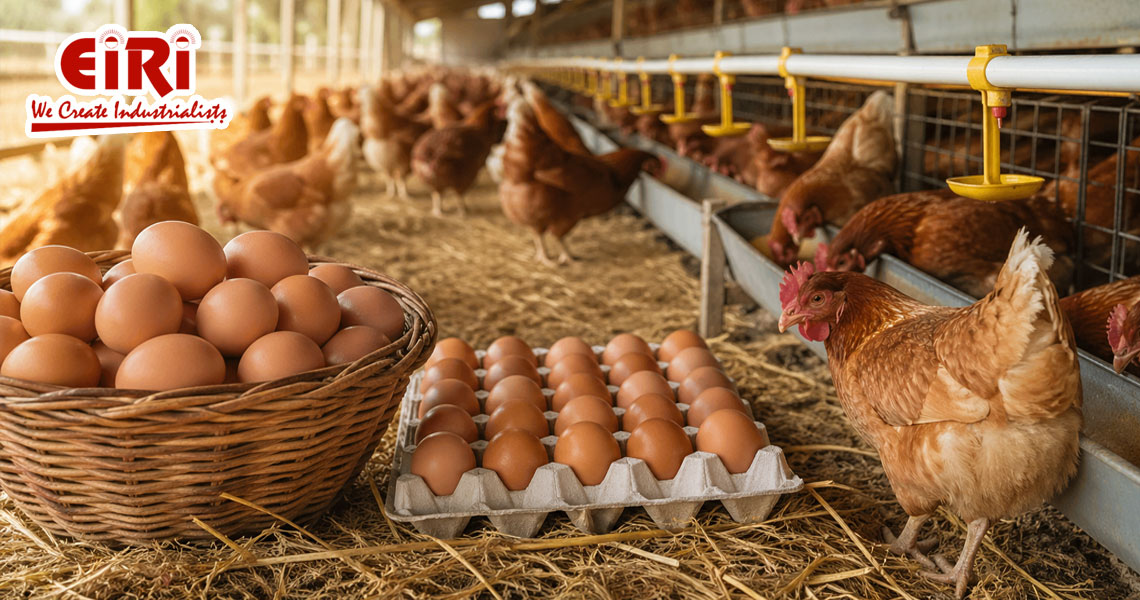
The poultry and egg industry is one of the most structured and scalable agribusiness segments, offering opportunities ranging from small farms to large integrated operations. At its core, the business revolves around two primary verticals: egg production through layer farming and meat production through broiler farming. Among these, egg production stands out as a stable and recurring revenue model because hens lay eggs almost daily during their productive cycle.
Eggs are not just a household food item but a versatile industrial raw material. They are used in bakeries, confectionery, processed foods, pharmaceuticals, and even cosmetics. This wide application ensures consistent demand across different market segments. Entrepreneurs entering this field must understand that success depends not only on farming but also on efficient handling, processing, and marketing of eggs.
The egg industry follows a well-defined chain starting from breeder farms, hatcheries, pullet rearing, and finally layer farms where eggs are produced. Each stage requires careful planning and management because inefficiencies at any level can impact overall productivity and profitability.
Setting Up a Poultry Farm
Establishing a poultry farm begins with selecting the right location and designing appropriate housing. The layout of the farm should allow smooth movement of birds, feed, and workers while minimizing stress and contamination risks. Housing systems are broadly divided into deep litter systems and cage systems. The deep litter system involves raising birds on a floor covered with bedding material, while cage systems confine birds in structured enclosures designed for efficient feeding and egg collection.
The orientation of poultry buildings plays a crucial role in maintaining optimal temperature and ventilation. Proper airflow helps in controlling heat, moisture, and harmful gases such as ammonia and hydrogen sulfide, which can accumulate from droppings. Insulation, roofing design, and ventilation systems must be planned carefully to maintain a stable internal environment.
Water supply must be consistent and clean, as water intake directly affects feed consumption and egg production. Modern poultry farms often use automated drinkers and feeders to ensure uniform distribution and reduce labor dependency. The choice of equipment, including brooders, feeders, drinkers, and egg collection systems, determines operational efficiency and long-term scalability.
Feed, Nutrition and Production Efficiency
Feed management is the backbone of poultry farming, accounting for a significant portion of the production cost. Layers require a balanced diet rich in proteins, vitamins, minerals, and energy sources to maintain consistent egg production. Calcium plays a particularly important role in eggshell formation, while amino acids support growth and egg quality.
Feed hygiene is critical to prevent contamination and disease. Improper storage or handling can lead to fungal growth, toxin formation, and nutrient loss. Water hygiene is equally important, as contaminated water can spread infections rapidly across the flock.
Egg production depends heavily on the condition of pullets before they start laying. Proper rearing during the early stages ensures uniform growth and better laying performance. Factors such as lighting, temperature, and stress management influence the laying cycle and overall productivity. High temperatures, for instance, can reduce feed intake and egg production, making temperature control an essential aspect of farm management.
Biosecurity and Disease Control
Disease prevention is one of the most important aspects of poultry farming. Biosecurity measures are designed to prevent the entry and spread of pathogens within the farm. This includes controlling the movement of people, equipment, and vehicles, as well as maintaining strict hygiene practices.
Poultry farms are vulnerable to a wide range of diseases, including viral, bacterial, and fungal infections. Diseases such as Newcastle disease, avian influenza, and infectious bronchitis can cause significant losses if not managed properly. Preventive strategies include vaccination, regular health monitoring, and maintaining clean housing conditions.
Disinfection of poultry houses is an ongoing process that involves cleaning surfaces, equipment, and water systems. Different types of disinfectants are used depending on the level of contamination and the type of pathogens present. Evaluating the effectiveness of disinfection programs is essential to ensure that disease risks are minimized.
Stress and management-related issues such as overcrowding, poor nutrition, and high temperatures can weaken the immune system of birds, making them more susceptible to diseases. Addressing these factors is as important as medical interventions in maintaining flock health.
Egg Structure, Composition and Functional Properties
Understanding the structure and composition of eggs is important for both production and processing. An egg consists of three main components: the shell, the white (albumen), and the yolk. The shell provides protection, while the white and yolk contain proteins, fats, vitamins, and minerals.
Egg white is rich in proteins such as ovalbumin, conalbumin, and lysozyme, which have functional properties like foaming and antimicrobial activity. The yolk contains lipids, proteins, and pigments that contribute to color, flavor, and nutritional value. These components make eggs highly versatile in food applications.
The functional properties of eggs, including coagulation, emulsification, and foaming, play a crucial role in food processing. These properties enable eggs to be used in products such as cakes, mayonnaise, sauces, and desserts. Entrepreneurs entering the egg processing segment must understand these properties to develop value-added products.
Egg Processing and Value Addition
Egg processing involves converting raw eggs into products that are easier to store, transport, and use in industrial applications. This includes liquid eggs, frozen eggs, and dried egg powders. The process begins with egg collection, washing, and inspection to ensure quality.
Egg breaking and separation are key steps in processing, where yolk and white may be separated depending on the product requirements. Pasteurization is used to eliminate harmful microorganisms while preserving functional properties. The processed egg products are then packaged and stored under controlled conditions.
Dried egg products, such as egg powder, have a longer shelf life and are widely used in the food industry. Spray drying is a common method used to produce egg powder, where liquid egg is converted into a fine powder through controlled heating and evaporation.
Eggshells, often considered waste, can be processed into calcium-rich powder for various applications. This creates an additional revenue stream and improves overall resource utilization within the business.
Designing an Egg Processing Plant
Setting up an egg processing plant requires careful planning of layout and machinery. The processing line typically includes washing, drying, breaking, separation, pasteurization, and packaging stages. Each stage must be designed to ensure smooth flow and maintain hygiene standards.
Key equipment includes egg washing machines, breaking and separating machines, pasteurizers, storage tanks, and filling machines. Automation plays a significant role in improving efficiency and reducing labor costs. A well-designed plant ensures consistent product quality and minimizes losses during processing.
Cleaning-in-place systems are often integrated into processing plants to maintain hygiene without dismantling equipment. This is particularly important in preventing contamination and ensuring compliance with food safety standards.
Quality Control and Shelf Life Management
Maintaining egg quality is essential for both fresh and processed products. Quality is influenced by factors such as feed, bird health, handling, and storage conditions. Shell quality, yolk color, and internal consistency are key indicators of egg quality.
Eggs undergo changes during storage, including moisture loss and changes in pH. Proper storage conditions, such as controlled temperature and humidity, help in preserving freshness. Techniques such as refrigeration, coating, and controlled atmosphere storage are used to extend shelf life.
Testing methods, including specific gravity measurement and visual inspection, are used to assess egg quality. Identifying spoilage indicators, such as off-odors and discoloration, is important in preventing the distribution of substandard products.
Marketing and Commercialization
Marketing plays a crucial role in the success of a poultry and egg business. Eggs can be sold as fresh shell eggs or processed into value-added products for higher margins. Understanding market demand and consumer preferences is essential for positioning products effectively.
Distribution channels include direct sales, wholesalers, retailers, and institutional buyers such as hotels and food processing companies. Branding, packaging, and product differentiation can help in capturing a larger market share.
Merchandising strategies in modern retail environments focus on product visibility, quality assurance, and consumer education. Digital platforms also provide opportunities for direct-to-consumer sales and brand building.
Innovations and Future Growth Strategies
Innovation in the poultry and egg industry is driven by advancements in breeding, nutrition, and processing technologies. Entrepreneurs can explore opportunities in designer eggs, enriched eggs, and specialty products tailored to specific consumer needs.
Packaging innovations, market research, and consumer insights play a significant role in expanding market reach. Understanding consumer behavior and preferences helps in developing products that meet evolving demands.
Value addition remains one of the most effective ways to increase profitability. From egg-based ready-to-eat products to specialized ingredients for the food industry, the possibilities are extensive. Entrepreneurs who focus on efficiency, quality, and innovation are more likely to succeed in this competitive industry.
Building a Profitable Poultry and Egg Business
A successful poultry and egg business requires a combination of technical knowledge, operational efficiency, and market understanding. From farm management and biosecurity to processing and marketing, each aspect must be carefully planned and executed.
Consistency in production, quality control, and cost management are key factors that determine profitability. By integrating farming with processing and value addition, entrepreneurs can create a sustainable and scalable business model.
The poultry and egg industry offers significant opportunities for growth, but it demands discipline, attention to detail, and a long-term perspective. With the right approach, it can become a highly rewarding venture for those willing to invest time and effort into mastering its complexities.