The tyre manufacturing industry represents one of the most stable and scalable opportunities within the broader automotive and industrial ecosystem. For entrepreneurs, it offers a unique combination of consistent demand, technological depth, and long-term growth potential. Every segment of mobility - ranging from two-wheelers and passenger vehicles to heavy-duty trucks, agricultural machinery, and construction equipment - depends on tyres as an essential component. Unlike many other products, tyres are not a one-time purchase; they require periodic replacement, ensuring continuous market demand.
What makes this industry particularly attractive is its integration across multiple sectors. Growth in automotive manufacturing, expansion in logistics and transportation, and increasing infrastructure activities all contribute to rising tyre consumption. This interconnected demand structure provides entrepreneurs with multiple entry points and revenue streams, allowing flexibility in business models and product focus.
At the same time, the industry is evolving rapidly. Advances in tyre design, manufacturing processes, and performance engineering are redefining product expectations. Entrepreneurs entering this space must not only understand the fundamentals of tyre production but also align their strategies with modern trends such as high-performance tyres, electric vehicle compatibility, and advanced manufacturing systems.
Understanding Market Structure and Demand Dynamics
A clear understanding of the tyre market structure is essential before entering the business. The industry operates through two primary channels: the OEM market and the replacement market. The OEM segment involves supplying tyres directly to vehicle manufacturers. While this segment provides large-volume contracts, it typically operates on tighter margins and requires strict quality and consistency standards.
In contrast, the replacement market offers higher profitability and greater flexibility. As vehicles are used over time, tyres wear out and need replacement, creating a recurring demand cycle. This segment is driven by distribution networks, dealer relationships, branding, and customer trust. For new entrepreneurs, the replacement market often serves as a more accessible entry point due to its lower barriers compared to OEM supply chains.
Demand drivers in the tyre industry are closely linked to vehicle production, usage patterns, and infrastructure development. Passenger vehicles generate significant demand for comfort and performance tyres, while commercial vehicles require durability and load-bearing capacity. Off-the-road (OTR) tyres used in construction and industrial applications form another lucrative niche, often characterized by higher margins and specialized requirements.
Electric vehicles are introducing a new dimension to demand. Due to their unique operating conditions, such as higher torque and weight distribution, EVs require tyres designed for enhanced grip, durability, and reduced rolling resistance. Entrepreneurs who recognize and adapt to these evolving requirements can position themselves in a high-growth segment of the market.
Evolution of Tyre Technology and Its Business Impact
The tyre industry has undergone significant transformation since its early stages, evolving from simple rubber structures to highly engineered products. Understanding this evolution is important for entrepreneurs because it highlights the role of innovation in maintaining competitiveness.
Modern tyres are built using advanced materials and complex designs that balance multiple performance parameters, including traction, durability, fuel efficiency, and ride comfort. Technological advancements have enabled manufacturers to optimize tread patterns, improve structural integrity, and enhance overall performance. These innovations have also increased the complexity of manufacturing processes, making technical expertise and process control critical success factors.
For entrepreneurs, this evolution underscores the importance of investing in knowledge, skilled manpower, and modern equipment. Entering the tyre industry is not merely about setting up a production unit; it involves building capabilities in design, testing, and quality assurance. Companies that successfully integrate technological advancements into their operations are better positioned to compete in both domestic and international markets.
Types of Tyres and Product Positioning Strategy
One of the key decisions for any new entrant is selecting the right product segment. The tyre industry offers a wide range of product categories, each with distinct applications and market dynamics. Passenger vehicle tyres, including all-season, summer, and performance variants, focus on comfort, safety, and fuel efficiency. Commercial vehicle tyres prioritize durability, load capacity, and cost-effectiveness, making them essential for logistics and transportation businesses.
Specialty tyres, such as those used in agriculture, construction, and industrial equipment, represent a niche segment with significant potential. These tyres often require customized designs and offer higher margins due to their specialized nature. Run-flat tyres and all-terrain tyres are examples of products that cater to specific performance needs and customer preferences.
Product positioning plays a crucial role in determining market success. Entrepreneurs must decide whether to compete on cost, quality, performance, or a combination of these factors. A clear positioning strategy helps in defining target customers, pricing models, and marketing approaches. It also influences decisions related to raw materials, manufacturing processes, and product design.
Raw Materials and Compounding Fundamentals
The foundation of tyre manufacturing lies in its raw materials and compounding processes. Natural rubber and synthetic rubber form the primary base materials, each offering distinct properties. Natural rubber provides elasticity and resilience, while synthetic rubber offers consistency and resistance to various environmental conditions. The selection and blending of these materials are critical in achieving desired performance characteristics.
Reinforcing fillers such as carbon black and silica play a vital role in enhancing strength, durability, and traction. Carbon black improves abrasion resistance and extends tyre life, while silica contributes to better grip and reduced rolling resistance. The choice between these fillers depends on the intended application and performance requirements of the tyre.
Rubber chemicals and vulcanization systems further define the properties of the final product. Vulcanization is a key process that transforms raw rubber into a durable and elastic material capable of withstanding operational stresses. The formulation design, including the selection of additives and curing agents, requires precise control and technical expertise.
For entrepreneurs, mastering compounding is essential because it directly impacts product quality and cost. Efficient formulation strategies can reduce material costs while maintaining performance standards, providing a competitive advantage in a price-sensitive market.
Tyre Engineering and Product Design
Tyre engineering is at the core of product development and differentiation. A tyre is composed of multiple structural components, including the tread, sidewall, bead, and inner liner, each serving a specific function. The design and integration of these components determine the overall performance of the tyre.
Radial and bias constructions represent two fundamental design approaches. Radial tyres, with their layered structure, offer better fuel efficiency, longer life, and improved handling, making them the dominant choice in modern markets. Bias tyres, on the other hand, provide robustness and are often used in specific applications such as heavy-duty or off-road operations.
Tread pattern design is another critical aspect of tyre engineering. It influences traction, noise levels, water dispersion, and wear characteristics. Advanced design techniques allow manufacturers to optimize tread patterns for specific conditions, enhancing performance and customer satisfaction.
Performance parameters such as load capacity, speed rating, heat resistance, and rolling resistance must be carefully balanced during the design process. These factors not only affect the functionality of the tyre but also influence its market acceptance and pricing.
Manufacturing Process and Plant Operations
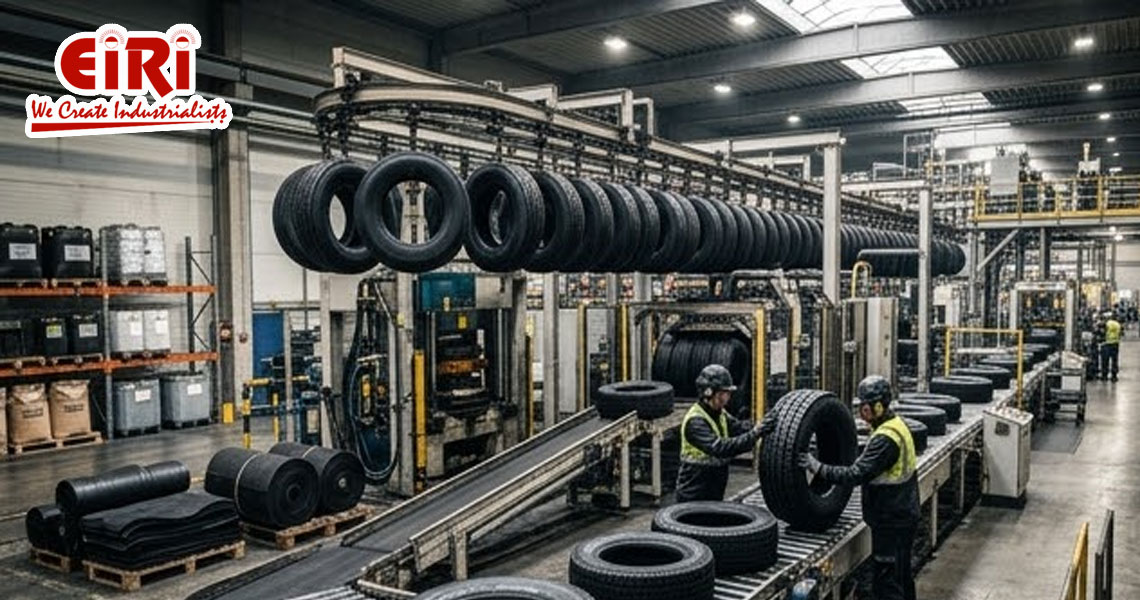
Setting up a tyre manufacturing plant involves a series of complex processes that transform raw materials into finished products. The manufacturing process begins with the preparation of rubber compounds, followed by extrusion and calendering to create various components. These components are then assembled using tyre building machines, forming the basic structure of the tyre.
The next critical stage is curing or vulcanization, where the assembled tyre is subjected to heat and pressure to achieve its final shape and properties. This process requires precise control of temperature, pressure, and time to ensure consistent quality.
Post-curing operations include finishing, inspection, and testing. Quality assurance plays a crucial role in ensuring that each tyre meets performance and safety standards. Advanced testing methods, including uniformity testing and dynamic balance analysis, are used to detect defects and maintain product consistency.
Automation and advanced manufacturing technologies are increasingly being adopted to improve efficiency, reduce errors, and enhance productivity. For entrepreneurs, investing in modern machinery and automation systems can significantly impact operational performance and long-term profitability.
Supply Chain and Operational Efficiency
The tyre manufacturing business relies on a well-structured supply chain that ensures the timely availability of raw materials and efficient distribution of finished products. Managing this supply chain effectively is essential for controlling costs and maintaining production continuity.
Raw material sourcing involves dealing with multiple suppliers and managing price fluctuations. Strategic procurement and inventory management practices can help mitigate risks and optimize costs. On the distribution side, building strong relationships with dealers, distributors, and retailers is crucial for market penetration and customer reach.
Operational efficiency is achieved through process optimization, capacity planning, and effective resource utilization. Entrepreneurs must focus on minimizing waste, improving production cycles, and maintaining consistent quality standards. These factors collectively contribute to cost control and competitive positioning.
Financial Planning and Profitability Considerations
Entering the tyre manufacturing industry requires significant capital investment, making financial planning a critical aspect of business success. Capital costs include land, machinery, infrastructure, and initial working capital. Entrepreneurs must carefully assess these requirements and develop realistic financial projections.
Cost of production is influenced by raw materials, energy consumption, labor, and maintenance. Understanding these cost components and implementing strategies to optimize them is essential for achieving profitability. Break-even analysis helps in determining the minimum production level required to cover costs, while profitability models provide insights into revenue potential.
Working capital management is another important factor, as the business involves continuous procurement, production, and sales cycles. Efficient management of receivables, payables, and inventory ensures smooth operations and financial stability.
Market Strategy and Business Growth
A well-defined market strategy is essential for establishing a strong presence in the tyre industry. Entrepreneurs must identify target segments, develop branding strategies, and build distribution networks. Marketing efforts should focus on highlighting product quality, performance, and reliability to build customer trust.
Competitive positioning requires a clear understanding of market dynamics and customer preferences. Differentiation can be achieved through product innovation, pricing strategies, or superior customer service. Building a strong brand and maintaining consistent quality are key factors in gaining market share.
As the business grows, expansion opportunities may include increasing production capacity, entering new markets, or diversifying product offerings. Strategic planning and continuous improvement are essential for sustaining growth and staying competitive in a dynamic industry.
Conclusion
The tyre manufacturing industry offers a compelling opportunity for entrepreneurs willing to invest in technology, expertise, and strategic planning. Its strong demand fundamentals, diverse product segments, and evolving technological landscape make it a promising sector for long-term growth. However, success in this industry requires a deep understanding of market dynamics, manufacturing processes, and financial management.
Entrepreneurs who approach this business with a clear vision, focus on quality and efficiency, and adapt to changing market trends can build a sustainable and profitable enterprise. By combining technical knowledge with effective business strategies, it is possible to establish a strong foothold in one of the most essential industries supporting global mobility.