
Groundnut (Peanut) Processing Industry: A Complete Entrepreneurial Guide










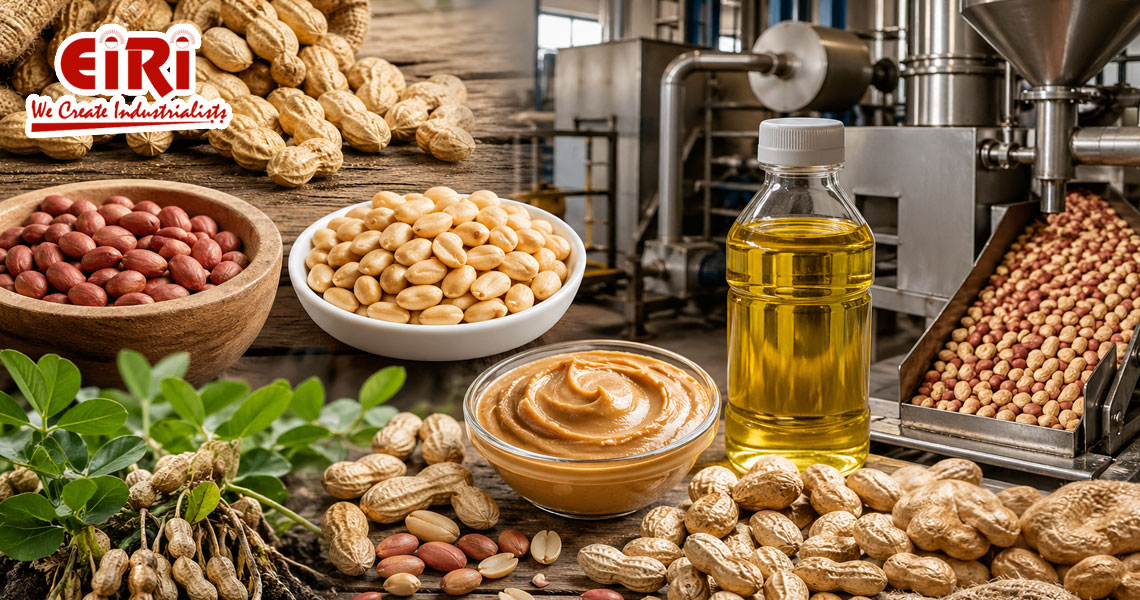
Groundnut, commonly known as peanut, represents one of the most versatile and commercially viable agricultural commodities for entrepreneurs. The industry spans from primary farming to advanced processing, offering multiple entry points depending on investment capacity, technical knowledge, and market focus. In India, groundnut cultivation has a long-standing legacy, evolving from traditional farming practices into a structured agro-industrial ecosystem that supports edible oil production, snack manufacturing, and value-added food processing.
The market potential of groundnut-based products is broad and resilient. Demand is driven by consumption of edible oil, roasted snacks, peanut butter, confectionery, and protein-rich foods. Urbanization, changing dietary habits, and increasing interest in plant-based proteins have further expanded the scope of peanut processing businesses. Entrepreneurs entering this sector benefit from a raw material that is widely available, storable, and adaptable to different product formats.
Product Profile and Applications
Groundnuts are nutritionally dense and commercially flexible. They contain high levels of protein, healthy fats, dietary fiber, vitamins such as vitamin E and B-complex, and minerals like magnesium, phosphorus, and potassium. Their calorific value makes them a compact energy source, while their biochemical composition supports multiple industrial uses.
From a business perspective, peanuts can be transformed into edible oil, roasted snacks, peanut butter, flour, protein isolates, and even beverage bases such as peanut milk. Their oil is widely used for cooking, while the defatted meal serves as animal feed or a protein ingredient in food formulations. Peanut skins, hulls, and vines also find use in secondary industries, ensuring minimal waste and multiple revenue streams.
Health-related attributes such as cholesterol management, blood sugar regulation, and satiety enhancement make peanut products attractive in consumer markets. However, entrepreneurs must also understand aspects like digestibility, presence of anti-nutritional factors, and allergen concerns when designing products.
Raw Material and Agricultural Foundation
The success of a peanut processing business begins with reliable access to quality raw material. Groundnut cultivation depends heavily on agro-climatic conditions, soil health, and seed quality. Sandy loam soils with good drainage are ideal, while warm climates with moderate rainfall support optimal yields.
Seed selection and treatment play a critical role in crop productivity. High-quality seeds ensure uniform germination and resistance to diseases. Field preparation, timely sowing, and intercultural practices such as weeding and pest control directly influence yield outcomes. Harvesting must be done at the correct maturity stage to avoid quality deterioration.
Post-harvest management is equally important. Proper drying, cleaning, and storage reduce moisture levels and prevent fungal contamination. Entrepreneurs who integrate backward into farming or establish strong supplier networks gain better control over quality and cost.
Nutrient Management and Crop Protection
Efficient nutrient management enhances both yield and quality of groundnuts. Macronutrients such as nitrogen, phosphorus, and potassium support plant growth, while calcium and sulfur are particularly important for pod development. Micronutrients like zinc, boron, and iron contribute to overall plant health.
Balanced fertilization ensures optimal crop performance, while bio-fertilizers and soil amendments improve long-term productivity. Managing pests and diseases is a constant challenge, with threats ranging from fungal infections to nematodes and viral diseases. Integrated approaches combining chemical treatments, biological controls, and cultural practices are essential for maintaining crop health.
Weed control also plays a vital role in maximizing yield. Mechanical methods, chemical herbicides, and crop rotation strategies help reduce competition for nutrients and water. Effective weed management translates directly into higher productivity and better-quality raw material for processing.
Water Management and Irrigation Practices
Water management significantly impacts groundnut cultivation. The crop requires moderate irrigation, with critical stages such as flowering and pod formation demanding consistent moisture. Over-irrigation can lead to fungal growth, while under-irrigation reduces yield.
Modern irrigation techniques such as drip and sprinkler systems improve water efficiency and uniform distribution. Entrepreneurs involved in large-scale farming or contract farming should consider integrating moisture monitoring systems and fertigation methods to optimize resource use.
Processing and Industrial Operations
- Processing is where groundnuts gain their commercial value. The transformation from raw pods to finished products involves several stages, each requiring specific machinery and technical expertise. The importance of processing lies in improving shelf life, enhancing flavor, and creating diverse product categories.
- Primary processing begins with cleaning and shelling, followed by grading based on size and quality. Roasting is a critical step that develops flavor and texture. Continuous dry roasters are widely used in industrial setups for consistent output.
- Oil extraction is a major segment of the industry. Traditional methods like ghani mills coexist with modern expellers and solvent extraction plants. Oil expellers mechanically press the kernels, while solvent extraction achieves higher oil recovery. The extracted oil is then filtered, refined, and packaged.
- Peanut butter production involves roasting, blanching, grinding, and emulsifying the kernels into a smooth paste. Salted and flavored peanuts require additional steps such as seasoning and controlled roasting. Packaging plays a crucial role in maintaining product quality and extending shelf life.
- Machinery requirements vary depending on scale but typically include shellers, roasters, oil expellers, filter presses, conveyors, and packaging units. Automation can significantly enhance efficiency and reduce labor costs.
Quality Control and Product Characteristics
Quality is a defining factor in the success of a groundnut processing business. Key attributes include flavor, texture, appearance, and nutritional composition. Sensory quality determines consumer acceptance, while physicochemical properties influence processing efficiency.
Grading and cleaning systems ensure removal of impurities and defective kernels. Parameters such as moisture content, oil yield, and protein levels are monitored to maintain consistency. Advanced processing units may also incorporate electronic sorting and color grading technologies.
Aflatoxin contamination is one of the most critical quality concerns in peanuts. These toxins, produced by certain fungi, can affect both safety and marketability. Proper drying, storage, and regular testing are essential to minimize risks.
Storage and Post-Harvest Handling
Storage conditions directly impact the quality and longevity of groundnuts. Low moisture levels, controlled temperature, and proper ventilation prevent fungal growth and spoilage. Storage facilities must be designed to protect against pests and environmental fluctuations.
Post-harvest physiology involves understanding factors such as respiration, humidity, and seed dormancy. Proper curing and drying techniques enhance shelf life and maintain kernel integrity. Entrepreneurs must invest in efficient storage infrastructure to ensure consistent supply for processing.
Value Addition and Product Diversification
One of the biggest advantages of the groundnut industry is the potential for value addition. Beyond traditional products, entrepreneurs can explore peanut protein concentrates, isolates, and functional food ingredients. These products cater to specialized markets such as sports nutrition and processed food manufacturing.
Peanut-based beverages, bakery products, and confectionery items offer additional revenue streams. By-products such as peanut meal, skin, and hull can be utilized in animal feed, bio-based materials, and industrial applications.
The ability to diversify products reduces dependency on a single revenue source and enhances business resilience.
Advanced Technologies and Innovation
Technological advancements are reshaping the groundnut industry. Innovations in breeding have led to improved varieties with higher yield, disease resistance, and better oil composition. Molecular markers and genetic mapping enable precise trait selection, enhancing crop performance.
Processing technologies have also evolved, with modern equipment offering higher efficiency and better product quality. Techniques such as ultrafine grinding, microwave sterilization, and enzymatic processing are used in advanced product development.
Emerging areas like peanut oligopeptides and protein isolates open new opportunities in nutraceuticals and functional foods. Entrepreneurs who adopt modern technologies gain a competitive edge in both domestic and export markets.
Peanut Oil Processing and Stability
Peanut oil production remains a cornerstone of the industry. The process involves cleaning, shelling, crushing, cooking, pressing, and refining. Each stage affects the final oil quality, including its flavor, color, and nutritional profile.
Oxidation stability is a key factor in determining shelf life. The use of antioxidants and proper storage conditions helps maintain oil quality. Understanding the relationship between fatty acid composition and stability is essential for producing high-quality edible oil.
Safety, Allergens, and Compliance
Peanut allergens are a significant concern in food processing. Entrepreneurs must implement strict quality control measures to prevent cross-contamination and ensure consumer safety. Clear labeling and adherence to food safety standards are critical for building trust and accessing wider markets.
Economics and Business Planning
The financial viability of a groundnut processing business depends on factors such as scale, product mix, and operational efficiency. Capital investment includes land, building, machinery, and working capital. Revenue is influenced by product pricing, market demand, and distribution channels.
Small-scale units can start with basic processing such as roasting and oil extraction, while larger enterprises may invest in integrated facilities producing multiple products. Efficient supply chain management and cost control are essential for profitability.
Market Trends and Future Outlook
The groundnut industry continues to grow, driven by increasing demand for edible oils, snacks, and plant-based proteins. Asia-Pacific remains a dominant market, with India playing a significant role in production and export.
Emerging global demand for peanut-based products, especially in health-conscious and protein-focused segments, creates new opportunities for entrepreneurs. Export markets offer additional growth potential, provided quality and consistency are maintained.
Conclusion
Starting a groundnut processing business offers a compelling opportunity for entrepreneurs willing to combine agricultural knowledge with industrial operations. The industry’s strength lies in its versatility, allowing businesses to operate across multiple product categories and value chains.
Success in this sector depends on careful planning, quality control, efficient processing, and continuous adaptation to market trends. By leveraging the full potential of groundnuts—from raw material to high-value products—entrepreneurs can build a sustainable and profitable enterprise in a highly dynamic market.