
Plastics Industry: Identification, Innovation, and Emerging Business Opportunities for Entrepreneurs










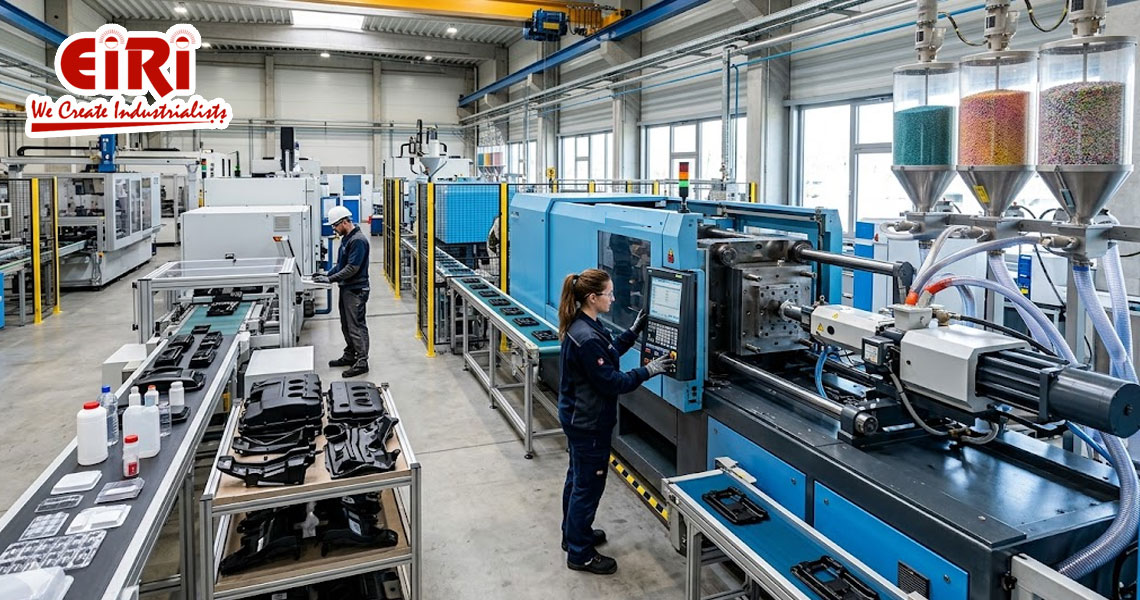
The plastics industry has transformed from a commodity-driven sector into a highly specialized, technology-intensive domain offering vast opportunities for entrepreneurs. Today’s market is no longer limited to mass production of basic materials; it has expanded into advanced engineering plastics, functional additives, high-performance composites, and application-specific formulations. For new entrants, success lies in understanding not just manufacturing, but the science behind materials, their identification, modification, and end-use applications.
Entrepreneurs entering this sector must recognize that plastics are not a single product category but an ecosystem. This ecosystem includes raw polymers, additives, processing technologies, testing methods, and application-driven innovations. Businesses that integrate technical knowledge with market demand are better positioned to build sustainable and profitable operations.
Importance of Material Identification in Business Operations
One of the most underestimated yet critical aspects of the plastics business is material identification. In practical terms, incorrect identification can lead to product failure, customer rejection, and financial losses. For entrepreneurs working in recycling, compounding, or manufacturing, the ability to distinguish between similar-looking plastics is a competitive advantage.
Modern businesses increasingly rely on both simple and advanced identification techniques. While small-scale units often depend on physical and chemical testing methods, growing enterprises adopt instrumental techniques such as spectroscopy and thermal analysis to ensure precision. The trend indicates a shift toward data-driven material validation, where consistency and traceability are becoming essential requirements.
- Accurate plastic identification prevents product failure and reduces costly manufacturing errors
- Essential for recycling businesses handling mixed plastic waste streams efficiently
- Helps maintain consistent product quality and meet customer specifications reliably
- Enables better raw material selection and process optimization in manufacturing units
- Combination of simple and advanced testing methods ensures reliable material classification
- Strong identification capability creates competitive advantage in quality-focused markets
In recycling-based ventures, identification becomes even more crucial. Mixed plastic waste streams require efficient sorting and classification to produce usable raw materials. Entrepreneurs who invest in identification capabilities can tap into value-added recycled products rather than low-margin commodity outputs.
Role of Additives in Product Differentiation
Additives have become the backbone of innovation in plastics manufacturing. Basic polymers such as polyethylene and polypropylene are widely available, but their performance in real-world applications depends on how they are modified. This is where additives create differentiation.
From a business perspective, additives enable customization. Manufacturers can produce plastics that are heat-resistant, UV-stable, flame-retardant, impact-resistant, or electrically conductive depending on the application. This flexibility allows entrepreneurs to cater to niche markets instead of competing in saturated commodity segments.
The market is increasingly moving toward specialized formulations rather than generic products. For example, packaging films with improved clarity and anti-blocking properties, automotive components with enhanced strength, or electronic housings with flame resistance are all driven by additive technology. Entrepreneurs who understand formulation science can position themselves as solution providers rather than just material suppliers.
Another important trend is the use of masterbatches, which simplify the incorporation of additives. This has opened opportunities for businesses focused solely on additive concentrates, supplying to manufacturers across industries.
Expansion of Plastics Applications Across Industries
The versatility of plastics has led to their widespread adoption across nearly every industrial sector. For entrepreneurs, this means multiple entry points depending on their investment capacity and technical expertise.
In the automotive sector, plastics are replacing metals in various components due to their lightweight nature and design flexibility. This shift is driven by the need for improved efficiency and performance. Entrepreneurs can explore opportunities in manufacturing interior components, under-the-hood parts, and structural elements.
The electronics industry relies heavily on engineering plastics for insulation, durability, and miniaturization. With the continuous growth of electronic devices, demand for high-performance plastics is increasing. Businesses that can produce precision-molded components or specialized materials for electronics have strong growth potential.
Construction is another major area where plastics are gaining importance. Applications include pipes, insulation materials, panels, sealants, and adhesives. The demand for durable and low-maintenance materials makes plastics a preferred choice in modern construction practices.
In packaging, plastics dominate due to their cost-effectiveness and versatility. However, the market is evolving toward high-performance packaging solutions that offer better protection, longer shelf life, and improved aesthetics. Entrepreneurs can focus on flexible packaging, rigid containers, or specialty films to capture market share.
High-Performance and Specialty Plastics: A Growing Opportunity
One of the most promising areas for entrepreneurs is high-performance plastics. Materials such as advanced thermoplastics and specialty polymers are used in demanding applications where standard plastics fail. These include aerospace components, medical devices, and precision engineering parts.
Although entry into this segment requires higher investment and technical expertise, the profit margins are significantly better compared to commodity plastics. Entrepreneurs who invest in research, quality control, and advanced processing technologies can build strong competitive advantages.
Engineering plastics such as nylon, polyacetal, and thermoplastic polyesters are widely used in mechanical applications due to their strength, wear resistance, and self-lubricating properties. These materials are replacing traditional materials in gears, bearings, and machine components.
Emerging Technologies and Advanced Polymer Systems
Innovation in polymer science is opening new frontiers for the plastics industry. Electrically conducting polymers, biodegradable systems, and advanced composites are gaining attention for their unique properties.
Conducting polymers are being used in applications such as flexible electronics, sensors, and energy storage devices. These materials combine the advantages of plastics with electrical functionality, creating entirely new product categories.
Biodegradable polymer systems are being explored for specialized applications, particularly in medical and packaging sectors. These materials are designed to degrade under specific conditions, offering functional advantages in controlled environments.
Biomedical applications of polymers represent another high-growth area. Plastics are used in surgical devices, implants, and drug delivery systems. Entrepreneurs entering this segment must focus on precision, quality, and compliance with industry standards, as the requirements are highly stringent.
Chemical Analysis and Quality Control as Business Drivers
As the plastics industry becomes more sophisticated, quality control is no longer optional—it is a fundamental requirement. Chemical analysis plays a critical role in ensuring product consistency, compliance, and performance.
Entrepreneurs must invest in analytical capabilities to monitor raw materials, additives, and finished products. This includes testing for chemical composition, impurities, and performance characteristics. Businesses that prioritize quality control can build trust with customers and establish long-term relationships.
The ability to analyze additives within polymers is particularly important. Additives influence product performance, and their correct concentration must be maintained. Advanced analytical techniques allow businesses to optimize formulations and troubleshoot issues effectively.
Processing Innovations and Manufacturing Opportunities
Processing technologies are evolving rapidly, creating new opportunities for entrepreneurs. Techniques such as extrusion, injection molding, blow molding, and foaming are being refined to improve efficiency and product quality.
Expanded plastics, such as foamed polyethylene and polystyrene, are widely used in packaging, insulation, and cushioning applications. These materials offer lightweight solutions with excellent thermal and mechanical properties. Entrepreneurs can explore manufacturing of foam products for diverse industries.
Cross-linked polyethylene is another example of innovation in processing. It offers enhanced strength and thermal resistance, making it suitable for applications such as cables and piping systems.
In agriculture, plastics are used in irrigation systems, protective coverings, and packaging. Drip irrigation components made from plastics have become essential for efficient water management. This sector presents opportunities for manufacturing specialized products tailored to agricultural needs.
- Advanced processing technologies improving efficiency and product precision
- Opportunities in extrusion, molding, foaming, and specialized fabrication methods
- Lightweight foam plastics widely used in packaging and insulation applications
- Crosslinked materials offering enhanced durability and thermal performance
- Growing demand for customized and application-specific plastic products
- Manufacturing innovation directly influences cost efficiency and scalability
Market Trends and Future Prospects
The future of the plastics industry is shaped by technological advancements, changing consumer preferences, and evolving industrial requirements. One key trend is the shift toward high-performance and application-specific materials. Businesses that focus on innovation rather than volume are more likely to succeed.
Automation and digitalization are also transforming manufacturing processes. Smart factories, data analytics, and process optimization are becoming standard practices in advanced operations. Entrepreneurs who adopt modern technologies can achieve higher efficiency and lower production costs.
Another emerging trend is the integration of plastics with other materials to create hybrid solutions. Composites combining plastics with fibers or metals are being used in high-performance applications, opening new business avenues.
The demand for lightweight, durable, and cost-effective materials will continue to drive the growth of plastics across industries. Entrepreneurs who stay updated with technological developments and market trends can identify new opportunities and adapt their business strategies accordingly.
Strategic Considerations for Entrepreneurs
Entering the plastics industry requires careful planning and strategic decision-making. Entrepreneurs must choose the right segment based on their resources, expertise, and market demand. While commodity plastics offer high-volume opportunities, specialty and engineering plastics provide higher margins.
Investment in technical knowledge is crucial. Understanding material properties, processing techniques, and application requirements enables better product development and customer satisfaction. Collaboration with industry experts, suppliers, and research institutions can further enhance capabilities.
Scalability is another important factor. Businesses should start with a focused approach and gradually expand into related areas. For example, a company specializing in plastic components can later move into compounding or additive manufacturing.
Brand positioning also plays a key role. Instead of competing solely on price, entrepreneurs should focus on quality, reliability, and innovation. Building a reputation for consistent performance can lead to long-term success.
Conclusion
The plastics industry offers a vast and dynamic landscape for entrepreneurs. From material identification and additive formulation to advanced applications and emerging technologies, every aspect presents opportunities for innovation and growth. Success in this sector requires a combination of technical expertise, market understanding, and strategic execution.
Entrepreneurs who move beyond basic manufacturing and embrace the science and technology of plastics can create high-value businesses. By focusing on quality, specialization, and evolving industry trends, they can position themselves at the forefront of this ever-expanding industry.