
Snacks and Bakery Products Manufacturing Plant


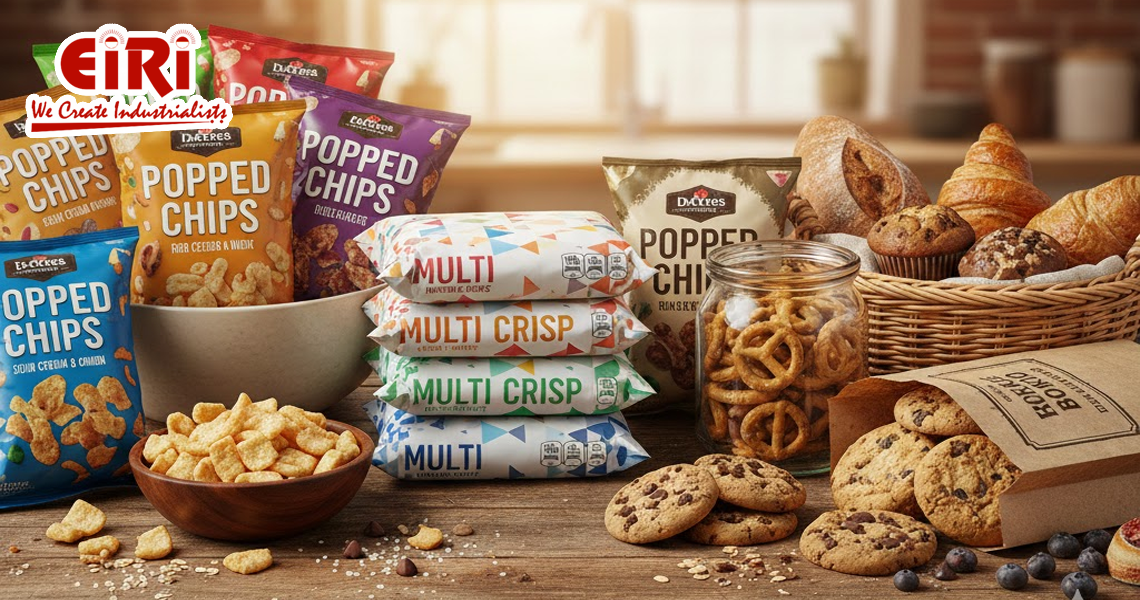
The snacks and bakery products industry has emerged as one of the fastest-growing segments within the food processing sector. Changing lifestyles, rapid urbanisation, increasing disposable incomes, and a growing preference for convenience foods have transformed eating habits across all age groups. Today, ready-to-eat snacks and packaged bakery products are no longer considered occasional indulgences but have become part of everyday consumption.
For entrepreneurs planning to start a new manufacturing venture, a snacks and bakery products manufacturing plant offers a compelling opportunity. Products such as popped chips, multicrisp snacks, pretzels, cookies, biscuits, and other bakery items enjoy consistent demand throughout the year, require comparatively moderate investment, and allow for scalable expansion. With the right product mix, quality control, and distribution strategy, this industry can generate steady cash flows and long-term brand value.
Understanding the Product Range and Market Potential
A modern snacks and bakery manufacturing plant typically produces a diversified portfolio to cater to multiple consumer segments. Popped chips and multicrisp snacks appeal to health-conscious consumers seeking lower oil content compared to traditional fried snacks. Pretzels offer a unique baked snack option with international appeal, while cookies and bakery items such as cakes, rusks, and breadsticks continue to dominate tea-time and impulse purchase categories.
The advantage of producing multiple snack and bakery products under one facility lies in operational synergy. Many raw materials such as flour, starches, sugar, fats, and flavouring agents are common across products. Shared utilities, storage, packaging lines, and distribution channels significantly improve cost efficiency.
Market demand for such products is driven by retail chains, supermarkets, institutional buyers, online grocery platforms, schools, offices, and hospitality establishments. With rising penetration of organised retail and e-commerce, even small and medium manufacturers can access nationwide markets without heavy dependence on traditional distributors.
- Wide consumer reach: Snacks and bakery products cater to all age groups, from children and teenagers to working professionals and elderly consumers, ensuring broad and stable demand.
- High frequency consumption: Most products in this category are repeat-purchase items, leading to consistent sales volumes and predictable cash flows.
- Flexible product positioning: The same manufacturing setup can support economy, mid-range, and premium product lines through changes in ingredients, flavours, and packaging.
- Regional and seasonal customisation: Flavours and product variants can be adapted to regional taste preferences and festive seasons, improving market acceptance and sales spikes.
- Low perishability for many items: Products such as cookies, pretzels, rusks, and popped snacks offer longer shelf life compared to fresh foods, reducing wastage and distribution risk.
- Private-label and contract manufacturing potential: Manufacturers can supply snacks and bakery items under retailer or institutional brands to ensure stable utilisation of plant capacity.
- Cross-selling opportunities: Offering multiple products under one brand increases shelf presence and improves distributor and retailer acceptance.
- Scope for health and specialty variants: Gluten-free, millet-based, sugar-free, high-protein, or fortified snack options allow entry into premium and niche segments.
- Strong impulse purchase behaviour: Attractive packaging and small pack sizes drive impulse buying, especially at retail counters, travel hubs, and offices.
- Export-friendly product categories: Baked and popped snack items face fewer handling challenges in exports compared to fresh or refrigerated foods.
Why Snacks and Bakery Manufacturing is Ideal for New Entrepreneurs
One of the strongest reasons this industry attracts new entrepreneurs is its balanced risk-return profile. Compared to heavy industries, food manufacturing requires lower capital investment and shorter gestation periods. Production cycles are quick, allowing faster inventory turnover and cash recovery.
Another important advantage is flexibility. Entrepreneurs can start with a limited product line such as cookies or popped snacks and gradually expand into pretzels, multicrisp variants, and premium bakery products. Product innovation, seasonal flavours, and customised packaging help manufacturers stay competitive without massive structural changes.
Additionally, food products enjoy repeat consumption. Unlike durable goods, snacks and bakery items generate continuous demand, reducing dependency on one-time sales. With consistent quality and branding, even regional manufacturers can build strong customer loyalty.
Key Raw Materials and Ingredients
The primary raw materials for a snacks and bakery manufacturing plant include wheat flour, maize or potato starch, sugar, salt, edible oils or fats, yeast, leavening agents, and flavouring compounds. For popped snacks and multicrisp products, raw materials such as corn grits, rice flour, or mixed cereal blends are commonly used.
Quality of raw materials plays a crucial role in determining taste, texture, shelf life, and consumer acceptance. Entrepreneurs should establish reliable supplier relationships to ensure consistency and cost stability. Bulk procurement directly from mills or agricultural processors often improves margins.
In addition to ingredients, packaging materials such as laminated pouches, cartons, trays, and food-grade plastics are essential. Attractive and functional packaging enhances shelf visibility while protecting products from moisture and contamination.
Manufacturing Process Overview
The manufacturing process varies slightly depending on the product category but generally follows structured and standardised steps. For popped chips and multicrisp snacks, raw materials are blended, extruded or popped using controlled heat and pressure, seasoned, and cooled before packaging. These processes require precise control of temperature, moisture, and expansion to achieve the desired crunch and uniformity.
Pretzel manufacturing involves dough preparation, shaping, baking, and optional seasoning or glazing. The dough formulation and baking parameters significantly affect texture and shelf life. Cookies and bakery items involve mixing, moulding or cutting, baking, cooling, and packaging. Automation at critical stages improves consistency and reduces labour dependency.
Maintaining hygienic production conditions, proper waste disposal, and efficient material flow are essential for regulatory compliance and operational efficiency.
Plant Location and Infrastructure Requirements
Selecting the right location for a snacks and bakery manufacturing plant is a strategic decision. Ideal locations include industrial estates, food parks, or semi-urban zones with access to raw materials, labour, power, water, and transportation. Proximity to consumption centres reduces logistics costs and improves delivery timelines.
The plant layout should be designed to ensure smooth workflow from raw material storage to processing, packaging, and finished goods dispatch. Separate zones for baking, frying or popping, seasoning, cooling, and packing help maintain hygiene and quality standards. Adequate ventilation, temperature control, and pest management systems are critical for food safety.
Water and electricity requirements are moderate but continuous. Backup power systems are recommended to prevent production losses and equipment damage.
Machinery and Equipment Required
A snacks and bakery manufacturing plant requires a combination of processing, baking, seasoning, and packaging equipment. Common machinery includes mixers, dough kneaders, extruders, ovens, poppers, conveyors, cooling tunnels, seasoning drums, and automatic packaging machines.
For new entrepreneurs, investing in semi-automatic machinery initially can reduce capital expenditure while allowing gradual automation as volumes grow. Equipment selection should focus on reliability, energy efficiency, ease of maintenance, and after-sales support.
Compliance with food-grade standards and safety certifications for machinery is essential to meet regulatory and buyer requirements.
Investment, Cost Structure, and Profitability
The investment required for a snacks and bakery manufacturing plant depends on capacity, automation level, and product range. Major cost components include land or rental expenses, building and interiors, machinery, utilities, raw materials, labour, packaging, and working capital.
Operating margins in this industry are generally attractive, especially for value-added and branded products. Efficient operations, minimal wastage, and strong distribution networks significantly enhance profitability. Break-even periods are relatively short compared to many other manufacturing sectors.
Growth Opportunities and Future Outlook
The future outlook for snacks and bakery products manufacturing remains highly positive. Rising health awareness is driving demand for baked, popped, and low-fat snack alternatives. Innovation in flavours, ingredients, and packaging continues to create new market segments.
The snacks and bakery products manufacturing industry is poised for sustained and long-term growth, supported by structural changes in consumer behaviour, retail expansion, and continuous product innovation. As lifestyles become faster paced and dual-income households increase, demand for convenient, ready-to-eat food products continues to rise across urban, semi-urban, and even rural markets. Snacks and bakery items fit naturally into this consumption pattern, making them resilient to economic cycles and seasonal fluctuations.
- One of the most significant growth drivers is the increasing shift toward healthier snacking options. Consumers are becoming more aware of nutritional content, calorie intake, and ingredient quality. This has accelerated demand for baked, popped, and low-fat snacks in place of traditional fried alternatives. Products such as popped chips, multicrisp snacks, whole wheat cookies, millet-based bakery items, and reduced-sugar formulations are gaining strong acceptance. Manufacturers who invest in healthier formulations, clean-label ingredients, and transparent nutritional communication are likely to enjoy premium pricing and stronger brand loyalty.
- Innovation continues to create new growth avenues within the industry. Flavour experimentation, fusion snacks, regional taste profiles, and international formats adapted to local palates are expanding product portfolios. Pretzels, for example, have evolved from niche imported products into mainstream snacks through flavour customisation and affordable pricing. Similarly, cookies and bakery items are being repositioned through premium ingredients, functional benefits, and attractive packaging. Continuous product development allows manufacturers to differentiate themselves even in competitive markets.
- Packaging innovation is another major contributor to future growth. Improved barrier materials, portion-controlled packs, resealable pouches, and sustainable packaging solutions enhance shelf life, convenience, and environmental appeal. As consumers increasingly value sustainability, manufacturers adopting recyclable or biodegradable packaging stand to gain both regulatory advantages and positive brand perception. Smart packaging and improved logistics also open opportunities for longer-distance distribution and export.
- Export potential for snacks and bakery products is expanding steadily, particularly in markets with large Indian and South Asian diaspora populations. Cookies, pretzels, rusks, and ethnic snack variants have strong demand in the Middle East, Africa, Southeast Asia, Europe, and North America. Improved compliance with international food safety standards and better cold-chain and shipping infrastructure are making exports more accessible even for small and medium manufacturers. For entrepreneurs, exports offer higher margins, currency diversification, and brand internationalisation.
- Institutional and private-label manufacturing represents another significant growth avenue. Large retail chains, airlines, hotels, corporate cafeterias, and educational institutions increasingly source snacks and bakery items from contract manufacturers. Private-label production allows new entrants to utilise capacity efficiently, generate stable volumes, and build operational experience before launching their own consumer brands. This model reduces marketing risk while ensuring predictable cash flows.
- Government support for the food processing sector further strengthens the industry’s outlook. Initiatives aimed at developing food parks, improving cold-chain infrastructure, offering capital subsidies, and supporting small and medium enterprises reduce entry barriers for new manufacturers. Policies encouraging value addition, export promotion, and rural industrialisation create a favourable ecosystem for sustained investment in snacks and bakery manufacturing.
- Digital transformation and e-commerce are also reshaping market access. Online grocery platforms, direct-to-consumer models, and social media-driven brand discovery allow manufacturers to reach consumers without relying solely on traditional distribution networks. Data-driven marketing and consumer feedback enable faster product refinement and targeted expansion.
In the long term, entrepreneurs who focus on consistent quality, regulatory compliance, scalable operations, and strong brand positioning are well placed to capitalise on the evolving market. The snacks and bakery products manufacturing industry offers not just immediate revenue potential but also the opportunity to build enduring consumer brands. With the right strategic approach, investment in this sector can deliver sustained growth, resilience, and long-term value creation.
Conclusion
Setting up a snacks and bakery products manufacturing plant offers an excellent opportunity for aspiring industrial entrepreneurs. With growing consumer demand, manageable investment requirements, and scope for continuous innovation, this industry provides a sustainable and scalable business model. By focusing on product quality, efficient operations, regulatory compliance, and strategic marketing, new manufacturers can build profitable enterprises and establish strong market presence in the dynamic food processing sector.