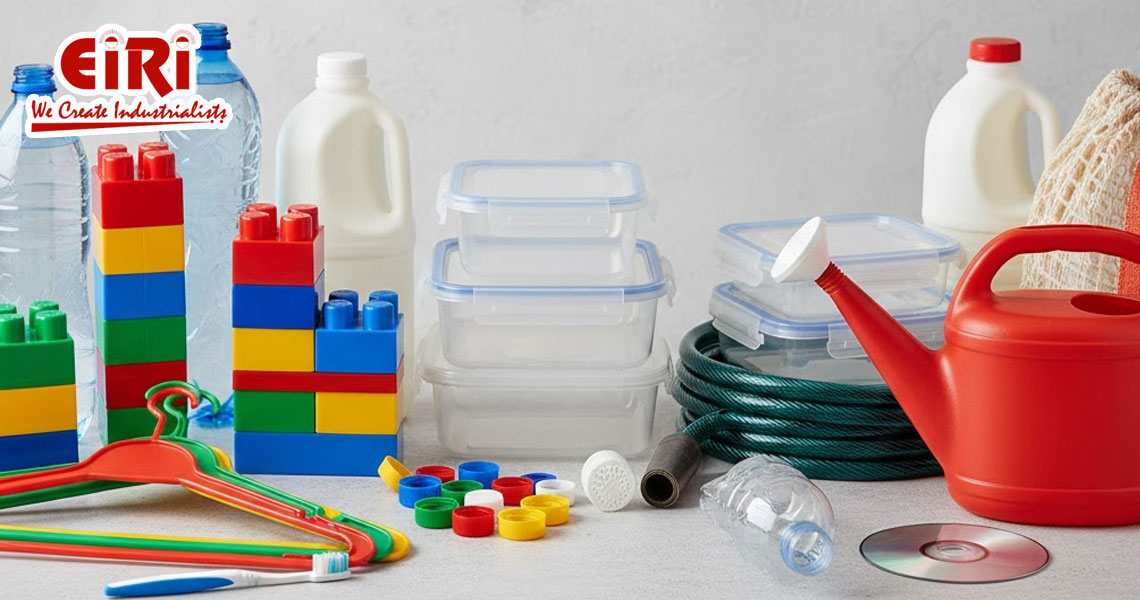
Plastics have quietly become one of the most enabling materials of modern industry. From infrastructure and agriculture to healthcare, packaging, consumer goods, and sustainability solutions, plastic processing technologies sit at the core of industrial growth. What makes plastics especially powerful is not just the material itself, but the vast range of processing methods that transform raw polymers into highly engineered, application-specific products.
Over the decades, plastic processing has evolved from simple moulding operations into a sophisticated ecosystem combining chemistry, mechanical engineering, automation, material science, and economics. Today, success in this sector depends on understanding not only how plastics are shaped, but why certain processes, materials, and designs dominate specific markets.
Core Plastic Processing Technologies Driving Industry
Injection moulding remains the backbone of plastic manufacturing, especially for thermoplastics. It enables mass production of precision components with consistent quality, making it indispensable for automotive parts, consumer durables, packaging, medical disposables, and electrical components. Advanced variants such as reaction injection moulding and thermoset injection moulding have further expanded design freedom, allowing the production of large, thick, and structurally complex parts with excellent surface finish.
Extrusion, another foundational process, plays a critical role in producing continuous profiles such as pipes, sheets, films, cables, and coated substrates. Thermoplastic extrusion dominates markets such as packaging films, agricultural sheets, wire insulation, and building materials, while thermoset extrusion finds niche applications in high-performance profiles. Blow moulding technologies—extrusion blow, injection blow, and injection stretch blow moulding—enable the large-scale production of containers, bottles, tanks, and industrial packaging solutions.
Rotational moulding and thermoforming have gained importance for hollow products, storage tanks, furniture, appliance housings, and food packaging. These processes offer material efficiency, uniform wall thickness, and flexibility in design, making them attractive for both large industrial products and lightweight consumer packaging.
Current Market Overview and Future Growth Outlook of the Plastics Industry
The global plastics industry continues to be one of the largest and most strategically important material markets worldwide. In 2025, the global plastics market is valued at approximately USD 770–800 billion, supported by strong demand across packaging, automotive, construction, electronics, healthcare, agriculture, and consumer goods. Plastics remain essential to modern manufacturing because of their versatility, cost efficiency, lightweight properties, and ability to meet diverse functional requirements.
Packaging represents the single largest application segment, driven by rapid growth in e-commerce, food and beverage consumption, pharmaceuticals, and consumer convenience products. Flexible packaging, high-barrier films, and lightweight containers are increasingly preferred due to their material efficiency and logistics advantages. Asia-Pacific dominates global demand, led by China, India, and Southeast Asian economies, where industrialization, urbanization, and expanding downstream manufacturing continue to fuel consumption. Processing technologies such as injection moulding, extrusion, and blow moulding remain the backbone of the industry, enabling high-volume, cost-effective, and precision manufacturing.
Looking ahead, the global plastics market is projected to grow steadily over the next decade. Market forecasts indicate that the industry could expand from around USD 769 billion in 2025 to approximately USD 1.1–1.14 trillion by 2035, representing a compound annual growth rate of about 4.0–4.8%. This translates into an overall market expansion of nearly 50–60% over ten years. Growth will be supported by rising packaging demand, infrastructure development, automotive lightweighting, increasing electronics usage, and expanding healthcare needs.
Packaging will continue to be the dominant growth driver, particularly flexible and multilayer formats used in food, consumer goods, and pharmaceutical applications. The automotive sector, especially with the global transition toward electric vehicles, is accelerating demand for advanced plastics and composites that help reduce vehicle weight and improve energy efficiency. At the same time, recycling and sustainability considerations are reshaping the industry. Investments in circular economy infrastructure, recycled content integration, and bio-based polymers are becoming central to long-term growth strategies.
India’s plastic processing industry stands out as one of the fastest-growing major markets globally. In 2025, the Indian plastics industry is estimated to be valued at around USD 26.6 billion and is expected to grow to approximately USD 44–45 billion by 2030. Depending on the segment, growth rates range between 6% and 11% annually. Packaging, pipes and profiles, construction materials, automotive components, and consumer products are the primary growth segments.
Government initiatives such as Make in India, production-linked incentive schemes, and infrastructure development are strengthening domestic manufacturing and encouraging capacity expansion. India is also witnessing rising exports of plastic products, positioning the country as an important global supply base in the coming years.
Overall, while growth patterns vary by region, the plastics industry remains on a strong upward trajectory. Emerging markets, particularly Asia-Pacific and India, are expected to capture the bulk of future expansion, while mature markets focus on sustainability, recycling, and high-performance applications. The industry’s future will be defined by innovation, efficiency, and the successful integration of circular economy principles.
Coating, Laminating, and Surface Engineering
Beyond shaping plastics, surface modification processes add functionality and value. Extrusion coating is widely used to combine the strength of substrates like paper, woven sacks, or aluminium foil with the barrier and sealing properties of polymers. Dip coating, fluidized bed coating, and specialized coating methods are used for corrosion protection, electrical insulation, and decorative finishes.
Lamination techniques extend the application range of plastics into packaging, insulation, furniture, and printed materials. These processes are particularly relevant in flexible packaging, where performance requirements such as moisture resistance, oxygen barriers, printability, and heat sealing must be balanced with cost and sustainability.
Reinforced Plastics and Composite Technologies
The rise of reinforced plastics has transformed structural applications. By combining polymers with glass fibres, carbon fibres, or mineral fillers, manufacturers can achieve exceptional strength-to-weight ratios. Reinforced thermoplastics are widely used in automotive, electrical, and consumer products, while reinforced thermosets dominate sectors such as construction, aerospace, wind energy, and chemical processing.
Processes such as hand lay-up, spray-up, filament winding, pultrusion, resin injection, and compression moulding allow manufacturers to tailor mechanical properties and production volumes. Sheet moulding compounds (SMC) and dough moulding compounds (DMC) have enabled high-volume production of strong, dimensionally stable components with excellent surface quality, especially in automotive and electrical enclosures.
Fabrication, Assembly, and Decorative Techniques
Plastic products rarely exist in isolation. Machining, welding, bonding, and mechanical joining techniques are essential for assembling complex systems. Technologies such as ultrasonic welding, hot plate welding, friction welding, and induction welding provide strong, clean joints without additional fasteners.
Decorative and functional finishing methods—including in-mould colouring, post-mould painting, hot stamping, vacuum metallizing, electroplating, and advanced printing—allow plastics to meet aesthetic expectations once reserved for metals and glass. These techniques are critical in consumer goods, appliances, automotive interiors, and branded packaging.
Non-Woven Plastics in Hygiene and Healthcare
One of the most impactful applications of plastics lies in non-woven polypropylene fabrics. These materials have revolutionized hygiene, medical, and healthcare products by offering lightweight, breathable, disposable, and cost-effective solutions. From diapers and sanitary products to surgical gowns, masks, drapes, and wound care materials, non-wovens play a crucial role in public health and infection control.
Advances in web formation, bonding, finishing, and converting have expanded product performance while maintaining high production efficiency. As healthcare awareness and hygiene standards continue to rise, especially in emerging markets, non-wovens remain a high-growth segment with continuous innovation.
Plastics in Agriculture and Protected Cultivation
Agribusiness has increasingly embraced plastics to improve productivity and resource efficiency. Polyethylene greenhouses and polyhouses enable controlled environments for crop cultivation, reducing water usage, improving yields, and extending growing seasons. Plastic films and sheets used in agriculture must balance durability, light transmission, thermal performance, and resistance to UV degradation.
The manufacturing and distribution of polyethylene greenhouses involve specialized extrusion, fabrication, and installation practices, with growing opportunities for local manufacturing and customization based on regional climatic conditions.
Packaging: Innovation, Protection, and Sustainability
Packaging remains one of the largest consumers of plastics, driven by food safety, convenience, logistics, and branding. Flexible packaging continues to replace rigid formats due to its material efficiency and cost advantages. Developments such as breathable films, multilayer barrier structures, aseptic packaging systems, and advanced form-fill-seal machinery have redefined how products are preserved and transported.
Blow moulded containers, PET bottles, industrial packaging, and specialty films are constantly evolving to meet regulatory requirements and sustainability goals. Biodegradable films, recyclable multilayer structures, and additive technologies are reshaping packaging design without compromising performance.
Specialized Plastic Products and Industrial Applications
Beyond mainstream markets, plastics support numerous specialized industries. Nylon monofilaments serve fishing, agriculture, textiles, and industrial applications. Structural foam moulding enables lightweight yet rigid components for furniture, automotive, and appliance housings. Oriented PVC pipes offer superior strength and flexibility for water distribution and infrastructure projects.
Synthetic papers based on polypropylene provide water resistance, durability, and recyclability, finding applications in packaging, labeling, stationery, and outdoor advertising. Wood plastic composites combine natural fillers with polymers to create durable, low-maintenance alternatives for decking, profiles, and automotive components.
Recycling, Resource Recovery, and Circular Plastics
As plastic consumption increases, recycling and waste management have become critical. Mechanical recycling of HDPE, PP, LDPE, LLDPE, PET, ABS, and other polymers enables material recovery for reuse in numerous applications. Advanced separation techniques, compatibilization, and reactive extrusion improve recycled material quality.
Chemical recycling methods such as pyrolysis, hydrocracking, and depolymerization convert plastic waste into fuels, chemicals, or feedstock for new polymers. Energy recovery through controlled incineration and landfill gas utilization also plays a role in integrated waste management strategies. Degradable and modified plastics further contribute to reducing environmental impact when used appropriately.
PET Processing and Recycling: A High-Growth Segment
PET has emerged as one of the most important polymers globally. From beverage bottles and food containers to fibers and films, PET processing technologies continue to advance. Injection stretch blow moulding, single-stage and two-stage systems, and optimized preform design have improved bottle performance while reducing material usage.
Recycled PET has gained acceptance in packaging, textiles, and industrial applications through improved contaminant removal, solid-state polymerization, chain extension, and reactive extrusion techniques. As regulations increasingly support recycled content, PET recycling represents both a commercial opportunity and a sustainability imperative.
Understanding Plant Economics and Project Viability
Technology alone does not guarantee success. Every plastic manufacturing venture must be supported by sound plant economics. Investment decisions depend on capital costs, machinery selection, raw material sourcing, working capital requirements, operating efficiencies, and market demand.
Whether it is pipes and fittings, PET preforms, water storage tanks, moulded furniture, biodegradable plastics, pyrolysis plants, or recycled granules, understanding project economics allows entrepreneurs to minimize risk and maximize returns. Detailed financial analysis bridges the gap between technical feasibility and commercial success.
The Road Ahead for Plastic Processing Industries
The future of plastics lies in smarter materials, cleaner processing, automation, and circular economy integration. Lightweighting, recyclability, energy efficiency, and digital manufacturing are shaping the next generation of plastic products. At the same time, demand from infrastructure, healthcare, packaging, agriculture, and consumer markets continues to grow, particularly in developing economies.
For professionals, entrepreneurs, and decision-makers, staying competitive requires a holistic understanding of materials, processes, applications, sustainability, and economics. Plastic processing is no longer a single discipline—it is a convergence of science, engineering, and business strategy.
As industries evolve and expectations rise, those who master the complete landscape of plastic technologies will be best positioned to lead innovation, build resilient businesses, and contribute meaningfully to modern manufacturing.