
Perfume Manufacturing Process, Formulation, and Fragrance Technology Explained










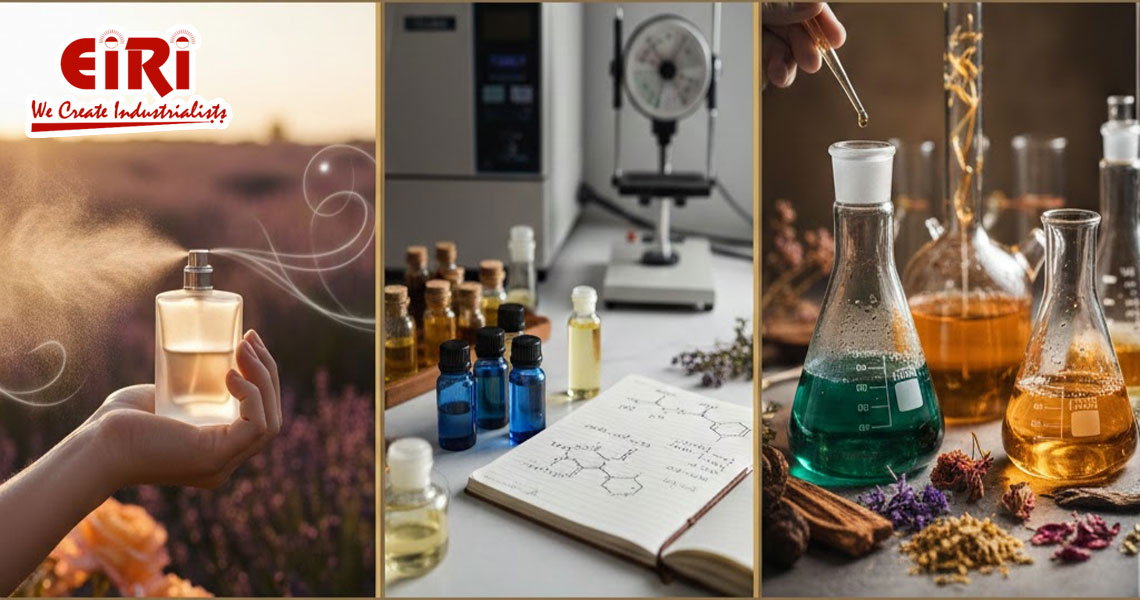
Perfumery is one of the few industries where chemistry, craftsmanship, tradition, and consumer psychology intersect so seamlessly. What appears to be a simple bottle of fragrance is, in reality, the outcome of years of scientific research, precise formulation, sensory evaluation, and manufacturing expertise. From personal care products and cosmetics to incense sticks, soaps, air fresheners, and deodorants, fragrance technology plays a decisive role in defining product identity and market success.
At its core, perfumery is both an art and a science. The art lies in blending aroma notes to create emotional responses, while the science ensures stability, safety, reproducibility, and performance across applications. Modern perfumery has evolved far beyond natural extracts; it now relies heavily on synthetic aroma chemicals, advanced extraction techniques, and standardized production methods that allow fragrances to perform consistently across climates and product bases.
Understanding Perfume Composition and Fragrance Structure
Every perfume is a carefully balanced composition of volatile aromatic compounds dissolved in a suitable carrier. These compositions are designed around top, middle, and base notes, each with distinct evaporation rates and sensory impacts. While natural essential oils continue to play an important role, synthetic aroma chemicals now form the backbone of most commercial fragrances due to their stability, cost efficiency, and creative flexibility.
Perfume compositions are also tailored to specific applications. Antiperspirants, deodorant sprays, roll-ons, sticks, aerosols, and smooth-on products each require unique fragrance systems that remain effective under varying conditions of moisture, temperature, and skin chemistry. This makes formulation science critical, as a fragrance must not only smell pleasant but also remain compatible with functional ingredients such as aluminum salts, alcohols, emulsifiers, and propellants.
Beyond consumer products, perfumery compositions are also engineered for household care, air freshening, fabric treatment, and industrial deodorization, where odour masking, malodour reduction, and long-lasting diffusion are essential.
Current Market Overview and Future Outlook of the Perfume & Fragrance Industry
The perfume and fragrance industry has evolved into a strong and resilient segment of the consumer goods market, supported by rising awareness of personal grooming, lifestyle enhancement, and emotional well-being. Fragrances are no longer limited to premium perfumes alone; they have become an integral part of everyday products such as deodorants, cosmetics, soaps, shampoos, incense sticks, household cleaners, and air fresheners. This wide application base has made the industry commercially attractive across both mass and premium price categories.
At a global level, the perfume market has crossed the USD 60 billion mark in recent years, encompassing luxury fragrances, affordable body sprays, functional deodorants, and lifestyle scent products. Industry projections indicate sustained expansion over the next decade, with the market expected to approach USD 100 billion by the early 2030s, growing at an average annual rate of around 5–6 percent. This steady growth reflects the increasing role of fragrances in daily consumption rather than discretionary luxury alone.
Several long-term factors are shaping this expansion. Consumers are spending more on personal care and grooming, particularly younger demographics who view fragrance as an extension of identity and self-expression. Demand is also rising for customised and niche scent profiles, encouraged by online platforms and direct-to-consumer brands that offer personalization at scale. At the same time, awareness of sustainability has increased interest in natural, eco-friendly, and clean-label fragrance ingredients. The rapid growth of digital commerce has further widened market access, allowing fragrance brands to reach customers beyond traditional retail channels.
Within this global landscape, Asia-Pacific has emerged as the fastest-growing region, driven by population growth, urbanisation, and improving disposable incomes. While Europe continues to dominate the premium and luxury fragrance segment due to its long-established perfumery heritage, emerging economies are increasingly shaping future demand. North America maintains steady growth through product innovation, premiumisation, and strong branding.
The Indian Market Scenario
India represents one of the most promising fragrance markets worldwide. The country’s perfume and deodorant industry is currently valued at several billion US dollars and continues to expand rapidly. Rising urban populations, exposure to global lifestyle trends, and increasing affordability of branded products have significantly altered fragrance consumption patterns. What was once considered a luxury is now a regular purchase for a large segment of consumers.
Market studies indicate that the Indian perfume and deodorant segment is expected to grow at a double-digit rate, with estimated annual growth ranging between 11 and 14 percent over the coming years. Growth is particularly strong in deodorant sprays, body mists, affordable perfumes, agarbatti, dhoop, and cosmetic fragrance applications. The expansion of e-commerce, social media marketing, and influencer-driven branding has further accelerated market penetration across Tier-II and Tier-III cities.
India’s strong base in essential oil production, aroma chemicals, incense manufacturing, and contract fragrance blending provides additional advantages. With increasing focus on domestic manufacturing and export-oriented production, the country is well positioned to serve both local and international fragrance demand. Over the next decade, the Indian fragrance market is expected to multiply in value, creating opportunities in formulation development, raw material processing, private-label manufacturing, and specialised perfumery products.
Synthetic Aroma Chemicals and Their Role in Modern Fragrances
The development of synthetic fragrance materials revolutionized perfumery. Through organic synthesis techniques such as Wittig reactions, esterification, hydrolysis, and controlled decarboxylation, chemists are able to create aroma molecules with specific odour profiles, stability characteristics, and performance attributes.
Compounds such as hexenoic acids, octenoic acids, ionones, aldehydes, musks, and amber notes are synthesized, purified, and evaluated through rigorous physical and sensory testing. Measurements of refractive index, density, boiling point, and odour thresholds ensure consistency across batches. Panel testing further validates how these compounds behave in real-world applications, ensuring that fragrance perception aligns with consumer expectations.
Certain aroma chemicals, including musky and animalic notes, are evaluated using controlled sensory methods to assess intensity, diffusion, and acceptability. These evaluations form the scientific foundation for building complex and sophisticated perfumes.
Raw Materials and Extraction Technologies
The fragrance industry relies on a diverse range of raw materials derived from botanical, animal, and synthetic sources. Natural fragrance materials are obtained through processes such as steam distillation, solvent extraction, maceration, and enfleurage. Each technique is selected based on the delicate nature of the plant material and the desired aromatic outcome.
Essential oils such as citronella, lemongrass, eucalyptus, and sandalwood continue to be important, especially in traditional perfumery and incense manufacturing. Their production requires careful control of temperature, pressure, and time to preserve aromatic integrity. Advances in extraction technology have improved yield, purity, and sustainability, making natural oils more accessible to large-scale manufacturers.
Synthetic raw materials, including alcohols, aldehydes, esters, formates, acetates, and propionates, expand the perfumer’s palette. Ingredients like linalool, citral, geraniol, benzyl acetate, anisyl acetate, and cinnamyl derivatives form the backbone of floral, fruity, and oriental fragrances used across industries.
Floral, Fruity, Oriental, and Woody Fragrance Families
Fragrances are traditionally classified into families that define their dominant sensory character. Floral fragrances remain the most widely used, drawing inspiration from rose, jasmine, lily of the valley, tuberose, violet, and mimosa. These scents are recreated using a combination of natural absolutes and synthetic molecules such as phenyl ethyl alcohol, ionones, and aldehydes.
- Fruity and citrus notes, including bergamot, lemon, orange, peach, strawberry, and apple, add freshness and vibrancy to perfumes. These notes are often achieved through ester combinations that mimic the juicy, sweet characteristics of fresh fruit.
- Oriental and balsamic fragrances rely on warm, resinous, spicy, and ambery materials. Vanilla, coumarin, musks, woods, and spice notes form rich, long-lasting bases that are particularly popular in premium perfumes, incense, and traditional attars.
- Woody fragrances, including sandalwood, cedarwood, vetiver, and mossy notes, provide depth and grounding. These materials are extensively used in men’s fragrances, chypre compositions, and high-end perfumery bases.
Perfume Bases and Advanced Fragrance Engineering
Modern perfumery relies heavily on pre-constructed bases that serve as building blocks for finished perfumes. Aldehydic bases, chypre bases, moss bases, leather bases, green bases, and oriental bases allow perfumers to achieve consistent results while accelerating product development.
These bases are carefully engineered to deliver balance, diffusion, and longevity. By modifying proportions or adding accent notes, perfumers can create an endless variety of finished fragrances tailored to different markets and applications. This approach is especially valuable in large-scale manufacturing, where reproducibility and cost control are essential.
Manufacturing of Finished Perfumes and Alcohol-Free Systems
The manufacture of finished perfumes involves precise blending, maturation, filtration, and quality control. Alcoholic strength must be carefully adjusted, and conversions between different measurement systems are required to maintain regulatory compliance and product consistency.
In response to market demand, alcohol-free perfumes and deodorants have gained popularity. These systems require alternative solvents and emulsifiers that deliver fragrance performance without the use of ethanol. Such formulations are particularly important in regions with cultural or regulatory restrictions on alcohol-based products.
Perfumery for Cosmetics and Personal Care Products
Fragrance plays a crucial role in cosmetics, influencing user perception and brand loyalty. Specialized perfume formulations are developed for creams, lotions, shampoos, hair oils, face powders, talcum powders, soaps, and oral care products. Each base presents unique challenges related to pH, fat content, surfactants, and processing temperatures.
Soap perfumery, for example, demands high stability against alkalinity and heat, while shampoo fragrances must withstand surfactants and prolonged storage. Lipstick and face cream perfumes require mildness, safety, and subtlety to ensure skin compatibility.
Incense, Agarbatti, and Dhoop Manufacturing
Perfumery has deep cultural and spiritual significance in incense manufacturing. Agarbatti and dhoop formulations combine fragrance compounds with combustible bases to produce consistent aroma release during burning. Floral, woody, oriental, and herbal fragrances are widely used, often inspired by rose, jasmine, sandalwood, and lavender.
Manufacturing involves careful selection of raw materials, perfuming methods, drying techniques, and packaging systems. Synthetic perfume compounds have become increasingly important, allowing manufacturers to achieve consistent fragrance quality at scale while controlling costs.
Attars, Ottos, and Traditional Fragrance Forms
Traditional perfumery forms such as attars and ottos continue to hold cultural and commercial importance. These concentrated fragrance oils are produced through distillation and blending techniques that preserve depth and complexity. Both natural and synthetic variants are used to meet modern demand while respecting traditional fragrance profiles.
Project Economics and Industrial Viability
Beyond formulation and chemistry, perfumery is a viable industrial venture. Detailed project profiles, covering plant layout, machinery, raw material requirements, working capital, and return on investment, provide a roadmap for entrepreneurs and manufacturers. From deodorant sprays and incense sticks to cosmetic perfumes and household fragrances, the industry offers opportunities across multiple price segments.
Implications for Entrepreneurs and Manufacturers
These market trends clearly indicate that perfumery is not merely an artistic discipline but a scalable and profitable industrial activity. Success in this sector depends on combining formulation expertise with efficient manufacturing systems, quality control, and cost-effective sourcing of raw materials. Investments in modern equipment, sustainable ingredients, and skilled formulation development can significantly enhance product competitiveness.
When supported by sound project economics—covering plant layout planning, machinery selection, working capital estimation, and return-on-investment analysis—fragrance manufacturing ventures can achieve stable growth across multiple product categories. For entrepreneurs, small-scale manufacturers, and established industrial players alike, the evolving fragrance market offers long-term opportunities driven by lifestyle changes, innovation, and expanding domestic and export demand.
Conclusion: Where Creativity Meets Industrial Precision
Perfumery is no longer confined to luxury fragrances alone. It has become an essential component of everyday products, shaping consumer experience across industries. The integration of chemistry, sensory science, traditional knowledge, and industrial engineering has transformed fragrance creation into a sophisticated discipline.
For professionals, entrepreneurs, chemists, and manufacturers, a deep understanding of fragrance technology is not just an advantage—it is a necessity. Those who master both the creative and technical dimensions of perfumery are best positioned to innovate, scale, and succeed in this timeless yet ever-evolving industry.