
Soybean Oil Manufacturing: A Complete Guide for Entrepreneurs










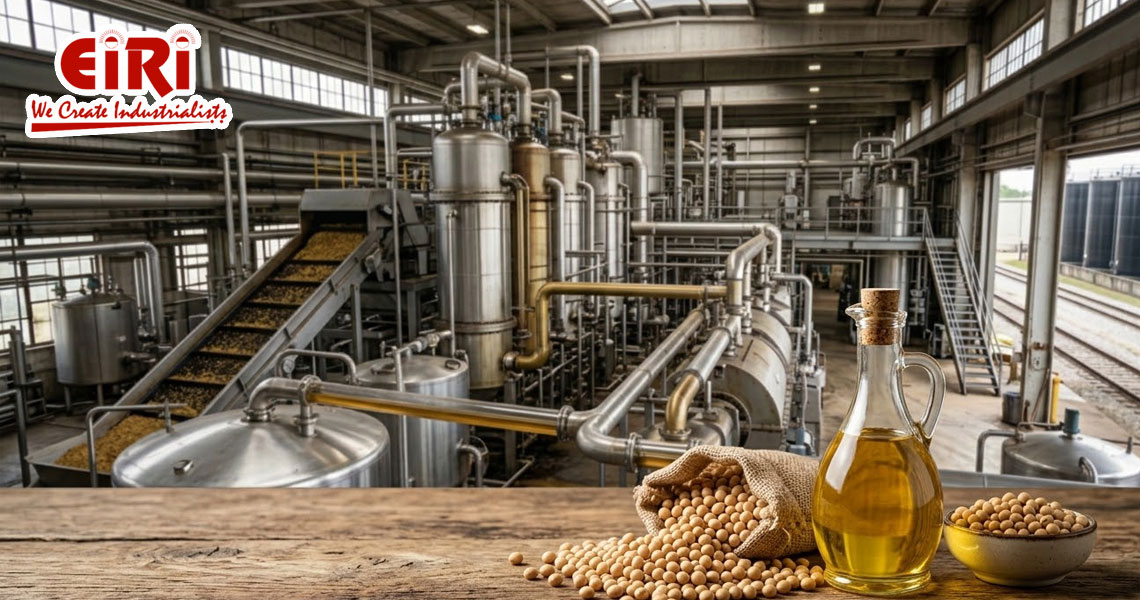
Soybean oil manufacturing stands as one of the most commercially attractive opportunities in the agro-processing sector. As one of the most widely consumed edible oils across the world, soybean oil plays a critical role in household cooking, food processing, and industrial applications. For entrepreneurs, this industry offers a combination of stable demand, scalable production, and multiple revenue streams, making it a strong candidate for long-term investment.
The growing consumption of packaged foods, quick-service restaurants, and processed edible products has significantly increased the demand for vegetable oils. Among these, soybean oil has emerged as a dominant player due to its affordability, availability, and versatility. The manufacturing process itself is well-established and technologically mature, allowing new entrants to adopt proven systems with predictable outcomes. This reduces uncertainty compared to many other manufacturing sectors and makes soybean oil processing an attractive option for those looking to build a reliable business.
Another key factor that strengthens this industry is the dual-output nature of soybean processing. Unlike many raw materials that yield a single product, soybeans produce both oil and high-protein meal, which is widely used in the animal feed industry. This dual revenue model enhances overall profitability and reduces dependency on a single market.
Understanding Soybean as a Raw Material
Soybean is a highly valuable agricultural commodity known for its balanced composition of oil and protein. Typically, soybeans contain around 18 to 20 percent oil and a significant proportion of protein, making them ideal for both edible oil extraction and feed production. This unique composition ensures that nearly every part of the soybean is utilized during processing, minimizing waste and maximizing returns.
For entrepreneurs, the quality and sourcing of soybeans play a crucial role in determining the efficiency and profitability of the manufacturing process. Factors such as moisture content, oil percentage, and cleanliness directly influence oil recovery rates and processing costs. High-quality soybeans result in better yields, reduced processing losses, and improved final product quality.
The availability of soybeans is generally linked to agricultural cycles, and procurement strategies must be planned accordingly. Many manufacturers secure raw material during harvest seasons and store it for year-round processing. Storage infrastructure, therefore, becomes an important consideration in ensuring uninterrupted production. Effective sourcing strategies not only stabilize operations but also protect businesses from price fluctuations in the raw material market.
Overview of the Manufacturing Process
The soybean oil manufacturing process involves a series of well-coordinated steps designed to extract oil efficiently while preserving its quality. The journey begins with raw soybean preparation and continues through extraction and refining stages before the oil reaches the final consumer.
Initially, soybeans are cleaned to remove impurities such as dust, stones, and plant residues. This step is essential to protect machinery and ensure smooth processing. The cleaned soybeans are then subjected to size reduction processes such as cracking and flaking, which increase the surface area and make oil extraction more efficient.
The prepared material is then processed using either mechanical pressing or solvent extraction methods. While mechanical pressing is simpler and suitable for smaller operations, solvent extraction is widely used in large-scale plants due to its ability to extract a higher percentage of oil. After extraction, the crude oil undergoes refining to make it suitable for edible use. Each stage of the process is interconnected, and efficiency at every step contributes to overall productivity and profitability.
Oil Extraction Process
Oil extraction is the core stage of soybean processing and determines the overall yield and economic viability of the plant. The process begins with conditioning the soybean flakes, where heat and moisture are carefully controlled to prepare the material for extraction. This step helps in breaking down the cellular structure, allowing oil to be released more easily.
In mechanical extraction, the conditioned flakes are subjected to high pressure in expellers, which physically squeeze out the oil. While this method is straightforward, it leaves a significant amount of residual oil in the meal. For higher efficiency, solvent extraction is preferred in industrial setups. In this method, a food-grade solvent is used to dissolve the oil from the flakes, resulting in a much higher recovery rate.
The oil-solvent mixture is then separated, and the solvent is recovered and reused in the system. The extracted oil at this stage is referred to as crude soybean oil, which contains impurities and requires further processing. The remaining solid material, known as soybean meal, is processed and sold as a valuable by-product.
Refining of Soybean Oil
Refining is a critical stage that transforms crude soybean oil into a high-quality edible product. The crude oil contains impurities such as phospholipids, free fatty acids, pigments, and odor-causing compounds, which must be removed to meet market standards.
The refining process typically begins with degumming, where unwanted gums and phospholipids are separated from the oil. This is followed by neutralization, which removes free fatty acids and improves the oil’s stability. The oil is then bleached to eliminate color pigments and achieve a clear appearance.
The final step is deodorization, where the oil is subjected to controlled heating under vacuum conditions to remove odor and flavor compounds. This results in a neutral-tasting, light-colored oil suitable for cooking and food processing. Proper refining not only enhances product quality but also increases shelf life and market acceptance.
Plant Setup and Production Capacity Considerations
Setting up a soybean oil manufacturing plant requires careful planning in terms of scale, technology, and investment. Entrepreneurs can choose from a range of plant capacities depending on their budget and market strategy. Small-scale units may focus on local markets, while large integrated plants cater to national and international demand.
The layout of the plant plays a crucial role in ensuring smooth material flow and operational efficiency. From raw material handling to finished product storage, each section must be designed to minimize handling time and reduce losses. Modern plants often integrate automation to improve consistency and reduce labor dependency.
Machinery selection is another critical aspect, as it directly affects production efficiency and maintenance costs. Entrepreneurs must strike a balance between initial investment and long-term operational benefits. A well-designed plant not only ensures higher productivity but also provides the flexibility to expand capacity in the future.
By-Products and Revenue Streams
One of the strongest advantages of soybean oil manufacturing is the generation of valuable by-products. Soybean meal, which remains after oil extraction, is a high-protein feed ingredient widely used in poultry, livestock, and aquaculture industries. This by-product often contributes a significant portion of total revenue and plays a key role in overall profitability.
In addition to soybean meal, other derivatives such as lecithin can be extracted during processing. Lecithin is used in food, pharmaceutical, and industrial applications, adding another income stream for manufacturers. The ability to utilize every component of the soybean ensures that the business operates with high resource efficiency.
For entrepreneurs, understanding and effectively marketing these by-products is essential. A well-balanced revenue model that includes both oil and by-products can significantly reduce financial risk and improve margins.
Market Demand and Industry Overview
The demand for soybean oil continues to grow steadily due to its widespread use in cooking, food processing, and packaged products. Its neutral taste, light texture, and compatibility with various cuisines make it a preferred choice for both households and commercial users.
In addition to direct consumption, soybean oil is extensively used in the food industry for frying, baking, and manufacturing processed foods. This broad application base ensures consistent demand across different market segments. The increasing urbanization and changing dietary patterns further contribute to the expansion of the soybean oil market.
The industry is characterized by both large-scale integrated players and regional manufacturers, creating opportunities for new entrants to find their niche. Entrepreneurs who can maintain consistent quality and competitive pricing are well-positioned to capture market share.
Business Economics and Profitability Dynamics
The profitability of a soybean oil manufacturing business depends on several interrelated factors, including raw material costs, processing efficiency, and market prices of both oil and meal. One of the key concepts in this industry is the relationship between soybean prices and the value of its outputs.
Efficient processing plays a crucial role in maximizing returns. Higher oil recovery rates and better-quality meal directly impact revenue generation. At the same time, operational costs such as energy, labor, and maintenance must be carefully managed to maintain profitability.
Market dynamics also play an important role. Prices of soybean oil and meal can fluctuate based on supply and demand conditions, making it essential for entrepreneurs to adopt flexible pricing and procurement strategies. A well-managed operation can maintain steady margins even in a competitive market environment.
Export Potential and Global Trade Opportunities
Soybean oil has a strong presence in international markets, creating significant export opportunities for manufacturers. Countries with high consumption but limited domestic production rely heavily on imports, opening avenues for exporters.
For entrepreneurs, entering the export market requires a focus on quality standards, packaging, and consistent supply. Building relationships with international buyers and understanding market preferences are key steps in establishing a successful export business.
Exporting not only increases revenue potential but also provides diversification, reducing dependence on domestic markets. With the right strategy, soybean oil manufacturers can expand their reach and tap into global demand.
Challenges in Soybean Oil Manufacturing Business
While soybean oil manufacturing offers strong potential, it also comes with its own set of challenges. One of the primary concerns is the fluctuation in raw material prices, which can impact production costs and margins. Managing procurement and inventory effectively is essential to mitigate this risk.
Operational efficiency is another critical factor. Any inefficiencies in processing can lead to lower yields and increased costs, affecting overall profitability. Maintenance of machinery and consistent quality control are essential to ensure smooth operations.
Competition in the market can also be intense, with both established players and new entrants vying for market share. Entrepreneurs must focus on differentiation through quality, branding, and efficient distribution to stay competitive.
Future Prospects of Soybean Oil Industry
The future of soybean oil manufacturing remains promising, driven by increasing consumption and expanding applications. As global food demand continues to rise, the need for edible oils is expected to grow steadily, supporting long-term industry expansion.
Technological advancements in processing are likely to improve efficiency and reduce costs, making the industry even more attractive for investment. Additionally, the growing demand for protein-rich animal feed ensures sustained demand for soybean meal, further strengthening the business model.
The industry is also witnessing diversification in applications, with soybean oil being used in various industrial products. This expanding scope creates new opportunities for manufacturers to explore additional markets and revenue streams.
Conclusion: Why Soybean Oil Manufacturing is a Strong Business Opportunity
Soybean oil manufacturing offers a compelling opportunity for entrepreneurs looking to enter the agro-processing sector. With its strong demand, well-established technology, and multiple revenue streams, the industry provides a solid foundation for building a sustainable business.
The ability to generate income from both oil and by-products enhances profitability and reduces risk, making it a balanced and resilient business model. While challenges exist, they can be effectively managed with proper planning, efficient operations, and a clear market strategy.
For those willing to invest in the right infrastructure and adopt a long-term perspective, soybean oil manufacturing can become a highly rewarding venture. Its scalability, consistent demand, and expanding market opportunities make it one of the most promising manufacturing industries for the future.