
Starting a Copper & Brass Recycling Plant: A Practical Business Guide






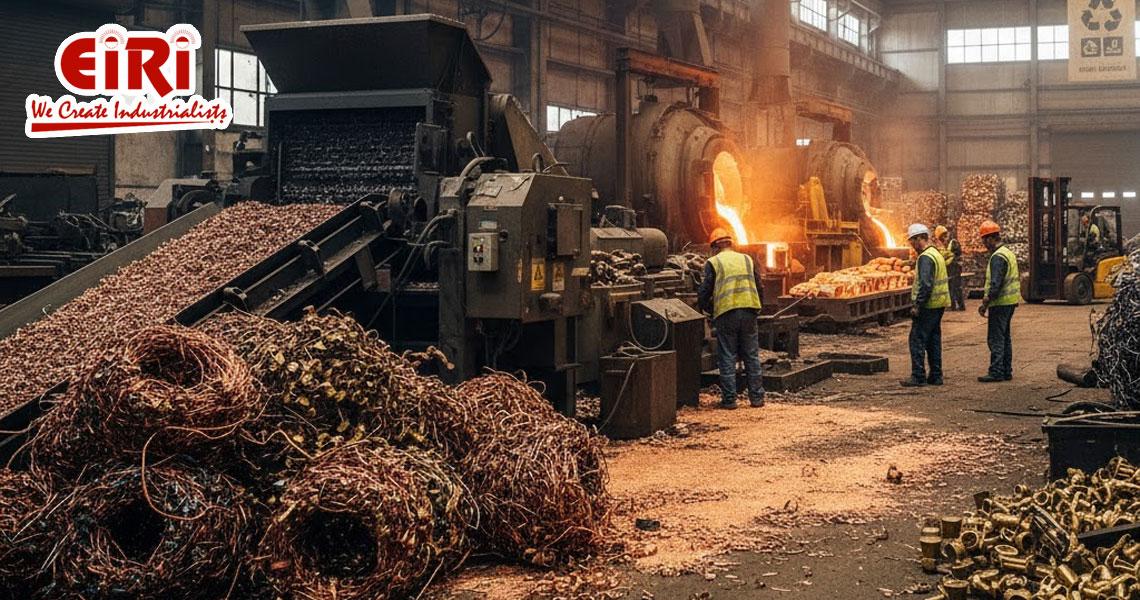
Recycling has become one of the most important industries in today’s economy. With growing demand for metals, rising raw material costs, and strong focus on sustainability, metal recycling offers a steady and long-term business opportunity. Among all recyclable metals, copper and brass hold special importance due to their high value, wide industrial use, and ability to be recycled multiple times without loss of quality.
Starting a copper and brass recycling plant is not only profitable but also supports resource conservation and environmental protection. This article explains the business opportunity, process, investment needs, raw materials, machinery, market demand, and key factors involved in setting up a copper and brass recycling plant.
Understanding Copper and Brass Recycling
Copper is a pure metal widely used in electrical, construction, plumbing, and industrial applications. Brass is an alloy mainly made from copper and zinc and is commonly used in fittings, valves, hardware, electrical parts, and decorative items.
Both copper and brass are highly recyclable. Scrap copper and brass can be melted and reused to produce new products with almost the same quality as virgin metal. Recycling these metals saves energy, reduces mining activity, and lowers production costs.
A recycling plant collects scrap material, processes it through sorting, cleaning, melting, and casting, and supplies recycled metal in different forms such as ingots, rods, billets, or sheets.
Why Start a Copper & Brass Recycling Plant?
High and Stable Demand
Copper and brass are used across many industries such as power, electronics, automobiles, construction, plumbing, and manufacturing. Demand for these metals remains steady even during slow economic periods. Recycled copper and brass are accepted by most industries because of their quality and cost advantage.
Strong Profit Potential
Scrap copper and brass have high resale value. The price difference between scrap material and finished recycled metal allows healthy margins when operations are managed properly. With good sourcing and efficient processing, the business can generate steady cash flow.
Low Dependence on Imports
India imports a large quantity of copper and copper products. Recycling helps reduce this dependence by supplying domestic industries with locally produced metal. This creates strong local demand for recycled copper and brass.
Environment-Friendly Business
Recycling uses much less energy than mining and refining new metal. It reduces waste, lowers pollution, and supports government goals related to sustainability and circular economy. This also improves the long-term image of the business.
Raw Materials for the Recycling Plant
The main raw materials for a copper and brass recycling plant are different types of scrap.
Copper Scrap Sources
- Electrical wires and cables
- Old motors and transformers
- Scrap from electrical and electronics industries
- Plumbing pipes and fittings
- Manufacturing waste from copper product units
- Demolished building materials
Brass Scrap Sources
- Plumbing fittings
- Valves and taps
- Hardware items
- Machining waste from brass units
- Old decorative items
- Electrical components
Scrap can be sourced from scrap dealers, industrial units, demolition contractors, electrical workshops, government auctions, and importers. Building strong relationships with suppliers is very important for steady operations.
Types of Copper and Brass Scrap
Scrap is usually classified based on purity and composition.
Copper scrap may include:
- Bare bright copper
- Copper wire scrap
- Copper tubing scrap
- Mixed copper scrap
Brass scrap may include:
- Yellow brass scrap
- Red brass scrap
- Brass turning scrap
- Mixed brass scrap
Proper sorting is essential because different grades require different processing methods and affect final product quality.
Recycling Process for Copper and Brass
The recycling process involves several controlled steps to ensure good quality output.
Scrap Collection and Storage
Scrap is collected from various sources and stored in a covered area. Proper storage helps avoid contamination with dirt, plastic, rubber, or other metals.
Sorting and Segregation
Scrap is sorted manually or mechanically based on metal type and grade. Copper and brass must be separated clearly. Iron, aluminum, plastic, and other unwanted materials are removed.
Cleaning and Size Reduction
Scrap is cleaned to remove oil, grease, paint, insulation, or rust. Wires may be stripped, and large scrap pieces are cut or crushed to suitable sizes for melting.
Melting
Sorted scrap is charged into furnaces. Melting is done at controlled temperatures to avoid metal loss. Fluxes may be added to remove impurities.
Refining
During melting, impurities rise to the surface and are removed. Chemical treatment may be used to improve metal quality. Proper refining ensures good strength and conductivity.
Casting
Molten metal is poured into molds to produce ingots, billets, rods, or cakes. These forms are easy to store, transport, and sell to manufacturers.
Cooling and Finishing
Cast products are cooled, inspected, weighed, and prepared for dispatch. Quality checks are done to ensure required composition and standards.
Current Market Overview
The copper market in 2025 is experiencing strong momentum, supported by rising prices and steady industrial demand. Global copper prices have moved to very high levels due to limited supply from mining activities and increasing consumption from power, electrical, and energy-related industries. As copper becomes more expensive to extract and refine from natural sources, recycling has emerged as a cost-effective and reliable alternative. Recycled copper and copper alloys require less energy to process and help manufacturers manage raw material costs more efficiently, making recycling plants more attractive in the present market environment.
Alongside rising prices, the scrap metal market has grown into a large and well-organized global industry. Copper scrap trading now represents a market worth many billions of dollars, supported by continuous demand from construction, electrical equipment, automobile manufacturing, and engineering sectors. Recycling has become an essential part of metal supply chains as mining output struggles to grow at the same pace as consumption. Developing economies, where infrastructure and manufacturing activity is expanding rapidly, are playing a major role in driving this growth.
The use of recycled copper and brass has increased across multiple industries. Manufacturers of electrical wires, cables, automotive components, machinery, and industrial equipment regularly use recycled metal because it meets quality standards while offering cost advantages. This widespread acceptance helps keep demand stable even during periods when copper prices fluctuate. For recycling plant operators, this means consistent off-take opportunities and reduced dependency on a single industry.
India holds an important position in the current market. The country’s demand for copper has increased due to growth in infrastructure projects, electrification, renewable energy installations, housing development, and industrial expansion. Although domestic consumption continues to rise, India still depends heavily on imported refined copper. This gap between demand and local supply has created strong opportunities for copper and brass recycling plants, as recycled metal helps improve supply security and supports domestic manufacturing needs.
Future Market Scope (2030 and Beyond)
The long-term outlook for copper and brass recycling remains positive and stable. Market studies indicate that the global copper scrap and recycling industry is expected to expand significantly over the next decade. As industries increasingly adopt recycled metals as a regular part of their raw material mix, the overall market value is projected to grow at a healthy annual rate. This growth is driven by industrial demand, supply limitations in mining, and the cost benefits of recycled materials.
Asia-Pacific is expected to remain the fastest-growing region for copper and brass recycling. Countries such as India, China, and those in Southeast Asia are investing heavily in infrastructure, transportation, manufacturing, and energy projects. These developments require large quantities of copper and copper alloys, which will increase both the availability of scrap and the demand for recycled metal. India, in particular, is likely to grow faster than the global average due to its expanding construction sector, rising automobile production, and ongoing electrification programs.
Electrification and renewable energy will play a major role in shaping future demand. Electric vehicles require much higher copper content than conventional vehicles, while solar power plants, wind energy systems, and power transmission networks depend heavily on copper wiring and components. As these sectors expand worldwide, total copper consumption will increase, and recycled copper will become an essential supply source to meet demand without placing excessive pressure on mining operations.
Another important factor supporting recycling is the limitation faced by the mining industry. New copper mines take many years to develop and often face regulatory, environmental, and cost challenges. As a result, future supply growth from mining alone may not be sufficient. Recycling helps bridge this gap by providing a steady secondary source of metal, making copper and brass recycling plants strategically important to the global supply chain.
Sustainability goals and environmental regulations further strengthen the future of this industry. Governments and large corporations are focusing on reducing carbon emissions, conserving natural resources, and promoting circular economy models. Recycling copper and brass consumes far less energy than producing metal from ore and significantly reduces waste. These advantages make recycling a preferred solution for both policy makers and manufacturers.
Although brass recycling receives less attention than pure copper in market studies, its outlook remains strong. Brass continues to be widely used in plumbing, electrical fittings, hardware, and industrial components. Growth in construction and manufacturing increases the availability of brass scrap, ensuring a steady feedstock for recycling plants. As copper prices rise, the value of brass recycling also improves, making it an important part of future recycling operations.
Conclusion
Starting a copper and brass recycling plant is a practical and rewarding business opportunity. With steady demand, strong resale value, and environmental benefits, this sector offers long-term growth potential. Success depends on proper planning, reliable raw material sourcing, efficient processing, and strict quality control.
For entrepreneurs looking to enter the metal recycling industry, copper and brass recycling provides a balance of profitability, sustainability, and industrial relevance. With the right approach and management, this business can become a stable and respected manufacturing venture.